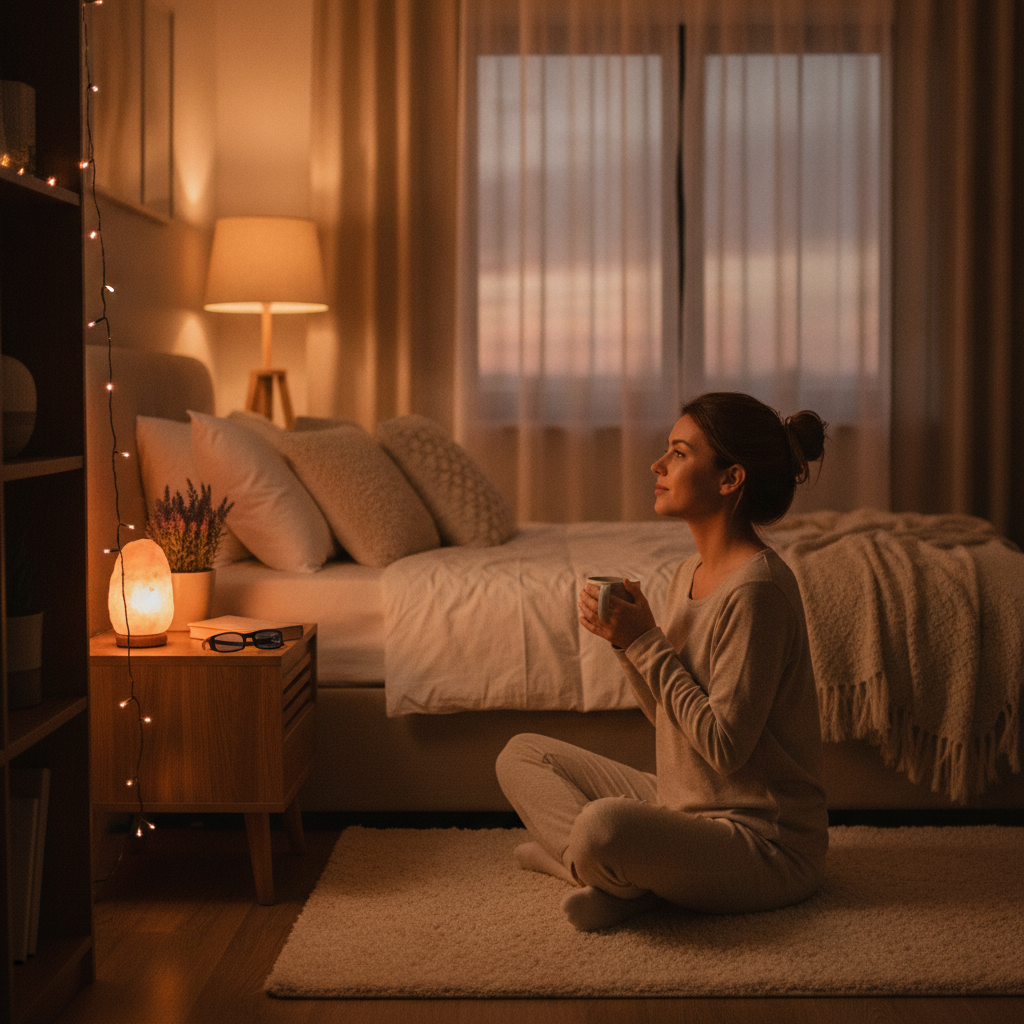
Lying awake at night, watching the minutes tick by, is one of the most quietly frustrating experiences a person can have. You're tired — genuinely tired — and yet sleep refuses to arrive. For many people, the culprit isn't stress, caffeine, or a noisy neighbor. It's light. Specifically, the kind of light flooding your eyes in the hour before bed, and what it's doing to the biological signals your body depends on to shift from wakefulness into rest.
The human body is exquisitely sensitive to light. Evening light exposure — particularly in the blue-wavelength range emitted by phones, tablets, televisions, and most overhead LED fixtures — suppresses melatonin production at precisely the moment your system needs it most. The good news is that this is one of the most actionable, cost-free factors in your sleep environment, and small adjustments make a measurable difference.
Dim the Overhead Lights an Hour Before Sleep
Overhead lighting is one of the most underappreciated disruptors of the body's wind-down process. Bright ceiling fixtures bathing an entire room in light signal to the brain that the day is still active, even when the clock says otherwise. Dimming overhead lights to around half their usual brightness — or switching them off entirely and relying on lamps placed lower in the room — helps shift the visual environment into something that doesn't fight your biology. The transition doesn't need to be dramatic; small reductions in brightness across the room make a real difference over time.
Switch to Warm-Toned Bulbs in Bedside Lamps
Not all artificial light is equally disruptive. Light in the warm amber and red range — typically measured at 2700K or lower on the color temperature scale — has a far gentler effect on melatonin compared to the cooler, blue-heavy light produced by most standard LED bulbs. Replacing the bulbs in bedside lamps with warm-spectrum alternatives is a one-time change that pays off every night. Brands like Philips and GE both offer warm-tone options widely available in hardware stores, and the difference in how a room feels under that light is immediately noticeable.
Use Blue-Light Filtering Glasses in the Evening
For people who find it difficult to avoid screens in the evening — whether for work, reading, or winding down with a show — blue-light filtering glasses offer a practical middle ground. These aren't a perfect solution, but they reduce the intensity of short-wavelength light reaching the retina during that critical pre-sleep window. Brands like Felix Gray and Gunnar have built their products specifically around this use case, with lens tints calibrated for evening use rather than daytime screen work. Wearing them consistently in the last 60 to 90 minutes before bed tends to produce noticeable improvements in how quickly sleep arrives.
Enable Night Mode on All Screens — And Actually Adjust the Settings
Most smartphones, tablets, and computers now include a night mode or warm display shift feature, but many people leave the default settings unchanged — which are often too mild to be effective. Going into the display settings and increasing the warmth shift to its maximum level, then scheduling it to activate 90 minutes before your intended bedtime, creates a more meaningful reduction in blue light output. This takes about two minutes to set up on an iPhone or an Android device and requires no further attention afterward. It's one of the simplest environmental adjustments available.
Keep Bathroom Lighting Soft During Your Nighttime Routine
The bathroom is often overlooked in sleep hygiene conversations, but it's a common source of disruptive light exposure. Bright vanity lighting — the kind designed for applying makeup or shaving — can blast several hundred lux directly at eye level, effectively resetting the melatonin suppression that the rest of your evening routine has been building. Installing a simple dimmer switch, using a lower-wattage warm bulb, or even keeping a small salt lamp nearby as ambient light for nighttime bathroom visits can prevent that abrupt re-exposure. The goal is never to eliminate light entirely, just to reduce its intensity and color temperature.
Block External Light Sources From Entering the Room
Streetlights, car headlights, and neighboring buildings all contribute to ambient light levels in a bedroom, particularly in urban environments. Even low levels of light entering the room during sleep can fragment sleep architecture and reduce time spent in deeper stages. Blackout curtains — widely available from retailers like IKEA or Amazon Basics — are one of the most effective passive sleep interventions available. For those who want something less permanent, a well-fitted sleep mask serves the same purpose and travels easily.
Create a Consistent Light Transition Ritual
The body responds well to predictable cues. Creating a consistent pattern — dimming lights at the same time each evening, following the same sequence of lower-light activities — reinforces the biological association between dimming light and approaching sleep. Over several weeks, this routine becomes a reliable signal that the body begins to anticipate. Reading physical books under a warm lamp, gentle stretching in a softly lit room, or even light journaling by candlelight all fit naturally into this kind of wind-down sequence without requiring any special equipment or supplements.
As awareness of circadian health grows, lighting manufacturers and technology companies are beginning to design products with sleep physiology more explicitly in mind. Smart bulbs that automatically shift color temperature throughout the day — like those in the Philips Hue ecosystem — represent a direction the industry is clearly moving toward. For anyone paying attention to how environment shapes health, the evening light conversation is only getting richer, and the tools available are becoming more accessible by the year. Starting with even one or two of these adjustments tonight can shift the experience of bedtime from frustrating to genuinely restful.