Health
How Introducing a Structured Twelve-Hour Overnight Eating Window Gradually Resets Morning Appetite Signals in Habitual Late-Night Snackers
Late-night eating gradually suppresses morning hunger signals by disrupting the body's natural hormonal rhythm. A structured twelve-hour overnight eating window, without any calorie restriction, can slowly restore those appetite cues over weeks of consistent practice.
By Robert Kim | Nov 06, 2026
How Gradually Shifting Your Evening Meal Composition Toward Lower Glycemic Density Reduces Nighttime Cortisol Spikes Without Eliminating Enjoyment
What's on the dinner plate influences more than just digestion — it shapes the hormonal conditions that determine sleep quality. Shifting evening meals toward lower glycemic density gradually can reduce nighttime cortisol spikes while keeping meals genuinely satisfying.
By Emily Rodriguez | Nov 03, 2026
Why Introducing a Structured Morning Joint Mobilization Sequence Before Any Screen Exposure Reduces Stiffness Accumulation Through the Day
A structured morning joint mobilization practice completed before any screen exposure helps warm synovial fluid, reset posture baselines, and reduce the stiffness that builds layer by layer through the day.
By Emily Rodriguez | Oct 31, 2026
How Systematically Increasing Dietary Fiber From Varied Whole Plant Sources Over Eight Weeks Measurably Reduces Fasting Blood Sugar Fluctuations
Systematically increasing dietary fiber from varied whole plant sources over eight weeks produces measurable improvements in fasting blood glucose stability. Here's what the science shows and how to build an effective protocol.
By Emily Rodriguez | Oct 28, 2026
Why a Structured Ten-Minute Evening Foot and Calf Routine Reduces Next-Day Fatigue
A structured ten-minute evening routine targeting the feet and calves helps flush pooled blood, release fascial tension, and reduce the fatigue that carries over into the next day for people who stand for long periods.
By Robert Kim | Oct 24, 2026

How Systematically Reducing Ambient Noise Exposure During Meals Improves Digestive Mindfulness and Reduces Habitual Overeating
Background noise during meals quietly disrupts satiety signals and accelerates eating pace. Reducing ambient sound is one of the most accessible ways to restore digestive mindfulness and curb habitual overeating.
By Emily Rodriguez | Oct 20, 2026

Why Introducing a Structured Midday Posture Reset Reduces the Cumulative Spinal Load That Causes Late-Day Lower Back Fatigue
Late-day lower back fatigue isn't inevitable — it's the predictable result of cumulative spinal load building unchecked from morning to afternoon. A structured midday posture reset interrupts that cycle before it compounds into discomfort.
By Emily Rodriguez | Oct 17, 2026

How Rotating Your Weekly Protein Sources Across Animal and Plant Bases Fills Amino Acid Gaps That Single-Source Diets Consistently Miss
No single protein source delivers every essential amino acid the body needs. Rotating between animal and plant proteins throughout the week is one of the most practical ways to close the gaps that single-source diets consistently leave open.
By Emily Rodriguez | Oct 14, 2026

Why Introducing a Structured Five-Minute Jaw and Neck Release Routine After Screen Work Reduces Tension Headache Frequency Over Time
Tension headaches that follow screen work aren't inevitable. A structured five-minute jaw and neck release routine, done consistently after each session, can reduce their frequency significantly over time.
By Emily Rodriguez | Oct 11, 2026

How Reorganizing Your Kitchen Storage to Place Whole Foods at Eye Level and Processed Snacks Out of Sight Shifts Default Eating Behavior Without Willpower
Reorganizing your kitchen so whole foods sit at eye level and processed snacks stay out of sight shifts your default eating behavior automatically — no willpower required. Here's how to set it up.
By Amanda Foster | Oct 08, 2026
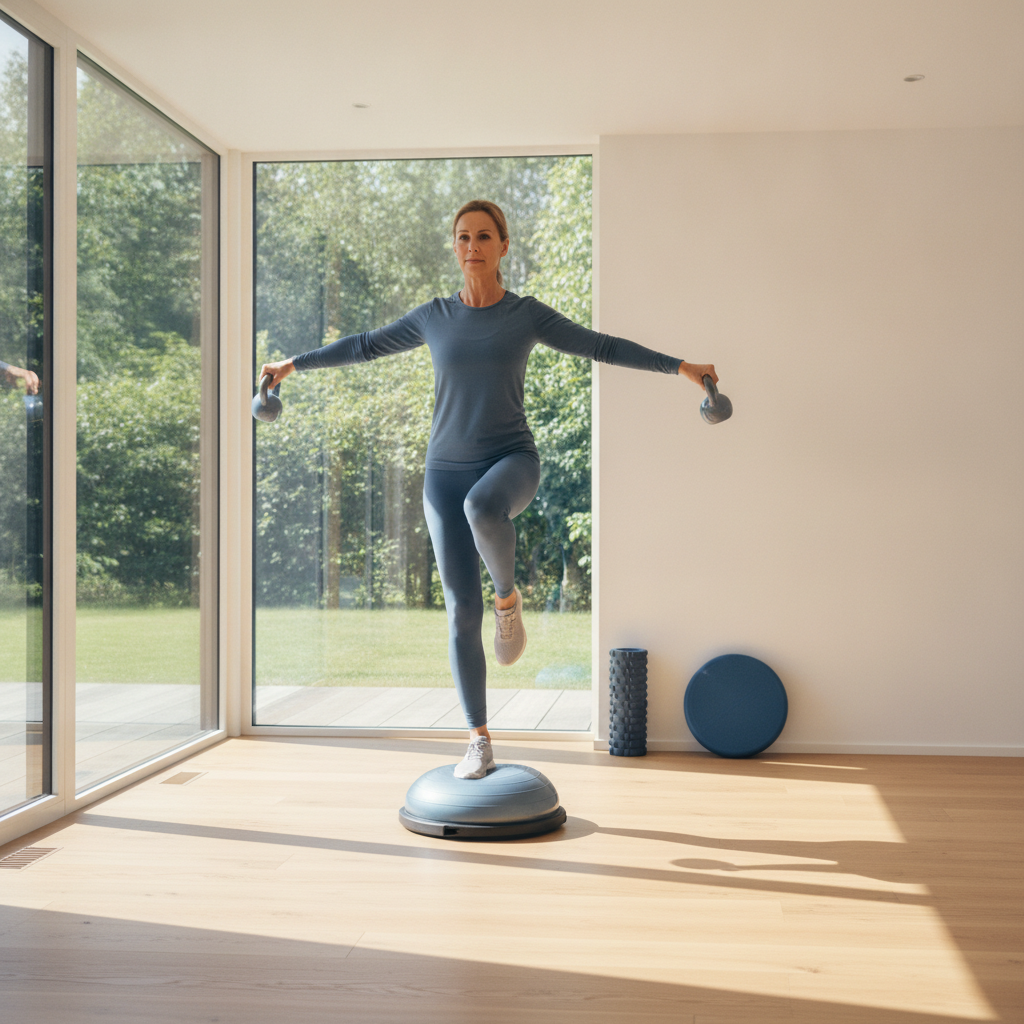
Why Training Your Balance Through Single-Axis Stability Exercises Three Times a Week Prevents the Gradual Proprioceptive Decline That Accelerates After Forty
Proprioceptive decline accelerates after forty, but targeted single-axis stability training three times a week can slow — and even partially reverse — the process. Here's why the approach works and how to build it into a routine.
By Chris Martinez | Oct 05, 2026

How Introducing a Weekly Full-Day Low-Stimulus Reset Reduces Nervous System Overload in High-Screen Professions
For people in screen-heavy professions, the nervous system absorbs a relentless stream of input that short breaks can't resolve. A structured weekly full-day low-stimulus reset offers the sustained recovery that restores focus, sleep quality, and emotional resilience over time.
By Robert Kim | Oct 02, 2026

Why Shifting the Timing of Your Largest Hydration Window to Mid-Morning Stabilizes Blood Pressure Variability Through the Afternoon
Shifting the bulk of your daily fluid intake to mid-morning — rather than relying on morning or evening hydration — can meaningfully stabilize blood pressure variability through the afternoon hours.
By Emily Rodriguez | Sep 29, 2026

How Introducing One Dedicated Chewing-Focused Meal Each Day Improves Digestive Efficiency and Reduces Bloating Without Dietary Restriction
Designating one meal each day as a deliberate, chewing-focused experience can meaningfully reduce bloating and improve digestive efficiency — no dietary restrictions required. Learn practical ways to make that single meal work harder for your gut health.
By Emily Rodriguez | Sep 26, 2026

Why Replacing Afternoon Coffee With Natural Light and Cold Water Breaks the Caffeine Dependency Cycle Without Withdrawal
The afternoon coffee habit is often less about enjoyment and more about compensating for disrupted sleep — a cycle that natural light exposure and cold water can interrupt without the discomfort of withdrawal.
By Emily Rodriguez | Sep 23, 2026

How Systematically Rotating Your Cooking Oils Based on Heat Application and Fatty Acid Profile Reduces Oxidative Stress in Everyday Meals
Not all cooking oils handle heat the same way, and using the wrong one consistently adds oxidative stress to otherwise healthy meals. A simple rotation strategy matched to heat level and fatty acid profile makes a meaningful difference over time.
By Jennifer Walsh | Sep 20, 2026

How Introducing Structured Walking Breaks Every Ninety Minutes Counteracts the Metabolic Slowdown Caused by Prolonged Desk Work
Prolonged desk work quietly suppresses metabolic function, but structured walking breaks every ninety minutes offer a practical and proven way to counteract that slowdown. Here's how to build the habit effectively.
By Emily Rodriguez | Sep 17, 2026

How Practicing a Ten-Minute Midday Reset Using Diaphragmatic Breathing Lowers Accumulated Cortisol Before It Disrupts Your Afternoon
Accumulated cortisol doesn't wait for the end of the day to cause problems. A ten-minute midday reset using diaphragmatic breathing can interrupt the stress cycle early and meaningfully improve the quality of your entire afternoon.
By Emily Rodriguez | Sep 14, 2026

How Shifting Your Strength Training Sessions to Late Morning Aligns With Natural Testosterone Peaks for Better Adaptation
The body's testosterone and cortisol rhythms create a natural late morning window that may significantly improve strength training adaptation. Understanding this hormonal timing offers a practical edge for anyone serious about building muscle efficiently.
By Emily Rodriguez | Sep 11, 2026

How Adjusting Your Sodium and Potassium Ratio Through Whole Food Sources Reduces Persistent Afternoon Headaches Without Medication
Persistent afternoon headaches are often linked to an imbalanced sodium-potassium ratio in the diet. Shifting toward whole food sources can restore that balance and reduce headache frequency without medication.
By Emily Rodriguez | Sep 07, 2026

Why Eccentric-Focused Resistance Training Builds Tendon Resilience That Concentric Work Alone Neglects
Eccentric-focused resistance training places a distinct mechanical demand on tendons that concentric lifting alone cannot replicate, stimulating the collagen remodeling that makes connective tissue more resilient over time.
By Emily Rodriguez | Sep 04, 2026

Why Incorporating a Weekly Mobility-Only Session Into Your Training Builds Long-Term Resilience That Strength Work Alone Cannot
A weekly mobility-only session fills the gaps that strength training leaves behind, building joint resilience and long-term movement quality that no lifting program can replicate on its own.
By Emily Rodriguez | Sep 01, 2026

How Eating the Same Breakfast Daily Reduces Decision Fatigue and Stabilizes Morning Cortisol Patterns
Eating the same breakfast every day reduces morning decision fatigue and supports healthier cortisol patterns — a simple habit with meaningful physiological and cognitive benefits.
By Emily Rodriguez | Aug 29, 2026

How Adjusting Your Evening Light Environment in the Hour Before Bed Accelerates Sleep Onset Without Supplements
The light environment in your home during the hour before bed has a powerful effect on how quickly sleep arrives. Small, practical adjustments to brightness and color temperature can accelerate sleep onset naturally.
By David Park | Aug 26, 2026

Why Structuring Your Week Around Three Distinct Movement Modalities Produces More Balanced Fitness Outcomes
Repeating the same type of exercise week after week creates narrow adaptation while leaving other physical systems under-stimulated. Structuring movement around three distinct modalities — aerobic, resistance, and mobility — builds more complete and lasting fitness outcomes.
By Amanda Foster | Aug 23, 2026

How Adjusting Hydration Strategy by Season Prevents the Subtle Energy Crashes That Mimic Fatigue and Brain Fog
Mild, seasonal dehydration is one of the most common and overlooked causes of afternoon energy crashes and mental fog. Adjusting your hydration strategy with each season can make a quiet but significant difference in how you feel day to day.
By Emily Rodriguez | Aug 20, 2026

Why Strength Training Twice a Week Outperforms Daily Light Exercise for Body Composition in Busy Adults
Two structured strength sessions per week consistently produce better body composition results than daily light exercise for busy adults. Here's why focused resistance training outperforms constant low-intensity movement.
By Robert Kim | Aug 17, 2026

Why Shifting Your Largest Meal to Midday Aligns Better With Circadian Digestion and Sustained Energy
Your body's digestive capacity peaks at midday, not at dinnertime. Shifting your largest meal to midday can improve energy, blood sugar stability, and sleep quality in ways that accumulate meaningfully over time.
By Emily Rodriguez | Aug 14, 2026

How Incorporating Breath-Hold Training Into a Weekly Routine Builds Stress Resilience Through CO2 Tolerance
Breath-hold training builds CO2 tolerance in a way that directly recalibrates the nervous system's stress response. Practiced consistently, it offers a physiologically grounded path to greater calm and faster recovery.
By Emily Rodriguez | Aug 11, 2026

How Spending Consistent Time Outdoors in Morning Light Regulates Cortisol Rhythms and Daytime Energy Levels
Morning light does far more than brighten the day — it anchors the cortisol rhythms that govern alertness, mood, and energy from waking to sleep. Here's how consistent outdoor exposure each morning quietly transforms how the body feels throughout the day.
By Emily Rodriguez | Aug 08, 2026

Why Incorporating Unilateral Leg Training Into a Weekly Routine Corrects Strength Imbalances Before They Become Injuries
Bilateral exercises like squats can mask subtle leg-to-leg strength imbalances for years. Unilateral training exposes and corrects those gaps before they lead to serious injury.
By Emily Rodriguez | Aug 04, 2026

How Timing Protein Intake Around Your Natural Hunger Window Supports Muscle Synthesis Without Rigid Meal Scheduling
Rigid meal timing isn't the only path to better muscle synthesis. Aligning your protein intake with your natural hunger windows offers a flexible, sustainable approach that your body can actually work with.
By Emily Rodriguez | Aug 01, 2026

How Incorporating Isometric Holds Into a Strength Routine Builds Joint Stability Without Adding Training Volume
Isometric holds generate meaningful joint stability adaptations with minimal recovery demand — making them one of the most efficient additions to an existing strength routine. This guide explains how they work and where to use them.
By Emily Rodriguez | Jul 29, 2026

How Tracking Heart Rate Variability Each Morning Can Guide Your Daily Training and Recovery Decisions
Heart rate variability is one of your body's most reliable recovery signals. Here's how to track it each morning and use it to make smarter training and rest decisions every day.
By Emily Rodriguez | Jul 24, 2026

Why Progressive Deload Weeks Are Essential for Strength Training Longevity After 35
Strength training after 35 requires a smarter approach to recovery. Progressive deload weeks help protect connective tissue, reset hormonal balance, and sustain long-term performance for lifters in midlife and beyond.
By Emily Rodriguez | Jul 21, 2026

Why Rotating Fermented Foods Seasonally Supports a More Diverse Gut Microbiome Year-Round
Eating the same fermented foods year-round limits your gut's microbial diversity. Rotating seasonally — lighter ferments in warmer months, heartier ones in cooler seasons — is one of the simplest ways to support a richer, more resilient gut microbiome.
By Emily Rodriguez | Jul 17, 2026

How Nasal Breathing During Low-Intensity Exercise Affects Oxygen Efficiency and Recovery Rates
Nasal breathing during low-intensity exercise influences oxygen delivery, carbon dioxide tolerance, and post-exercise recovery in ways that mouth breathing largely bypasses. Here's what the physiology shows and how to apply it.
By Emily Rodriguez | Jul 14, 2026

Building a Sustainable Meal Prep Routine That Survives a Packed Weekday Schedule
A sustainable meal prep routine isn't about spending all Sunday in the kitchen — it's about making a few smart decisions ahead of time so your weekdays run on momentum. Here's how to build one that actually sticks.
By Emily Rodriguez | Jul 11, 2026

How Zone 2 Cardio Training Improves Metabolic Efficiency Without Overloading Your Recovery
Zone 2 cardio training improves metabolic efficiency by enhancing mitochondrial function and fat oxidation — all without taxing the body's recovery systems. Here's why this steady, low-intensity approach delivers outsized long-term health benefits.
By Emily Rodriguez | Jul 08, 2026

How Magnesium Glycinate Supplementation Supports Deep Sleep Quality in Adults Over 40
Magnesium glycinate has become a well-regarded supplement for supporting deep sleep in adults over 40, working with the body's natural sleep mechanisms rather than overriding them. This article examines why it works, who may benefit, and how to use it effectively.
By Emily Rodriguez | Jun 30, 2026

How Controlled Cold Exposure Through Cold Showers Can Reduce Chronic Inflammation Over Time
Cold showers trigger a measurable anti-inflammatory response in the body through repeated exposure and hormetic adaptation. Consistent practice over weeks and months may help reduce chronic low-grade inflammation linked to a range of long-term health conditions.
By Emily Rodriguez | Jun 29, 2026

How to Build a Consistent Sleep Schedule That Works Around Shift Work and Irregular Hours
Shift work and irregular hours make standard sleep advice nearly useless. These practical strategies help you build a consistent, restorative sleep routine that works with your actual schedule.
By Emily Rodriguez | Jun 27, 2026

Seasonal Produce, Local Markets, and the Quiet Power of Eating With the Calendar
Shopping for seasonal produce at local markets offers a dual benefit that's easy to overlook: it reduces chronic inflammation through higher nutrient density while consistently lowering grocery costs through the natural economics of seasonal abundance.
By Emily Rodriguez | Jun 27, 2026

The Benefits of Outdoor Exercise for Mind and Body
By Ethan Sawyer | Mar 05, 2026

Healthy Eating Habits for Busy Professionals
By Julian Styles | Feb 22, 2026

How to Boost Your Immune System Naturally This Year
By Aiden Reese | Feb 13, 2026

Stress Management Techniques You Haven’t Tried Yet
By Ruby Singh | Oct 17, 2025

The Science Behind Intermittent Fasting and Its Benefits
By Riley Patel | Oct 17, 2025

Mental Health Reset: Simple Daily Practices That Work
By Georgia Hayes | Oct 17, 2025

Sleep Hygiene 101: Tricks for Falling Asleep Faster
By Aubrey Cole | Oct 17, 2025

The Role of Hydration in Energy, Focus, and Wellness
By Riley Patel | Oct 17, 2025