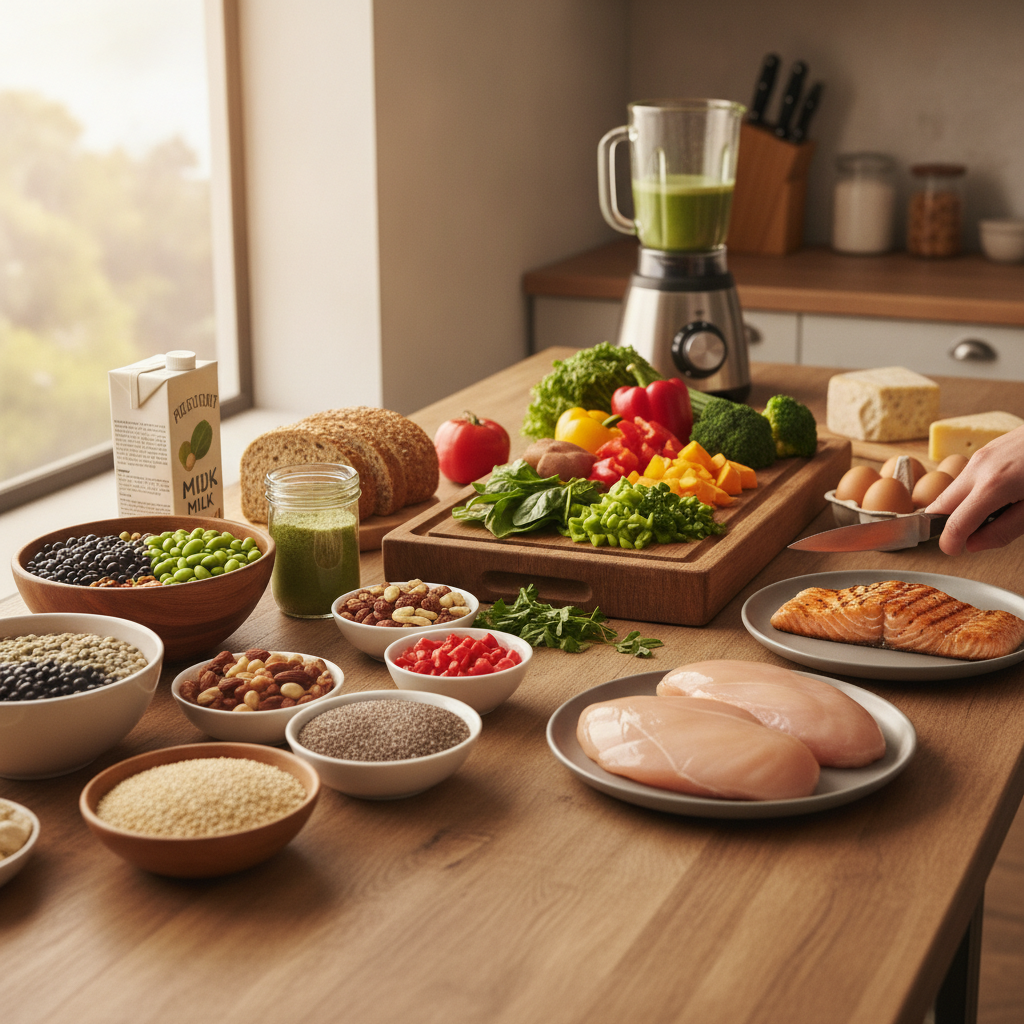
Protein is rarely one thing. The word itself suggests simplicity — a single macronutrient with a single job — but the biochemical reality is far more layered. Different protein sources carry different combinations of amino acids, and no single food delivers every essential amino acid in the proportions the human body actually uses. Rotating protein sources across both animal and plant categories throughout the week isn't a fringe nutritional strategy. It's one of the most practical and overlooked ways to close the gaps that even well-intentioned, high-protein diets tend to leave open.
Why Amino Acid Profiles Are Not Created Equal
Amino acids are the structural units that proteins break down into during digestion, and the body requires twenty of them to function — nine of which it cannot produce on its own. These nine essential amino acids must come from food, and their presence varies significantly across sources. Animal proteins like eggs, salmon, and Greek yogurt tend to offer all nine in ratios that closely match human tissue needs. Many plant proteins, by contrast, are lower in one or more essential amino acids. Lentils, for example, are rich in lysine but relatively low in methionine. Quinoa is a notable exception, offering a complete amino acid profile — but even quinoa doesn't replicate what animal sources provide in terms of leucine density, a factor closely linked to muscle protein synthesis.
The Limits of Single-Source Protein Reliance
Relying on one dominant protein source — even a high-quality one — creates a pattern of repetitive amino acid delivery that leaves certain repair and synthesis processes chronically underfueled. Someone eating chicken breast as their primary protein every day may hit their gram targets while still falling short on glycine, an amino acid abundant in collagen-rich foods like bone broth and skin-on poultry. Someone leaning heavily on tofu may miss out on creatine precursors found naturally in red meat. The body adapts around these shortfalls to a degree, but over weeks and months, the cumulative effect shows up as slower recovery, reduced tissue repair, or simply a plateau in the results that diet and training are meant to support.
How Rotation Naturally Completes the Amino Acid Picture
Structuring a week around varied protein sources — alternating between eggs, legumes, fish, dairy, red meat, poultry, and seeds — allows each source's amino acid strengths to offset the gaps left by others. Black beans and rice, eaten across different meals during the week alongside animal-based proteins, collectively provide all essential amino acids without requiring precise pairing at every sitting. Brands like Kite Hill and Forager Project have made it easier than ever to incorporate high-quality plant-based proteins without sacrificing variety. The complementary pattern doesn't need to be rigid or calculated. It emerges naturally when the week's protein sources genuinely vary rather than cycling through the same two or three options on rotation.
The Role of Leucine, Glycine, and Methionine in Recovery
Three amino acids deserve particular attention when thinking about rotation strategy. Leucine, found in highest concentrations in whey protein, beef, and eggs, acts as a primary trigger for muscle protein synthesis. Glycine, concentrated in collagen peptides, bone broth, and slow-cooked meats, supports connective tissue, skin integrity, and sleep quality through its role in the nervous system. Methionine, found abundantly in eggs and fish, is essential for methylation — a cellular process involved in gene expression, detoxification, and neurotransmitter production. Rotating toward foods rich in each of these across a week ensures none of these critical functions are quietly underpowered.
What a Practical Rotation Looks Like Across Seven Days
Building a rotation doesn't require precision tracking or sophisticated meal planning. If you're starting from a mostly animal-based or mostly plant-based routine, the simplest shift is adding two or three deliberate contrasts each week. A breakfast of eggs on Monday might give way to a hemp seed and Greek yogurt parfait on Wednesday and a lentil-based dish on Friday. Dinner might alternate between wild-caught salmon, grass-fed beef, tempeh stir-fry, and slow-cooked chicken thighs across the week. Apps like Cronometer can help identify which amino acids appear consistently low, offering a useful starting reference point without requiring obsessive logging. The goal is breadth, not perfection.
Where Protein Nutrition Research Is Heading
Nutritional science is paying increasing attention to protein quality over protein quantity — a shift that moves the conversation well beyond gram counts toward the functional sufficiency of amino acid delivery across time. Research interest in the timing, source diversity, and digestibility of proteins continues to grow, with particular focus on how amino acid availability intersects with aging, metabolic health, and inflammation. As plant-forward eating patterns become more widespread, the question of how to ensure complete amino acid coverage without defaulting to animal sources will only become more relevant. Rotation, as a strategy, sits at the center of that question — practical, flexible, and grounded in how the body actually uses the proteins it receives.
Protein diversity is one of the quieter levers of nutritional health — less discussed than calorie balance or carbohydrate timing, but no less significant in its long-term effects. A weekly rotation across animal and plant sources works not by overwhelming the body with variety for its own sake, but by ensuring that each amino acid the body needs arrives reliably and in sufficient form. It's a straightforward practice with compounding returns, and one of the more accessible upgrades available to anyone already paying attention to what they eat.