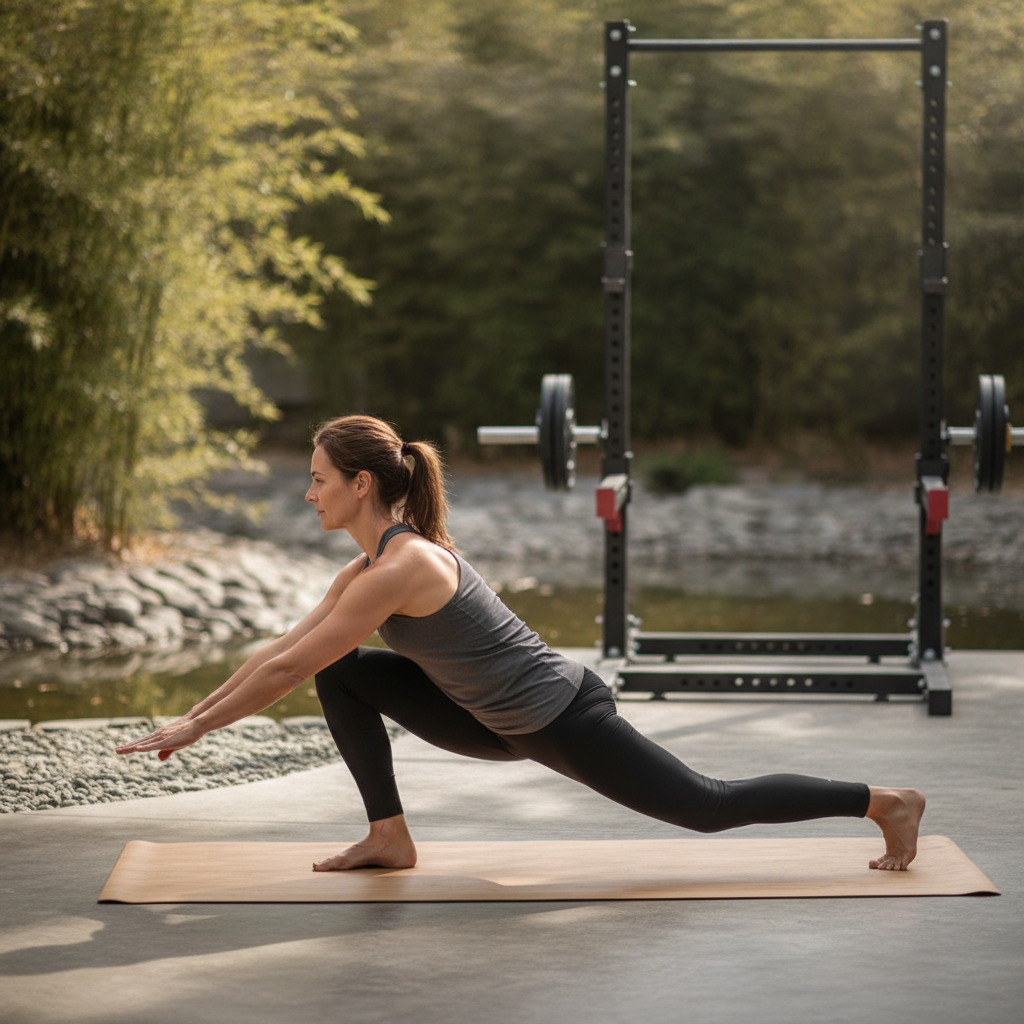
Strength training builds muscle, improves bone density, and boosts metabolism — but it doesn't guarantee that your body moves well. That's a distinction worth taking seriously, especially if you train consistently and want to keep doing so for decades. A dedicated mobility session once a week, separate from your lifting or cardio work, addresses the gaps that even a solid training program tends to leave behind.
The Difference Between Flexibility and Mobility
These two terms get used interchangeably, but they describe different things. Flexibility is passive — it's how far a muscle can be stretched when external force is applied. Mobility is active — it's how much usable range of motion you have under your own muscular control. You can be flexible without being mobile, which is why someone can stretch deeply in a yoga class but still struggle to hold a clean squat position. Mobility work trains your nervous system alongside your tissues, teaching your body to own the range it moves through rather than just borrow it temporarily.
Why Strength Training Leaves Gaps
The Pattern Repetition Problem
Strength training is inherently repetitive. You push, you pull, you hinge, you squat — and over time, the muscles and connective tissue involved in those patterns adapt to work within a specific range. That's efficient, but it also means your joints gradually lose access to positions they don't visit regularly. The shoulder that never goes overhead in full external rotation, the hip that never moves into deep flexion under load — these become the vulnerabilities that surface as stiffness, compensations, or eventual injury.
The Tension-Recovery Mismatch
Strength work creates tension. That's the point. But repeated tension without deliberate decompression shortens tissues over time and reduces the space available within joints. A weekly session focused entirely on mobility gives your body a chance to restore length, rehydrate connective tissue, and recalibrate joint position sense — none of which happens adequately during a cool-down stretch or a rest day on the couch.
What a Mobility Session Actually Looks Like
This isn't a yoga class, and it isn't static stretching either. A well-designed mobility session moves through controlled articular rotations, end-range strengthening, and positional breathing work — all aimed at expanding the edges of what your joints can do actively. Apps like GOWOD and Pliability offer structured routines built specifically around this kind of work, with sessions that range from twenty minutes to an hour depending on your focus area. Both platforms let you target by body region or athletic goal, which makes it easy to build something that complements your existing training rather than duplicating it.
Timing It Within Your Week
Where you place your mobility session matters almost as much as doing it at all. Scheduling it the day after your heaviest training day tends to work well — your body is in a recovery state, tissue temperature is manageable, and the decompression effect feels most pronounced when you're coming off significant muscular demand. Alternatively, some people find that a standalone Sunday session functions as both physical preparation and mental reset for the week ahead. The goal is consistency over perfection, so the best placement is whichever one you'll actually stick with across a full season of training.
The Seasonal Case for Prioritizing Mobility
Colder months are when mobility work tends to fall away first — and when it matters most. Tissues tighten in lower temperatures, movement patterns become guarded, and people spend more time sitting indoors. If you train through winter, which most dedicated athletes and fitness enthusiasts do, adding a weekly mobility session during these months builds a buffer against the stiffness and restricted movement that cold weather amplifies. Platforms like the Romwod app (now rebranded under a broader wellness umbrella) offer seasonally adjusted programming that accounts for this shift, with longer holds and more emphasis on hip and thoracic work during colder periods.
Building Resilience Over Years, Not Weeks
The real payoff from mobility training isn't felt in month one. It accumulates. People who maintain consistent joint health practices through their thirties and forties tend to recover from training stress more quickly, experience fewer overuse complaints, and retain athletic capacity longer than those who relied on strength work alone. The body rewards this kind of sustained attention to range and tissue quality with something that no single workout can offer: the ability to keep moving well as the years stack up. Think of your weekly mobility session less as supplemental maintenance and more as a long-term investment in the quality of every other session you do.