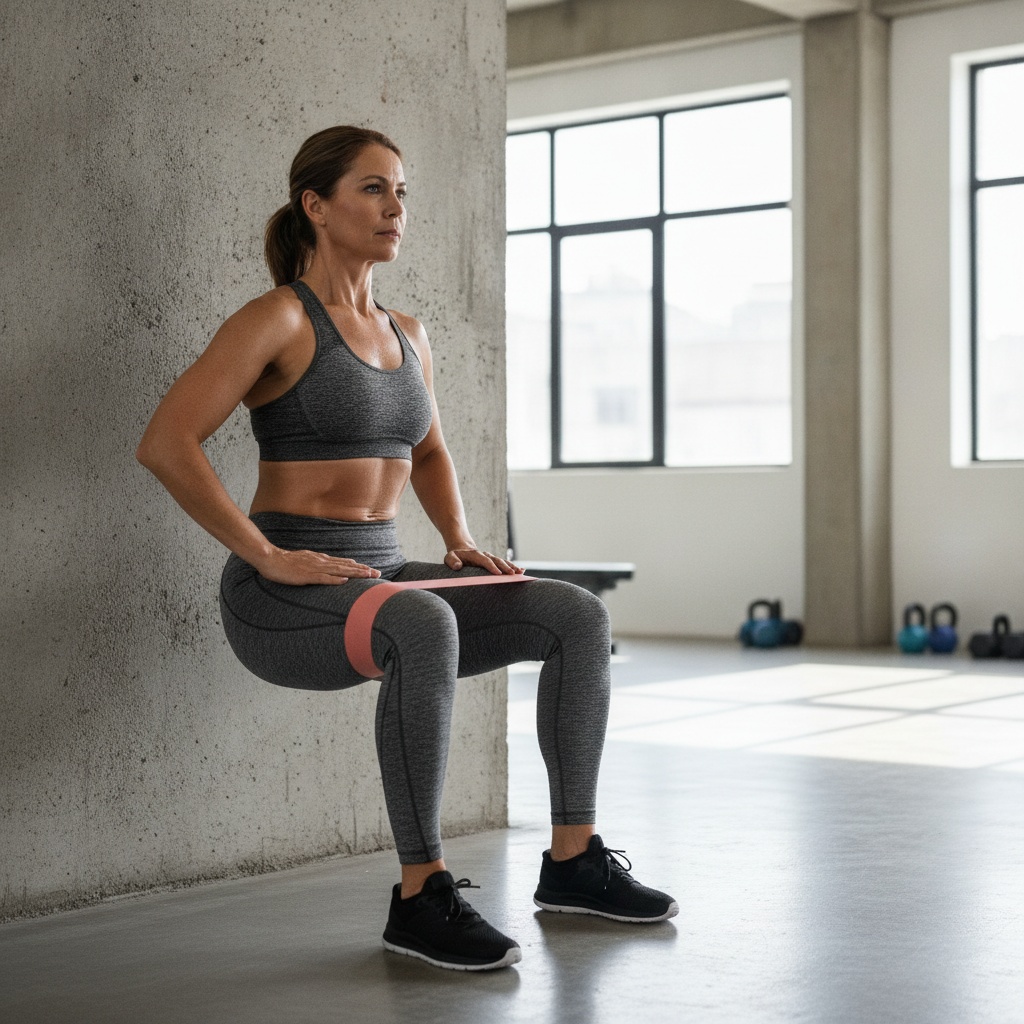
Isometric exercise — the practice of contracting a muscle without changing its length — has long been a staple in physical rehabilitation settings, but its value extends well beyond recovery contexts. Strength athletes and everyday lifters alike are discovering that strategic isometric holds can meaningfully improve joint stability without piling additional volume onto an already demanding program. The mechanism is straightforward, and the benefits are well-supported: sustained static contractions build tendon resilience, reinforce motor control at vulnerable joint angles, and do so with relatively low systemic fatigue.
Why Joint Stability Deserves More Attention
Joint stability is often treated as a side effect of getting stronger, rather than something to train directly. That assumption works reasonably well when movement patterns are sound and progression is gradual — but most training programs eventually expose weak links at the joints rather than in the muscles themselves. The knee under load during a deep squat, the shoulder at end-range during a press, the hip in single-leg stance — these are positions where muscular strength alone doesn't guarantee control. Developing stability at these specific angles requires deliberate, position-specific work that dynamic lifts don't always provide.
What Isometric Contractions Actually Do to the Body
When a muscle holds a contraction without moving, several adaptations occur that differ from those produced by dynamic repetitions. Tendons, which respond more slowly to training stimulus than muscle tissue, are placed under sustained tension during isometric holds — a condition that encourages collagen remodeling and increases tendon stiffness over time. Stiffer tendons transfer force more efficiently and are less vulnerable to strain injuries. Beyond structural changes, isometric training sharpens the nervous system's ability to recruit motor units at specific joint angles, which is particularly useful for positions where dynamic exercises tend to rush through the range.
The Volume Problem Isometrics Help Solve
One of the persistent challenges in well-designed strength programming is balancing stimulus with recovery. Adding extra sets to address a weak point — say, hip external rotation stability or elbow joint integrity during pressing — increases total training volume, which compounds fatigue and can interfere with recovery from primary lifts. Isometric holds inserted at key joint angles during existing exercises, or performed as brief standalone additions, generate meaningful adaptive stress with a fraction of the systemic load. Practitioners using programs influenced by systems like Westside Barbell or the principles of coaches such as Dan John have noted that tacking short isometric pauses onto compound movements rarely affects session recovery the way additional working sets would.
Practical Positions That Deliver the Highest Return
Not every joint angle benefits equally from isometric work, and targeting positions that are biomechanically demanding tends to produce the clearest results. The bottom of a squat held for several seconds trains the hip capsule and knee joint under compressive load in a range where dynamic reps often lack sufficient time under tension. A mid-range push-up hold challenges the shoulder girdle and rotator cuff in a position that pressing variations tend to move through quickly. For the posterior chain, a Romanian deadlift pause mid-shin places sustained demand on the hamstring-to-ischium attachment — an area notorious for chronic strain in runners and field athletes. Tools like resistance bands from brands such as Perform Better or TRX suspension systems make it easier to add controlled isometric loading without requiring heavy barbell setups.
Timing and Duration Within a Session
The placement of isometric holds within a training session affects both their effectiveness and their impact on overall fatigue. Inserting them at the end of a warm-up set — holding the final rep of an activation drill for five to ten seconds — prepares the joint without pre-fatiguing the working muscles. Alternatively, pausing at the most demanding position of a working set for two to four seconds increases time under tension without adding extra reps. Standalone isometric blocks of fifteen to thirty seconds, performed between heavier sets as active rest, can address stability deficits without extending workout duration. The key principle is that duration matters more than intensity; a moderate contraction held consistently is more productive for joint adaptation than a maximal squeeze held briefly.
Adding Isometrics Without Disrupting What Already Works
If you're looking to incorporate isometric holds without overhauling your existing program, the simplest entry point is pausing at the mechanically challenging moment of movements you already perform. In a lunge, that means stopping for three to four seconds at the bottom before driving back up. In a pull-up, it means holding a slight above-bar position for a beat before lowering. Apps like Tempo or platforms that support video-based coaching, such as those offered through Renaissance Periodization, can help you identify which joint angles in your current lifts lack positional control. Start with two or three holds per session, keep durations under thirty seconds, and treat them as targeted maintenance rather than a separate training block entirely.
Isometric holds occupy a unique position in strength training: they demand relatively little in terms of recovery resources while delivering targeted adaptations that dynamic work often misses. By building tendon resilience, sharpening motor control at vulnerable joint angles, and reinforcing stability in positions that conventional programming rushes past, they address the underlying causes of many common overuse injuries before those injuries develop. For anyone who has hit a plateau caused by joint discomfort rather than muscular weakness, or who simply wants to make their training more durable over time, adding strategic holds to an existing routine is one of the most efficient adjustments available.