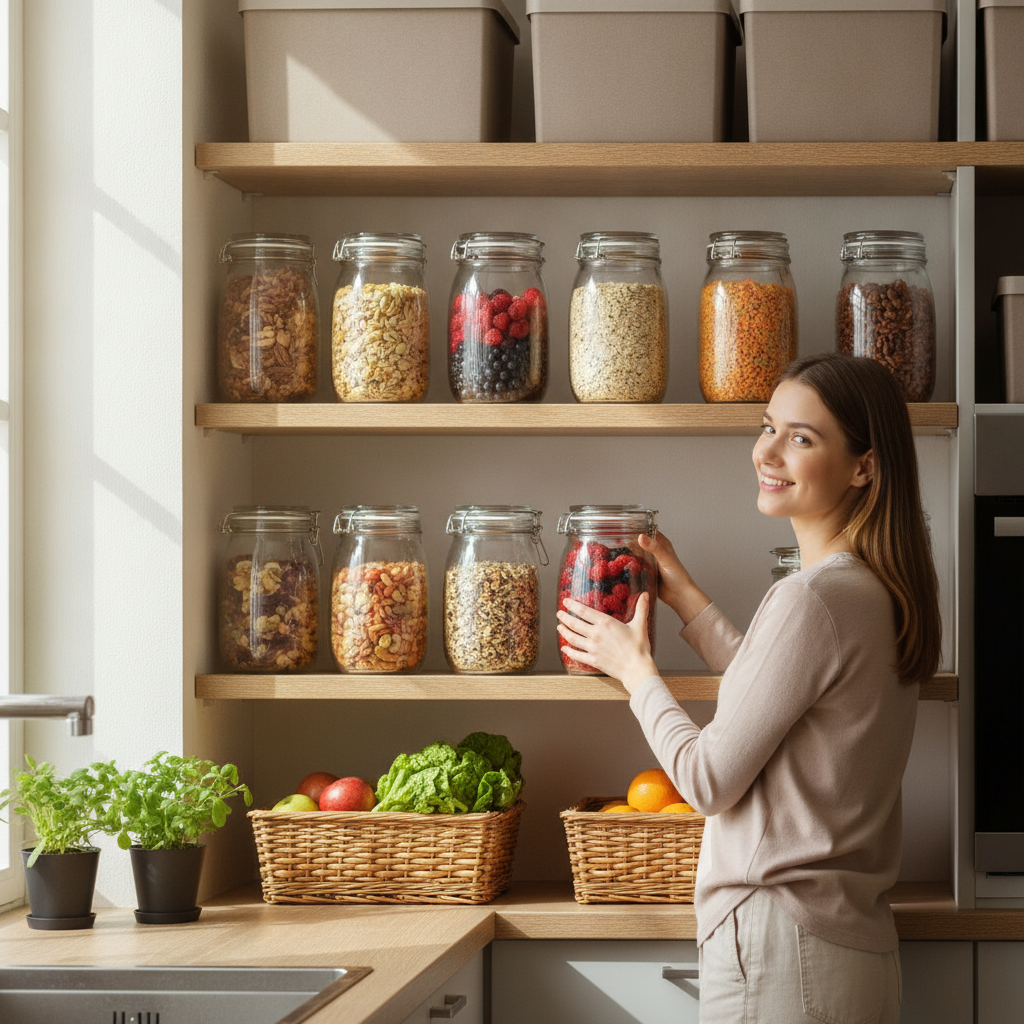
Most people assume that eating better is primarily a matter of discipline — that the gap between intention and behavior comes down to motivation or mental toughness. But the environment you move through every day does far more work than willpower ever could. When your kitchen is organized so that the first things you see and reach for are whole foods, your default choices shift quietly and automatically, without any internal struggle required.
This isn't about following a restrictive plan or overhauling your diet overnight. It's about engineering your surroundings so that the easier choice also happens to be the better one. Small structural changes to your kitchen layout can produce real, lasting shifts in what you actually eat — not just what you intend to eat.
Clear the Counter and Make Fruit the Default Reach
Counter space is prime real estate in any kitchen, and whatever lives there gets eaten first. Placing a simple fruit bowl — ceramic works well, and brands like Le Creuset or even basic IKEA options hold up beautifully — directly on your counter puts whole food within arm's reach the moment you walk in. Bananas, apples, oranges, and pears require zero preparation, which makes them genuinely competitive with a bag of chips. When the friction of eating well disappears, the behavior follows naturally.
Move Whole Grains and Legumes to the Front Shelf
Your pantry's eye-level shelf is where decisions happen on autopilot. Canned lentils, dried chickpeas, brown rice, rolled oats, and whole grain pasta placed directly at eye level become the ingredients your brain registers as available. Processed snacks pushed to higher or lower shelves don't disappear — they just stop being the default. Reorganizing one shelf takes under ten minutes, but it quietly restructures dozens of small decisions you make throughout the week without ever consciously thinking about them.
Store Processed Snacks in Opaque Containers on High Shelves
Visibility is a trigger. Open bags of crackers, transparent containers of cookies, and brightly packaged snacks at eye level activate wanting even when you weren't thinking about food. Moving these items to high shelves — and decanting them into plain, opaque containers — removes the visual cue almost entirely. This isn't about eliminating those foods from your life. It's about making them a considered choice rather than a reflexive one. The extra few seconds it takes to retrieve something from a high shelf is often enough time for the impulse to pass.
Prep Vegetables in Advance and Keep Them at Fridge Eye Level
The main reason vegetables get overlooked isn't dislike — it's inconvenience. A head of broccoli requires washing, cutting, and cooking. Washed and chopped broccoli florets sitting in a glass container at the center of your fridge shelf require nothing. OXO makes excellent clear containers that keep prepped produce visible and fresh, and spending thirty minutes on a Sunday afternoon prepping vegetables for the week changes what gets grabbed during busy weekday evenings. Make the healthy option the lazy option, and the math changes entirely.
Place Healthy Proteins at the Front of Your Fridge Drawer
Hard-boiled eggs, sliced turkey, hummus, Greek yogurt, and string cheese placed front and center in the fridge drawer make protein-rich snacking the path of least resistance. When these are buried behind leftovers or pushed to the back, they get forgotten. The front of any storage area is where choices actually get made, and that positioning determines behavior more reliably than good intentions do. Spend a few minutes each week restocking and rotating so that whole food options are always the first things your hand finds.
Create a Dedicated Whole Food Snack Zone
Designate one basket, bin, or shelf section — in the pantry or on the counter — as your snack zone, and stock it exclusively with whole food options. Raw nuts, dried fruit with no added sugar, rice cakes, nut butter packets, and dark chocolate with a high cocoa percentage all work well. Brands like Bob's Red Mill, Justin's, and Hu Chocolate make this easy without compromising quality. When someone in the household wants a snack, this zone is the obvious first stop. Over time, reaching into that space becomes habitual rather than deliberate.
Use Smaller Serving Vessels for Processed Foods
If processed snacks remain in your home — and for most households, they will — decanting them into smaller bowls or portioned containers before eating reduces how much gets consumed in a single sitting. This isn't about strict rationing. It's about removing the automatic continuation that comes from eating directly from a large bag or box. Portion into a small bowl, put the container away, and sit down with what you have. The act of getting up to refill creates a natural pause that often ends the snacking session.
Label Shelves to Lock In the New System
Reorganized kitchens tend to drift back to their original chaos within a few weeks unless something holds the structure in place. Simple labels — handwritten masking tape works fine, or printed labels from a Dymo machine — assigned to specific shelves and zones help other household members maintain the system and remind you of the intention behind the arrangement. "Snacks" on one clearly defined shelf and "Grains" on another turns a one-time reorganization into a durable infrastructure that runs in the background.
Changing what you eat rarely requires enormous willpower — it more often requires a kitchen that's set up to support better choices without demanding that you make a conscious decision every single time. Spend an afternoon rearranging your shelves, stocking your fridge strategically, and tucking processed foods out of immediate view. That one-time effort quietly does the work of discipline for weeks and months to come. Start with just one shelf today, and let the environment carry the rest.
