Most people find a fermented food they like and stick with it. A daily spoonful of the same sauerkraut, the same brand of kefir every morning, the same kombucha flavor week after week. It feels like a healthy habit — and it is — but it may be leaving a lot of gut health potential on the table.
Your gut microbiome thrives on variety. The community of bacteria, fungi, and other microorganisms living in your digestive system responds differently to different fermented foods, and rotating what you eat across the seasons is one of the more practical ways to keep that community rich and adaptable throughout the year.
How Does Seasonal Rotation Actually Affect Gut Diversity?
Fermented foods aren't all doing the same job. Kimchi, miso, yogurt, kefir, and tempeh each carry different strains of beneficial microorganisms, and those strains interact with your gut in distinct ways. When you eat the same fermented food repeatedly, you're essentially strengthening a narrow band of microbial activity while leaving other pathways underserved. Seasonal rotation introduces new microbial inputs at regular intervals, which encourages a broader ecosystem to develop over time.
This matters because microbial diversity is consistently linked to better digestion, more resilient immunity, and a lower likelihood of chronic inflammation. A gut microbiome that only knows one type of fermented food input is a bit like a garden planted with a single crop — productive in a narrow way, but vulnerable.
What Should You Eat in Spring and Summer?
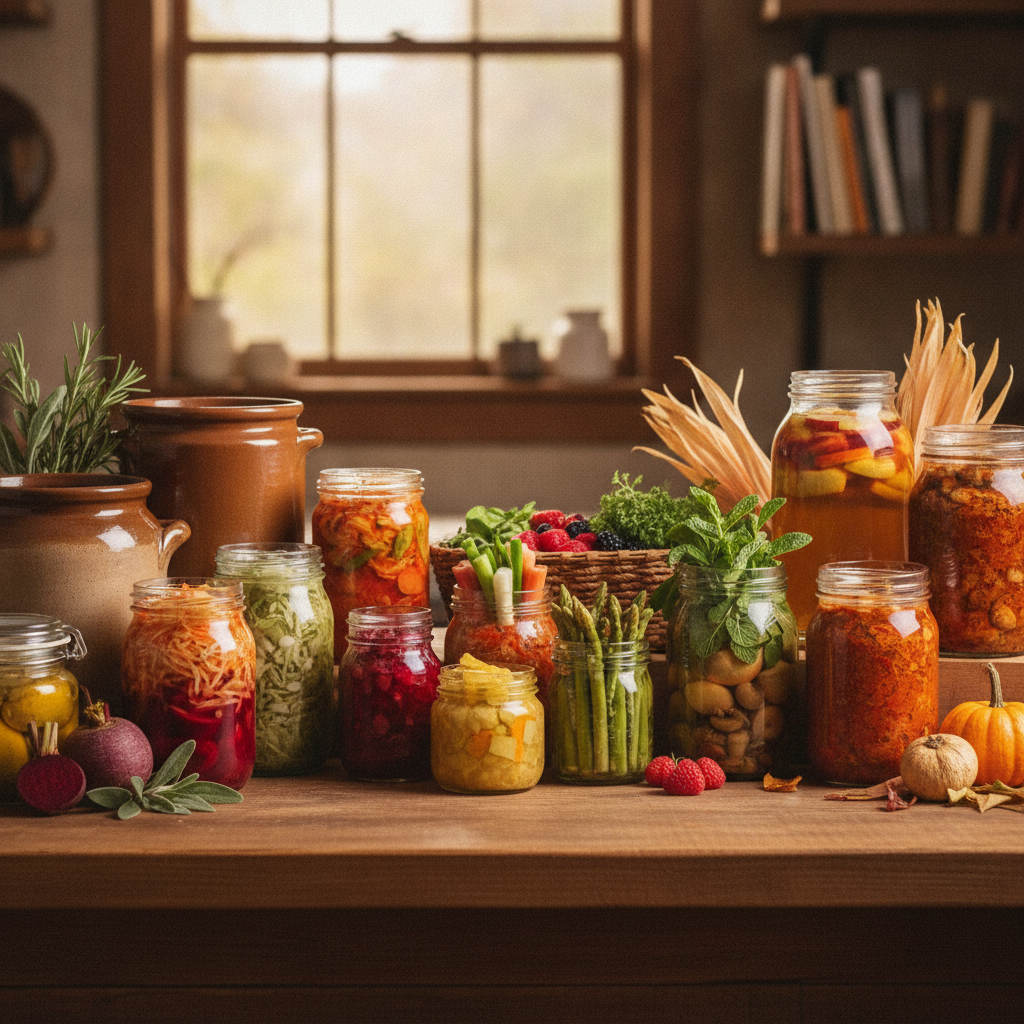
Warmer months are ideal for lighter, more refreshing fermented options. Water kefir and kombucha are naturally well-suited to summer — they're hydrating, easy to sip throughout the day, and introduce a range of yeast and bacterial strains that differ from dairy-based ferments. Fresh vegetable ferments like quick-pickled cucumbers or radishes also work beautifully during this season, especially when you can source produce locally.
Spring is also a good moment to explore fermented dairy more intentionally. If you've been relying on standard yogurt, consider trying a traditional skyr or a plain kefir from a small-batch producer — both introduce different Lactobacillus strains and have a slightly different fermentation profile. Apps like Cronometer can help you track which fermented foods you're rotating in and monitor how your overall nutrition shifts across the season.
Which Fermented Foods Belong in Autumn and Winter?
Cooler seasons naturally invite heartier, more complex ferments. Miso — particularly aged varieties — becomes a genuinely useful addition to soups, dressings, and marinades from autumn onward. Its longer fermentation process produces a different bacterial profile than quick ferments, and the umami depth makes it easy to incorporate into cooked meals without it feeling like a supplement. Tempeh is another cold-weather staple worth rotating in; it's a whole soybean ferment rich in protein and carries its own distinct microbial signature.
Kimchi tends to peak in autumn as well, both culturally and practically. Traditional preparations often happen in late fall, and the fermentation process produces particularly high bacterial counts after a few weeks of curing. Natto — a strongly flavored fermented soybean product common in Japanese cuisine — is worth trying if you haven't, even just occasionally. It introduces Bacillus subtilis strains that aren't present in most other fermented foods, expanding your microbial inputs meaningfully.
How Can You Track What You're Rotating?
Keeping a loose log of what you're eating is more useful than it might sound. You don't need a detailed nutrition journal — a simple note in an app like Notion or even a paper notebook listing which fermented foods you've eaten that week is enough to spot patterns. If you notice you've eaten the same two or three fermented foods for three months straight, that's a clear signal to introduce something new.
Zoe, the personalized nutrition platform, offers gut microbiome testing alongside dietary tracking and can give you a clearer picture of how your current fermented food habits are — or aren't — supporting diversity. It's not essential, but if you're genuinely curious about what's happening at a microbial level, it provides concrete feedback rather than guesswork. Many people find that seeing real data motivates more intentional rotation.
What Makes Homemade Ferments Worth Considering?
Commercially produced fermented foods are convenient and reliable, but homemade ferments often carry higher bacterial counts simply because they haven't been pasteurized or stabilized for shelf life. Making your own sauerkraut, for example, requires only cabbage, salt, and time — and the result is typically more microbially active than most store-bought versions. The same applies to simple vegetable ferments and even yogurt made with a good starter culture.
Beginning with one homemade ferment per season is a manageable way to expand variety without overwhelming your routine. You get to control the ingredients, the fermentation time, and ultimately the flavor — which makes it easier to actually eat the thing consistently. There's also something grounding about the process itself, which tends to build a more mindful relationship with what you're putting into your body.
The broader principle here is simple: your gut benefits most when it's regularly encountering new inputs. Seasonal rotation gives you a natural framework for doing exactly that — spring and summer for lighter, fresher ferments, autumn and winter for deeper, more complex ones. Over the course of a year, that rhythm quietly builds the kind of microbial diversity that supports long-term digestive health, stronger immunity, and better overall resilience. Starting with just one seasonal swap is enough to set that process in motion.