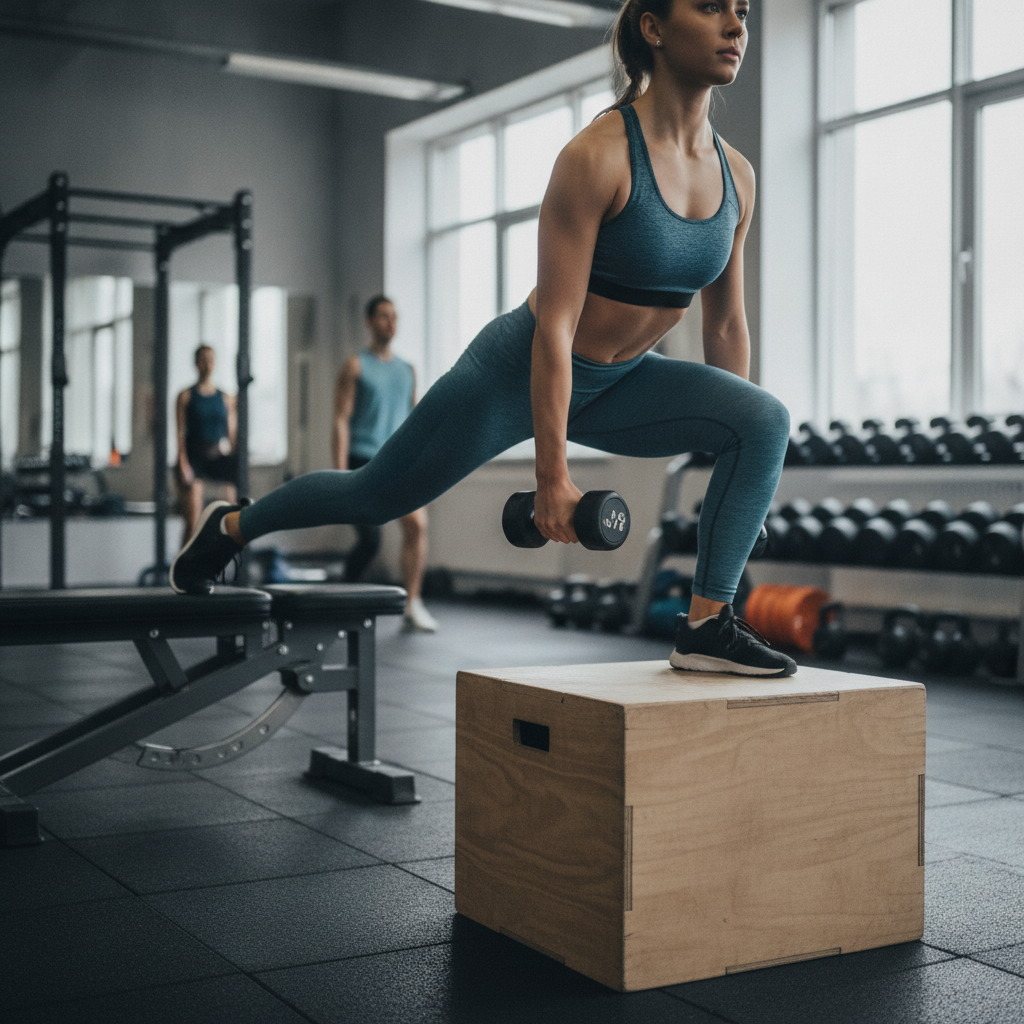
Most people who train regularly assume that bilateral exercises like squats and deadlifts are building both legs equally. They rarely are. Subtle strength differences between the left and right sides of the body are extremely common, and when those differences go unaddressed over months or years, they tend to express themselves not as workout plateaus but as injuries — in the knees, hips, and lower back especially. Unilateral leg training, which isolates one leg at a time, is one of the most effective tools available for catching these imbalances early.
The Hidden Reality of Side-to-Side Strength Gaps
Bilateral movements allow the stronger leg to quietly compensate for the weaker one. The nervous system is efficient, and during a heavy squat or leg press, it distributes effort in ways that favor the dominant side. Over time, this compensation pattern deepens. The stronger leg becomes disproportionately developed, while the weaker side stagnates. Most people don't notice this until a physical therapist flags it after a knee injury or a persistent ache that won't resolve. The imbalance was there long before the pain.
How Unilateral Movements Expose What Bilateral Work Hides
Exercises like the Bulgarian split squat, single-leg Romanian deadlift, and step-up require each leg to do its own work without assistance from its partner. There's nowhere to hide. When an athlete performs a Bulgarian split squat and notices the left leg shaking significantly more than the right, that difference is diagnostic information. Tools like the Rogue adjustable bench or TRX suspension trainer make these movements accessible across home gyms and commercial settings alike, requiring minimal equipment while delivering significant feedback about functional asymmetry.
The Injury Prevention Logic Behind Single-Leg Training
Strength imbalances create uneven mechanical loading on joints, tendons, and connective tissue. When one hip consistently absorbs more force during running or jumping, the structures surrounding it accumulate stress at a faster rate. Unilateral training doesn't just correct the strength gap — it also trains the stabilizing muscles of the hip, ankle, and knee independently, which improves neuromuscular coordination on each side. This kind of stability work is precisely what reduces the risk of ACL sprains, IT band syndrome, and the category of overuse injuries that sideline recreational and competitive athletes alike.
Programming Unilateral Exercises Without Overcomplicating the Week
The most practical approach is to include one or two unilateral lower-body movements per training session rather than restructuring an entire program. A well-designed lower body session might open with conventional back squats, then move to Bulgarian split squats for three working sets per leg, finishing with single-leg press or reverse lunges. Apps like TrainHeroic allow athletes to log side-by-side performance data, making it easy to track whether a weaker leg is closing the gap over several weeks. Progress doesn't need to be rapid — consistent exposure to unilateral load is what drives the adaptation.
What Research and Physical Therapy Practice Both Confirm
Physical therapists working in sports rehabilitation consistently use single-leg assessments — single-leg squats, hop tests, and step-down tests — to determine readiness for return-to-sport after injury. The logic flows in both directions: if a side-to-side strength deficit indicates that someone isn't ready to play, then training to eliminate that deficit before injury occurs is a sensible preventive strategy. Strength and conditioning coaches at programs like Exos and ALTIS have long incorporated unilateral leg work into athletic preparation for exactly this reason, treating it not as an accessory exercise but as a structural component of balanced development.
Building the Habit Into Your Weekly Training
If you're currently squatting and deadlifting but skipping single-leg work, the adjustment doesn't require a dramatic overhaul. Start by adding one unilateral exercise to each lower-body day and track both sides independently. Note whether one side requires a longer rest period, shakes under load, or hits a depth significantly shallower than the other. These observations matter more than the weight on the bar. Over several weeks, you'll likely find that the weaker side improves faster than the stronger one — the body responds quickly to new stimulus. Once parity is established, both legs tend to develop more evenly through bilateral work as well, since compensation patterns are no longer driving the adaptation.
Strength imbalances between the legs are not unusual, but they are correctable — and far easier to address through deliberate training than through rehabilitation after an injury has already occurred. Unilateral leg exercises provide clear, real-time feedback about how each side of the body is functioning, expose the compensation patterns that bilateral movements mask, and build the joint stability that protects against the cumulative wear that eventually becomes a structural problem. Making them a consistent part of a weekly routine is one of the most practical investments a person can make in long-term physical health.