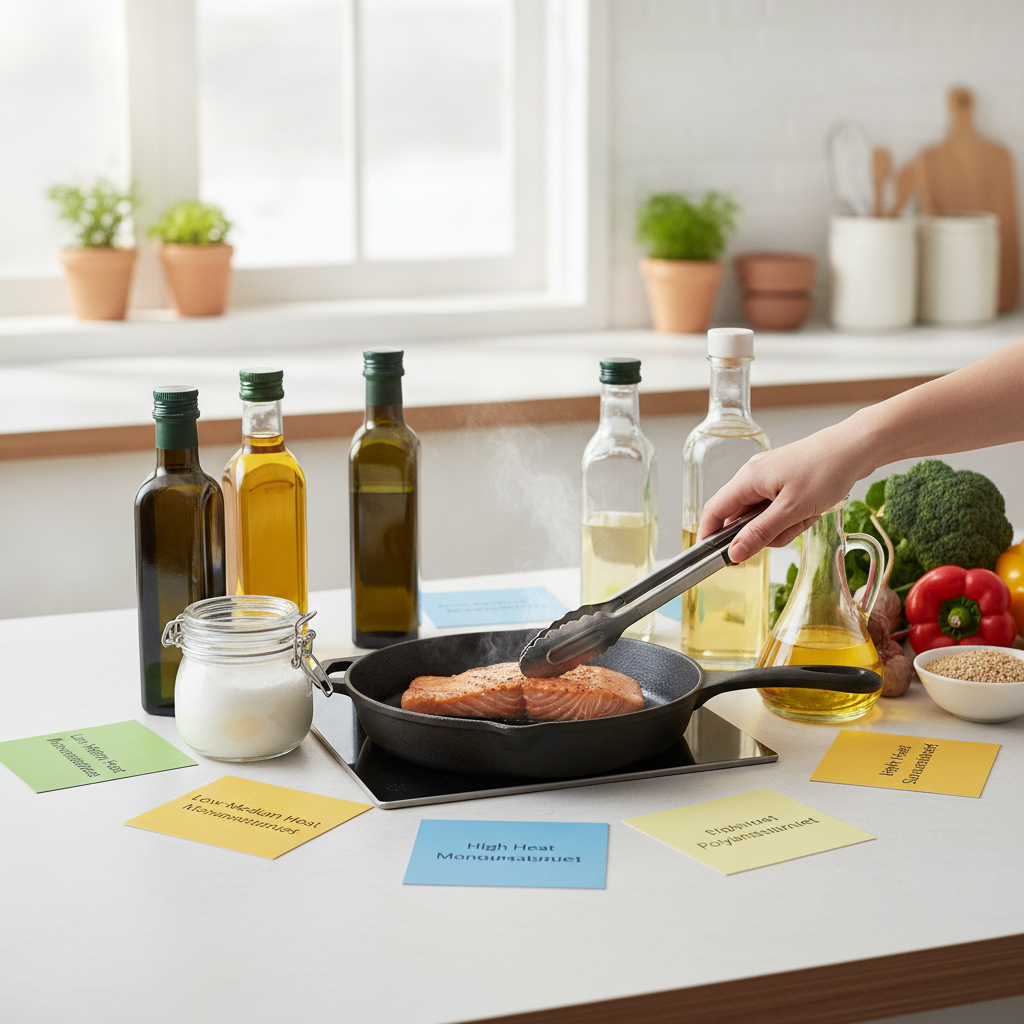
Every cooking oil behaves differently under heat, and using the wrong one consistently can introduce oxidative byproducts into otherwise healthy meals. The fatty acid composition of an oil determines how stable it is when exposed to high temperatures, ambient light, and oxygen — three forces present in nearly every kitchen. A rotation strategy, matched to how each oil is actually being used, is one of the more practical and underappreciated tools for reducing low-grade oxidative stress over time.
Why Smoke Points Are Only Half the Story
The smoke point of an oil is the temperature at which it visibly begins to break down, but oxidation often starts well before that threshold. Oils rich in polyunsaturated fatty acids — like standard sunflower or generic vegetable blends — are structurally more vulnerable to heat because their chemical bonds are less stable. When these oils are used repeatedly for high-heat cooking, they generate harmful compounds even when they appear fine in the pan. Avocado oil and refined coconut oil are among the more stable options for high-heat applications, not simply because of their smoke points, but because of their saturated and monounsaturated fat ratios.
The Role of Fatty Acid Saturation in Oil Stability
Saturated fats, despite their complicated reputation, are chemically inert in ways that make them ideal for high-temperature cooking. Monounsaturated fats — like those found in extra virgin olive oil and high-oleic safflower oil — are moderately stable and perform well at medium heat. Polyunsaturated fats, abundant in flaxseed oil and most conventional vegetable oils, are far less stable and oxidize readily even at room temperature. Understanding this spectrum helps explain why a single go-to oil for all cooking tasks creates an unnecessary cumulative burden, particularly when high-heat methods like searing and stir-frying are regular habits.
Matching Specific Oils to Specific Cooking Methods
A practical rotation starts with assigning oils to tasks rather than using one bottle for everything. For high-heat searing, roasting above 400°F, or deep frying, refined avocado oil from brands like Chosen Foods performs reliably without generating excessive oxidation products. For medium-heat sautéing and everyday stovetop cooking, extra virgin olive oil — particularly first cold-press varieties from California Olive Ranch — retains its beneficial polyphenols while staying within a safe temperature range. For raw applications like salad dressings and finishing drizzles, cold-pressed flaxseed or walnut oils provide omega-3 fatty acids without exposure to destabilizing heat.
Cold-Pressed and Unrefined Oils Deserve Separate Treatment
Unrefined oils carry the most nutritional complexity — polyphenols, antioxidants, and flavor compounds that processing strips away. This is also what makes them the most heat-sensitive. Extra virgin olive oil, cold-pressed sesame oil, and raw hemp seed oil are best used where heat is either absent or minimal. Toasted sesame oil, popular in brands like Kadoya, is a finishing oil meant to be added after cooking rather than used as the cooking medium itself. Treating these oils as condiments rather than cooking fats preserves their beneficial compounds and prevents the oxidation that would otherwise occur from sustained heat exposure.
How Storage Habits Extend or Undermine Oil Quality
Even the best rotation strategy loses effectiveness if oils are stored poorly. Light and oxygen are the two primary drivers of rancidity in unsaturated oils, which means dark glass bottles, sealed caps, and cool pantry conditions matter considerably. Polyunsaturated oils like flaxseed oil should be refrigerated and used within a few weeks of opening. Monounsaturated oils like olive oil are more forgiving but still benefit from storage away from stovetop heat and direct sunlight. A simple check — smelling the oil before use — catches rancidity early and prevents the quiet, cumulative oxidative load that comes from cooking with degraded fat.
Building a Simple Rotation You'll Actually Maintain
Keeping three oils on hand covers most cooking scenarios without overwhelming your pantry or your budget. You'll want one high-heat stable oil for roasting and searing, one medium-heat oil for everyday stovetop use, and one cold-use oil for dressings and finishing. Start by auditing what's already in your kitchen — check the type, the storage conditions, and how long each bottle has been open. From there, replacing one oil at a time is far more sustainable than overhauling everything at once. Small, deliberate shifts in which oil gets used for which task accumulate into a genuinely meaningful reduction in oxidative load across hundreds of meals a year.
The connection between everyday cooking habits and long-term cellular health is more direct than most people realize. Matching oils to their appropriate heat application, understanding the basic chemistry of fatty acid stability, and storing each oil properly creates a compounding benefit that shows up quietly in how the body handles inflammation over time. A thoughtful rotation doesn't require expertise — just a bit of awareness and a willingness to treat the oils in your kitchen as tools with specific jobs rather than interchangeable ingredients.
