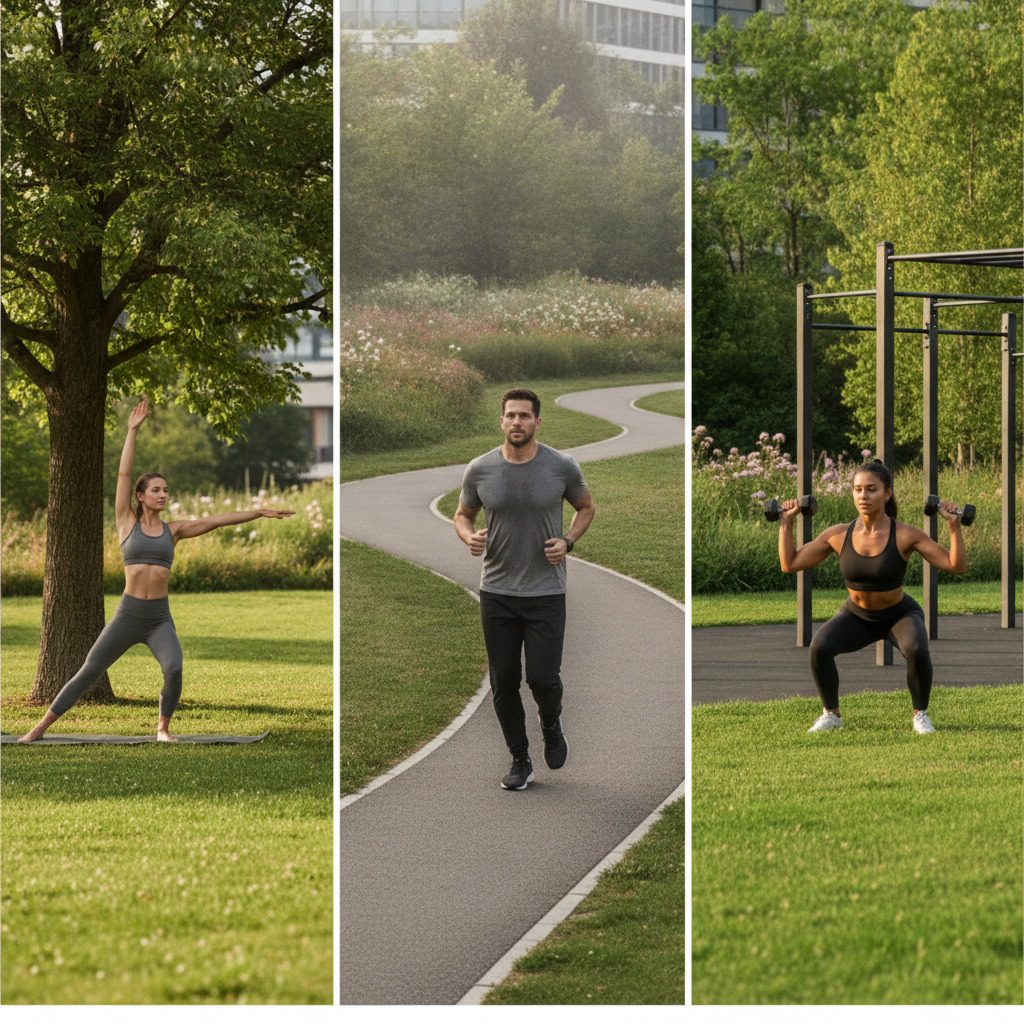
Fitness outcomes are rarely determined by how hard someone trains — they're shaped by how intelligently that training is designed across time. A runner who logs thirty miles a week but never lifts may be cardiovascularly capable yet fragile in ways that only reveal themselves when something breaks down. A devoted weightlifter who avoids aerobic work may build impressive strength while quietly compromising metabolic flexibility. The body is a multi-system organism, and the exercise habits people build should reflect that complexity rather than flatten it into a single, repeated effort.
The Case for Deliberate Modality Diversity
Modality diversity in fitness refers to the intentional distribution of different movement types — typically cardiovascular training, resistance work, and mobility or flexibility practice — across a structured weekly schedule. When the body is exposed to varied physiological demands, it adapts across multiple systems simultaneously: the cardiovascular system becomes more efficient, muscles grow stronger and more resilient, and connective tissue maintains the elasticity needed to support both. Repeatedly performing only one type of exercise, by contrast, creates adaptation in a narrow band while leaving other systems under-stimulated. The result is a kind of fitness imbalance that often goes unnoticed until injury, plateaus, or energy irregularities surface.
How Repetition of a Single Mode Creates Systemic Gaps
The repetitive strain argument is well-understood in sports medicine, but the subtler issue is systemic neglect rather than overuse injury alone. A person who exclusively performs cycling, for example, builds strong cardiovascular output and lower-body endurance — but without resistance training, lean muscle mass tends to decline, bone density development slows, and postural muscles can weaken from prolonged seated positioning. Similarly, someone who focuses entirely on yoga or Pilates builds functional flexibility and core control while potentially missing the metabolic benefits of sustained aerobic effort. Each modality is valuable on its own; the problem is exclusivity, not the practice itself.
The Three Modalities Worth Anchoring Your Week Around
The most effective weekly structures tend to anchor around three core movement categories. The first is cardiovascular or aerobic work — activities like running, rowing, cycling with platforms such as Peloton, or swimming — which builds heart and lung efficiency and supports metabolic health. The second is resistance training, whether through free weights, machines, bodyweight protocols like those popularized by TRX, or functional movement patterns. The third is mobility and recovery-focused movement: stretching, yoga, foam rolling, or dedicated mobility routines offered through apps like ROMWOD or sessions at studios such as YogaWorks. Together, these three address endurance, strength, and structural integrity.
Distributing the Week Without Overcomplicating the Plan
A practical three-modality week doesn't require elaborate periodization or a professional coach. A structure as straightforward as two strength sessions, two aerobic sessions, and one dedicated mobility session covers the essential bases across five active days — leaving room for rest without sacrificing consistency. The key is treating mobility work as a genuine training priority rather than something reserved for injury recovery. Many people who feel chronically stiff or prone to minor strains simply haven't allocated structured recovery movement into their weeks. Adjusting that allocation, even modestly, tends to produce noticeable improvements in how the body feels during other sessions.
Why Balance Produces Better Long-Term Adaptation
The physiological argument for modality variety becomes clearer when viewed across months rather than weeks. Strength training stimulates muscle protein synthesis and improves insulin sensitivity; aerobic work enhances mitochondrial density and cardiac output; mobility training preserves range of motion and reduces the compensatory movement patterns that lead to overuse strain. When all three are present, these adaptations compound on each other rather than competing. A runner who incorporates resistance training tends to become a more efficient runner. A lifter who adds consistent Zone 2 cardio often recovers faster between sets. The systems of the body aren't isolated, and training them in parallel reflects that interconnectedness.
Putting the Structure Into Practice
If your current routine leans heavily on one type of movement, the shift toward three modalities doesn't require starting over — it requires addition and redistribution. Begin by identifying which of the three categories is currently absent or underrepresented in your week. If you're primarily a strength trainer, consider adding one or two thirty-minute aerobic sessions and replacing one rest day with a structured mobility session. If you run regularly, a twice-weekly resistance session using minimal equipment can meaningfully improve your strength balance. Tracking how your body responds — energy levels, sleep quality, joint comfort — gives you the feedback needed to refine the structure over time. The goal isn't to become an athlete in three disciplines but to give your body the varied inputs it needs to function well across all of them.
The opening observation holds across experience levels and age groups: fitness outcomes follow the quality and diversity of the inputs that produce them. A well-constructed week — one that asks the cardiovascular system, the muscular system, and the connective tissues to each do their share — tends to produce a body that's more capable, more resilient, and more adaptable than one trained through repetition alone. That balance, built quietly over weeks and months, is ultimately what sustainable fitness looks like in practice.