There is a particular kind of intelligence embedded in the way traditional cultures have always eaten — not by preference, exactly, but by necessity — and that intelligence turns out to be remarkably aligned with what modern nutritional science keeps rediscovering. Eating with the seasons, sourcing food from nearby land, and building meals around what is freshest at any given time of year is not a trend or a nostalgic affectation. It is, in measurable and meaningful ways, one of the more effective strategies for reducing chronic inflammation in the body while quietly lowering the household grocery bill at the same time.
The Biology Behind Seasonal Eating and Inflammation
Chronic inflammation is the slow, persistent activation of the body's immune response — a condition increasingly linked to heart disease, metabolic disorders, joint deterioration, and accelerated aging. Diet is one of its most significant drivers, and also one of the most addressable. Seasonal produce tends to be harvested at peak ripeness, which means it carries a higher concentration of antioxidants, polyphenols, and phytonutrients — the compounds that directly counteract inflammatory pathways. Tomatoes picked in August from a nearby farm, for instance, contain substantially more lycopene than tomatoes shipped in January from a distant growing region. The body registers that difference, even when the label does not.
Why Distance and Storage Diminish Nutritional Value
The average piece of conventional supermarket produce travels a significant distance before it reaches a shopping cart — crossing state lines, sometimes international borders, spending days in refrigerated transport and warehouse storage. During that time, nutrient degradation begins almost immediately after harvest. Vitamin C, folate, and many of the flavonoids responsible for anti-inflammatory activity are particularly sensitive to time and temperature fluctuation. Farmers markets in cities like Portland, Austin, and Chicago regularly source from farms within a hundred-mile radius, which means the interval between harvest and purchase is often measured in hours rather than weeks. That proximity translates directly into nutritional density.
The Economic Logic of Buying In-Season Locally
The pricing structure at local markets follows a straightforward seasonal logic: abundance drives cost down. When strawberries flood the stalls in late spring, or winter squash fills every booth by October, vendors price competitively to move volume. Contrast this with the premium a grocery chain charges for out-of-season produce that required long-haul transport, extended cold storage, and multiple distribution layers. Shoppers who build their weekly meals around what is genuinely in season — rather than what they're accustomed to eating year-round — often find their produce spending drops meaningfully without any reduction in the quality or variety of what they eat. It's a structural saving, not a sacrifice.
The Concept of 'Eating the Rainbow' Through a Seasonal Lens
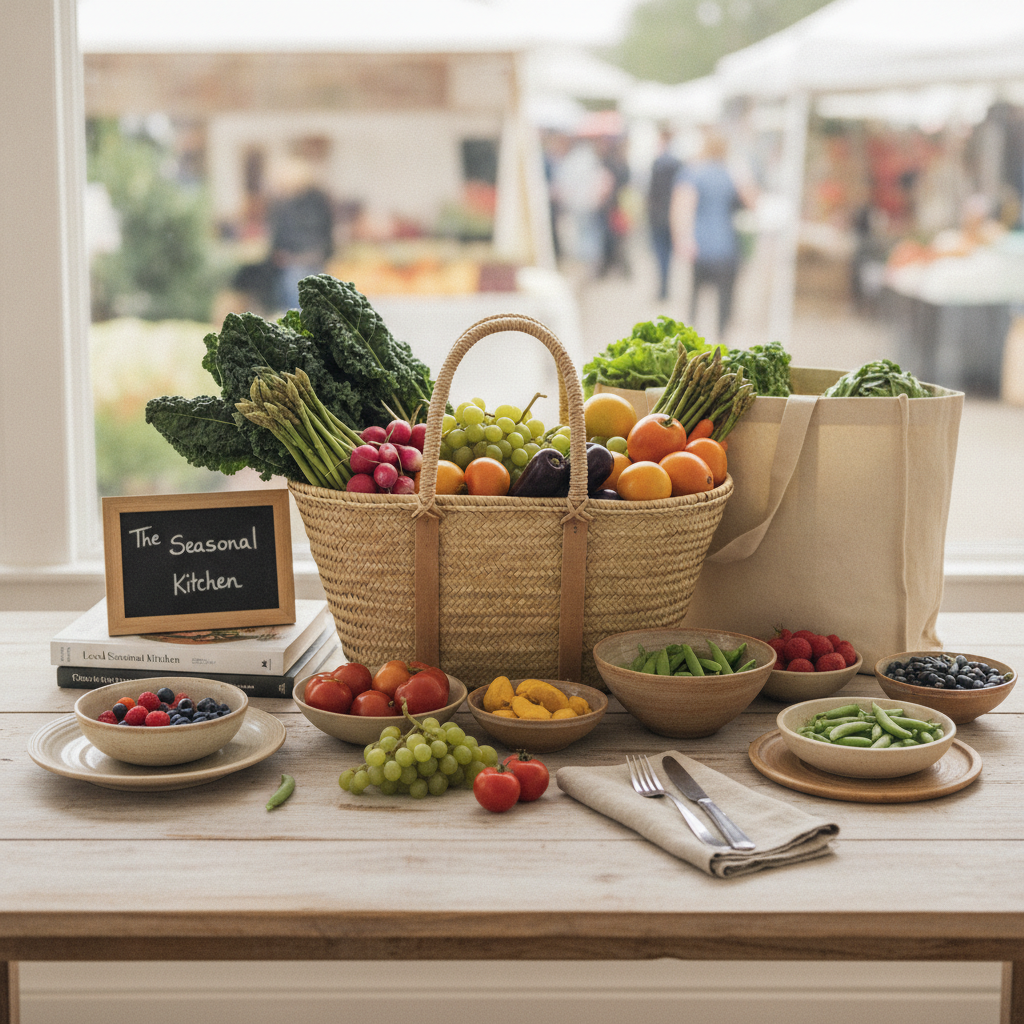
The phrase *comer el arcoíris* — "eating the rainbow" in Spanish — captures the nutritional wisdom of consuming produce across the full spectrum of colors, each hue representing a different class of protective compounds. Seasonal eating makes this instinctive rather than deliberate. Spring brings the greens: asparagus, peas, spinach, and arugula, rich in chlorophyll and folate. Summer loads the palette with reds, oranges, and purples from peppers, peaches, and eggplants. Autumn delivers deep oranges and yellows through squash, sweet potatoes, and pears. Each seasonal rotation naturally cycles through different antioxidant profiles, which means the anti-inflammatory benefit accumulates over time, across categories, without requiring a nutrition chart or a supplementation plan.
Local Markets as Community Infrastructure
Farmer's markets and community-supported agriculture programs — often called CSAs — function as more than retail spaces. In neighborhoods like Brooklyn's Park Slope or San Francisco's Mission District, weekend markets have become a form of community infrastructure, connecting households directly to the agricultural systems that feed them. This proximity to food production creates a different kind of consumer awareness: one that recognizes the person who grew the food, understands the conditions it was raised in, and feels some accountability to the relationship. That awareness often translates into less food waste, more intentional cooking, and a broader willingness to try unfamiliar vegetables — all habits that reinforce the anti-inflammatory benefits of diverse, whole-food eating.
Practical Patterns for Building a Seasonal Shopping Habit
For those unfamiliar with how to structure shopping around seasonal availability, a few simple patterns tend to be effective. Visiting the same market weekly builds familiarity with vendors and helps identify which items are at peak abundance — the surest signal that prices will be favorable and nutritional value will be high. Apps like Farmish or platforms connected to local CSA networks can help identify what's currently in season by region. Buying in moderate bulk during peak season and preserving through simple methods — freezing blueberries in summer, roasting and storing winter squash — extends the anti-inflammatory benefit of seasonal produce into months when fresh options are more limited. The approach asks for some planning, but not an overhaul of daily life.
Bringing the Practice Into Your Own Kitchen
When you start to reorganize your shopping around what's genuinely in season and locally available, something shifts — not dramatically, but noticeably. The meals become less abstract, less assembled from global supply chains, and more rooted in the particular time of year. You spend less, not because you're cutting corners, but because abundance is genuinely cheaper than scarcity. Your inflammation markers, tracked through how you feel rather than a lab panel, tend to reflect the change over weeks and months: less joint stiffness, more stable energy, better digestion. The body responds to being fed well and fed appropriately for the season in ways that accumulate quietly but steadily over time.
There is, as it turns out, a reason traditional cultures built their culinary calendars around what the land offered at each turn of the season. The intelligence embedded in that practice was never lost — it simply waited for modern circumstances to make it relevant again. Eating with the calendar is not a return to scarcity or constraint. It is, more accurately, a return to alignment: between the body's needs, the land's cycles, and the practical reality of what good food actually costs when it doesn't have to travel so far to reach the table.