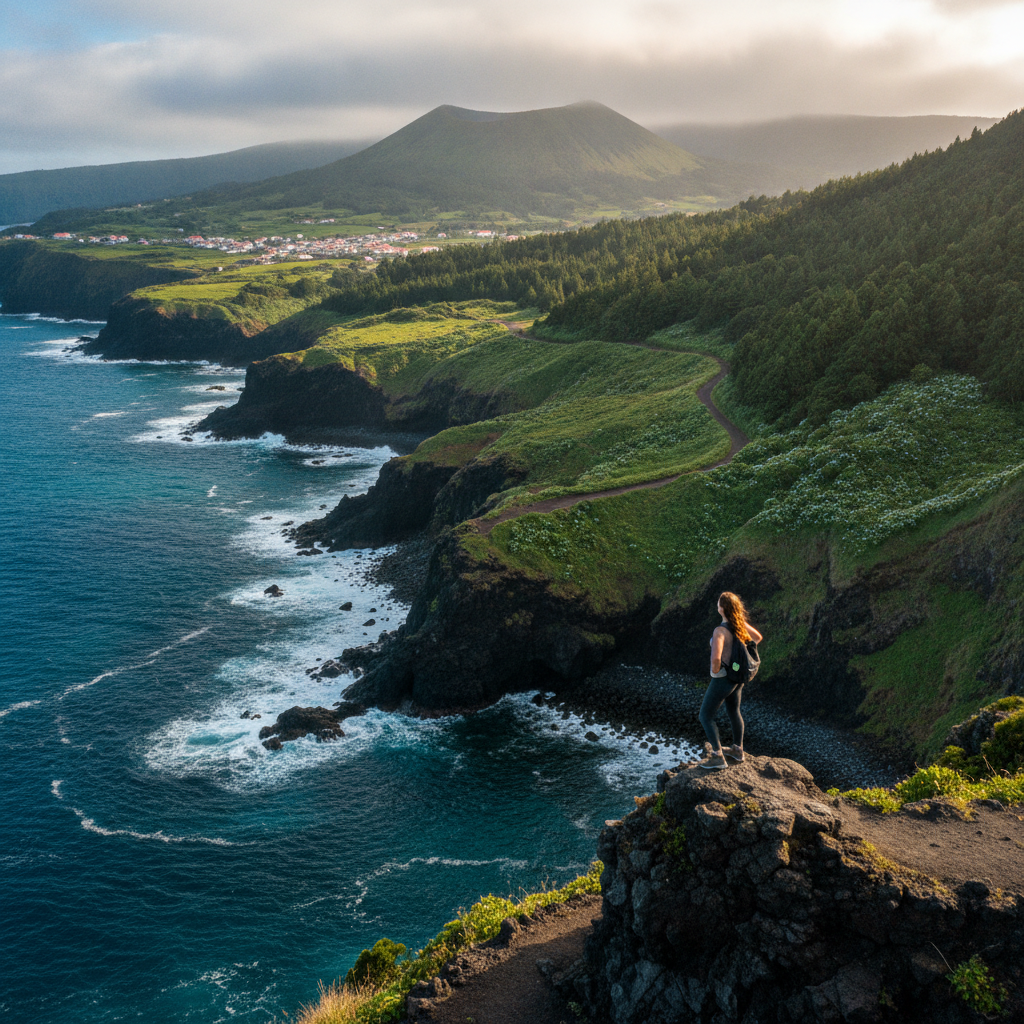
There is a particular kind of traveler who arrives at an airport with nothing confirmed beyond a return flight, and the Azores has a way of making that choice feel quietly brilliant. This mid-Atlantic archipelago, scattered across nine islands roughly 1,500 kilometers west of Lisbon, operates on its own logic — one that resists rigid itineraries and rewards those willing to follow the weather, the tides, and the occasional tip from a guesthouse owner who knows which crater lake is glassy-calm on a Tuesday morning. Ten days here without a fixed plan is not a travel mistake. It turns out to be the most honest way to understand what volcanic islands actually offer.
When the Absence of Structure Becomes the Strategy
Most destination guides treat the Azores as a checklist: Sete Cidades on São Miguel, the hydrangea-lined roads of Faial, whale watching out of Pico. These are genuine highlights, but the checklist framing misses something important. Volcanic archipelagos have temperamental microclimates — a valley that was shrouded in mist at 9 a.m. can be dramatically clear by noon, and a boat trip to a neighboring island that seemed impossible on Monday might open up beautifully by Wednesday. Trying to lock down each day weeks in advance means fighting the very nature of the place rather than moving with it. Travelers who arrive without rigid plans often end up having richer experiences precisely because they can say yes when conditions align.
The practical version of this looks less romantic than it sounds, and that's worth acknowledging honestly. Showing up without accommodation for ten nights on multiple islands requires some baseline infrastructure. Apps like Booking.com and GetYourGuide are genuinely useful here — not for pre-booking everything, but for checking same-day and next-day availability when you decide where you want to be. Ferries between islands run on published schedules through Atlanticoline, and having that timetable saved offline means you can make real decisions the night before without scrambling. The unplanned trip still benefits from a handful of lightweight tools; the difference is that those tools serve flexibility rather than replace it.
How Volcanic Terrain Teaches a Different Kind of Attention
São Miguel is where most visitors begin, and it earns its reputation as the archipelago's anchor island. The Furnas Valley alone — with its geothermal calderas, steaming ground, and the local tradition of slow-cooking cozido das Furnas in volcanic heat — can absorb two full days without effort. But what becomes apparent when time pressure is removed is how much texture exists beyond the famous viewpoints. The coastal paths between Mosteiros and Ginetes, the black sand beaches near Ribeira Grande, the tiny parish churches tucked into hillside villages — these accumulate into a more complete picture of island life, and they only surface when you're not rushing toward the next tick on a list.
Pico, the island dominated by Portugal's highest peak, operates differently again. The mountain itself is cloud-dependent; summit attempts require permits booked through the local hiking management system, and the decision of when to attempt it belongs entirely to weather and visibility. Travelers with fixed departure dates often miss the window entirely. Those with open days can wait, watch the cloud line, check conditions through the Windy app each morning, and climb when the mountain is genuinely ready to be climbed. That patience — that willingness to let the place set the terms — is what volcanic islands specifically reward, because their most dramatic features are also their most variable.
Reading the Rhythm of Island Time
One of the less-discussed qualities of the Azores is how quickly its pace becomes contagious. The islands sit in a Portuguese cultural context that already values long lunches, unhurried conversations, and the kind of café culture where a single espresso might anchor an hour's worth of watching the street outside. Without a schedule, visitors begin to absorb this tempo naturally — eating when the restaurants actually open rather than at tourist-adjusted early hours, lingering at a miradouro until the light changes rather than moving on to photograph the next viewpoint. This is not laziness. It's a recalibration that changes what you notice and remember.
Faial's marina town of Horta is a good place to observe this rhythm without pressure. The famous Peter Café Sport, a transatlantic sailors' bar that has served as a waypoint for ocean crossers for decades, draws an interesting mix of long-distance sailors and island-hoppers who have no particular agenda. The walls covered in painted panels left by sailing crews give the space a weight of accumulated journey that rewards slow attention. Sitting there for an afternoon with no particular next move is not time wasted — it's the Azores working exactly as it should on someone patient enough to let it.
For longer stays, keeping accommodation costs manageable across ten days matters. Tools like Airbnb offer weekly-rate discounts on many Azorean properties, and reaching out directly to guesthouse owners — especially outside peak summer weeks — often surfaces informal deals that platform pricing doesn't reflect. Traveling in shoulder season, roughly late April through early June or September through October, provides both softer rates and more reliably accommodating weather windows for outdoor activities.
The traveler who arrives in the Azores with ten days and no fixed plan is making a quiet bet that the islands will offer something better than any itinerary they could have designed in advance — and that bet, more often than not, pays out. What volcanic islands reveal to patient visitors is a kind of layered richness: geology and weather and local ritual and pure accidental discovery, all operating on schedules that have nothing to do with departure boards. The person who booked nothing beyond their return flight and a rough sense of where to begin will likely leave having seen more of what the place actually is than any tightly optimized trip could have delivered.