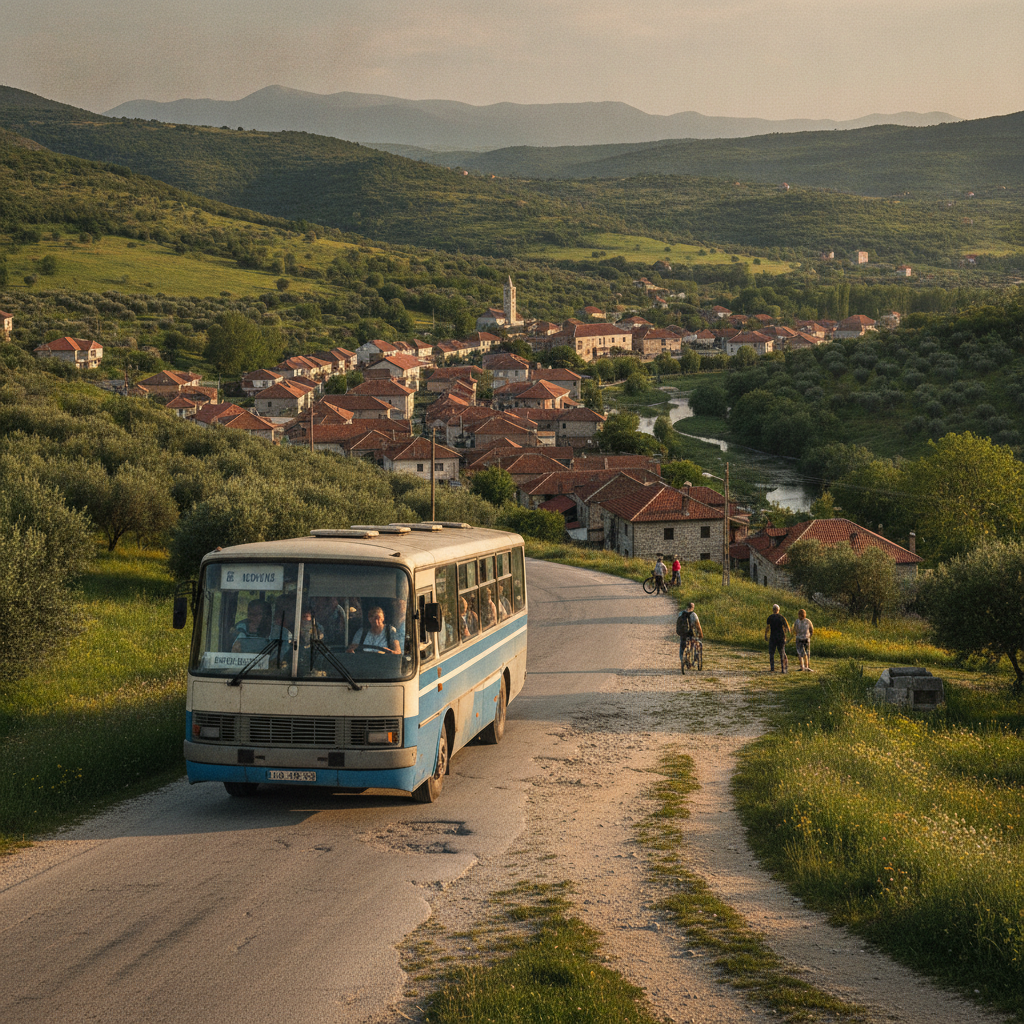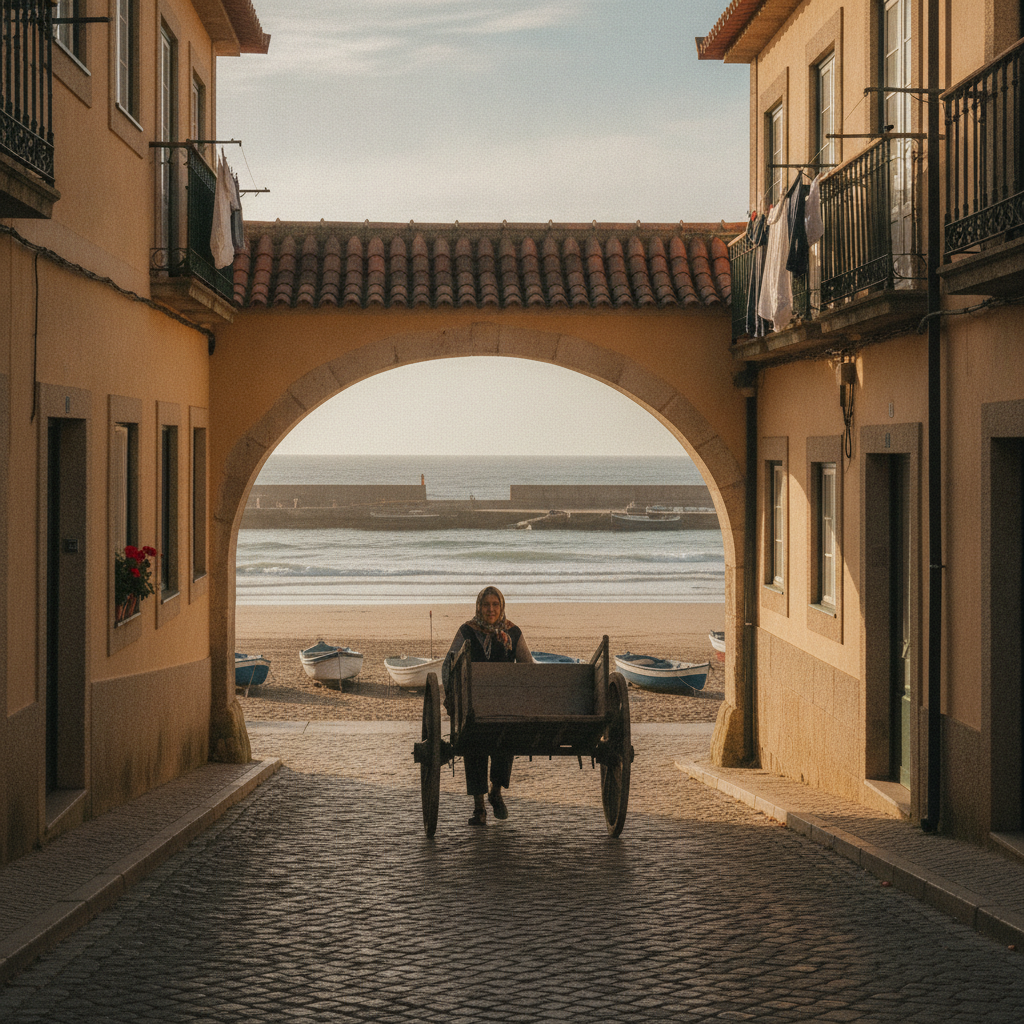
There is a particular quality of stillness that settles over a coastal town when the summer crowds have gone and the sea-facing restaurants have pulled their chairs inside. It isn't emptiness exactly — it's more like a collective exhale, a return to a pace that belongs to the place itself rather than to the visitors who briefly claimed it. Nowhere does this feel more tangible than along the Atlantic-facing stretches of Portugal's Costa de Prata, where towns like Nazaré and Peniche slip back into rhythms that tourists rarely witness: fishermen mending nets by mid-morning, the smell of *bacalhau* — the country's beloved salted cod — drifting from kitchen windows, and afternoons so unhurried they seem to expand to fill the available light.
The Character That Returns When the Season Ends
What makes off-season travel in coastal Portugal so quietly compelling is the way a place reasserts its own identity once the pressure of high-season performance lifts. In Nazaré, the upper village of *Sítio* — reachable by a century-old funicular — feels during October and November like a neighborhood rather than a destination. Women in the traditional seven-layered skirts known as *saia de sete saias* walk to market without stopping for photographs. The fish market opens before dawn and winds down by mid-morning, its transaction complete before most travelers have finished breakfast. The architecture, the cadence of conversation, the particular way light falls across whitewashed walls — all of it becomes more legible when the interpretive layer of peak tourism is removed. The visitor willing to sit with that unhurried texture finds something that no itinerary can fully engineer.
This is the distinction that separates off-season travel from simply finding cheaper accommodation. The value isn't only economic — though it is that too. It's experiential in a way that takes a few slow days to fully register. A traveler arriving in Peniche in late autumn will find the surf culture of the town operating on its own terms: serious surfers from across Europe still chase the Atlantic swells, but the town's cafés and *tascas* — small, no-frills local restaurants — are filled with regulars rather than first-timers, and conversations happen at the bar rather than being shouted across crowded terraces. The social texture of a place, which is perhaps its most interesting quality, only reveals itself when the ratio of residents to visitors tilts back toward the people who actually live there.
Reading the Daily Rituals as a Form of Orientation
For the unhurried traveler, the daily rituals of a coastal Portuguese town function as both a schedule and an education. The *pastelaria* — a pastry shop and café combined — is typically the anchor of morning life, where *bica* (a short, strong espresso) is consumed standing at a zinc counter alongside a *pastel de nata*, the custard tart that has become one of Portugal's most recognized exports but tastes entirely different when eaten without ceremony in its natural context. By late morning, the covered market — *mercado municipal* in larger towns — draws local shoppers sorting through seasonal vegetables, regional cheeses, and the day's catch. These aren't performances arranged for tourists; they're functional, efficient, and deeply social. Participating in them, even as an outsider who speaks only approximate Portuguese, is one of the more honest forms of cultural engagement available to a traveler.
The afternoon in a coastal Portuguese town during the off-season belongs almost entirely to the imagination of whoever is willing to fill it slowly. *Siesta* culture, though less formally observed than in southern Spain, still exerts a gentle gravitational pull on the midday hours, and many smaller shops close between roughly one and three in the afternoon. Rather than treating this as an inconvenience, the off-season traveler learns to absorb it as an invitation — to walk the sea wall, to find a bench facing the Atlantic, to read or simply to watch the light change over water that has been doing exactly this for centuries regardless of who happened to be watching.
What Slower Travel Costs and What It Returns
There is a practical dimension to this mode of travel that deserves acknowledgment. Off-season visits to coastal Portugal — roughly October through March, with the exception of Christmas and New Year's — bring meaningfully lower accommodation rates, easier access to short-term rentals in residential neighborhoods, and the kind of service in restaurants that comes when a kitchen isn't overwhelmed. A week in a self-catered apartment in a town like Ericeira or Cascais during November can cost a fraction of a comparable summer stay, and the trade-offs are fewer than most people expect. Weather along the Atlantic coast is mild rather than cold by northern European standards, and the occasional rain shower is easy to plan around rather than through.
What off-season travel returns is harder to quantify but tends to linger longer in memory. The traveler who spends a week in a coastal Portuguese town during the quiet months tends to come away with something closer to understanding than impression — a sense of how the place actually operates, what its people value, what the light looks like on a Tuesday afternoon in November when nobody is performing for an audience. That kind of knowledge changes how a person thinks about travel itself, not as a series of checked destinations but as an occasional, genuine encounter with somewhere else's ordinary life.
The stillness that first appeared to be absence turns out to be presence — the presence of a place being itself. And for the traveler willing to arrive without urgency and leave without a highlight reel, that particular quality of coastal Portuguese quiet has a way of staying close, like the smell of salt air that clings to a jacket long after the return journey home.