Greece's island chains are not best understood from the air. The country's ferry network — one of the most extensive in the Mediterranean — connects hundreds of islands, islets, and coastal towns in a way that no airline route map ever could. For travelers willing to slow down and trade the speed of a domestic flight for the rhythm of the sea, the ferry system opens up corners of Greece that most itineraries never touch. The Dodecanese, the Northern Aegean, the Ionian Islands — these are places where the boat is not just transportation, but the whole point.
Build Your Route Around Port Hubs First
Before booking anything, identify the major ferry hubs that anchor each island group. Piraeus, just outside Athens, is the largest departure port in the country and connects to virtually every major island chain. Rhodes and Heraklion serve as secondary hubs in the southeastern Aegean. Planning a route through lesser-visited islands like Ikaria, Halki, or Lipsi becomes far more manageable when you understand that most smaller islands are reached via these hub ports rather than directly from Athens. Start with the hubs, then layer in the smaller stops.
Use Ferryhopper to Map Connections Early
Ferryhopper is one of the most reliable planning tools for Greek island ferry routes. It aggregates schedules across multiple operators — including Hellenic Seaways and Blue Star Ferries — and lets you search multi-leg routes in a single session. The interface shows frequency, duration, and available vessel types, which matters when you're deciding between a slow overnight ferry and a faster daytime crossing. Booking through the platform also tends to be straightforward, with e-tickets accepted at most ports. Getting familiar with it before you arrive saves considerable time at the dock.
Choose Overnight Ferries for Long Crossings
On routes that take eight hours or more — say, from Piraeus to Chios or down to Karpathos — overnight ferries are worth the modest cabin upgrade. You board in the evening, sleep through open water, and arrive refreshed at a new island by morning. This approach essentially doubles your usable travel days, since you're not burning daylight on long crossings. Deck-class tickets are affordable and work fine in warmer months, but a basic cabin berth adds comfort and privacy that makes a meaningful difference on journeys over ten hours.
Read the Seasonal Schedule Carefully
Greek ferry schedules shift significantly between low season and peak summer. Some connections that run daily in July operate only two or three times a week in spring and autumn, and certain smaller routes to islands like Agathonisi or Nisyros may suspend entirely outside the main season. Downloading the relevant PDF timetable directly from an operator's website — rather than relying solely on aggregator data — helps avoid gaps in planning. Cross-referencing two sources is a reliable habit, especially for islands that are served by local ferries rather than the major lines.
Pack Light Enough to Move Quickly Through Ports
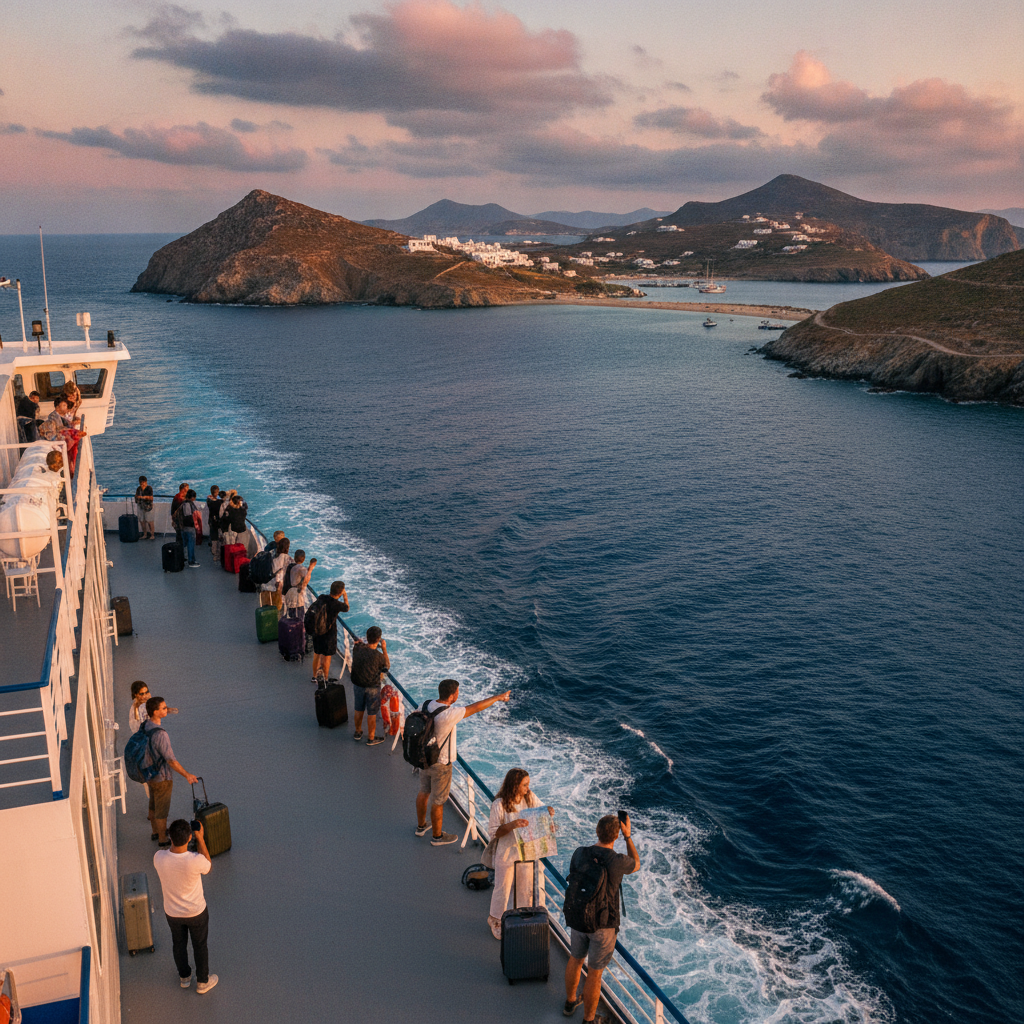
Greek ports vary enormously in size and efficiency. Piraeus is vast and can feel overwhelming on a busy departure day, while a small quay like the one serving Tilos might have nothing more than a jetty and a kiosk. Moving through these environments is significantly easier with luggage you can carry comfortably. A single mid-sized backpack or roll-aboard keeps you mobile between the ticket office, the waiting area, and the gangway — all of which might be fifty meters apart, or spread across a large industrial terminal. Checking oversized bags is possible on most ferries but adds friction to every transition.
Allow Buffer Days Between Island Connections
Ferries run on schedule most of the time, but the Aegean is not always cooperative. Wind conditions — particularly the meltemi that sweeps through the central Aegean in summer — can delay or cancel sailings with short notice. Building at least one buffer day between a ferry arrival and an onward flight or time-sensitive commitment protects the rest of the trip. Travelers who fall in love with a particular island and choose to extend their stay will also appreciate having that flexibility built in. A loose itinerary is not a poorly planned one in this context.
Explore the Northern Aegean Islands Separately
The Northern Aegean cluster — including Lesvos, Samos, and Lemnos — is often overlooked because it sits apart from the more commonly traveled Cyclades. This group deserves its own dedicated trip, ideally approached from Kavala or Thessaloniki on the mainland rather than routing everything back through Piraeus. Lesvos in particular has a ferry culture of its own, with connections to the Turkish coast and links to smaller surrounding islands that feel genuinely off the tourist trail. Treating this region as its own circuit, rather than a side trip, gives it the time it warrants.
Talk to Port Locals Before Booking the Next Leg
No app fully captures the informal knowledge that lives in port towns. Café owners near the Mytilene waterfront, guesthouse managers in Kalymnos, or the ticket agent at a smaller dock often know which operator runs the most reliable service, whether a particular route is prone to delays, and whether a lesser-known connection might suit the itinerary better than the obvious one. These conversations take five minutes and consistently turn up useful, current information. The ferry network as it exists on paper is slightly different from how it operates in practice, and local knowledge bridges that gap reliably.
Greece's ferry infrastructure continues to improve, with newer high-speed vessels entering service on select routes and better digital ticketing becoming standard across operators. Smaller islands that once felt genuinely hard to reach are becoming more accessible without losing the sense of discovery that makes them worth visiting. For travelers who embrace the pace of sea travel and treat the crossing as part of the experience rather than an inconvenience to endure, the ferry network remains the finest way to explore the quieter, less-photographed side of the Greek world.