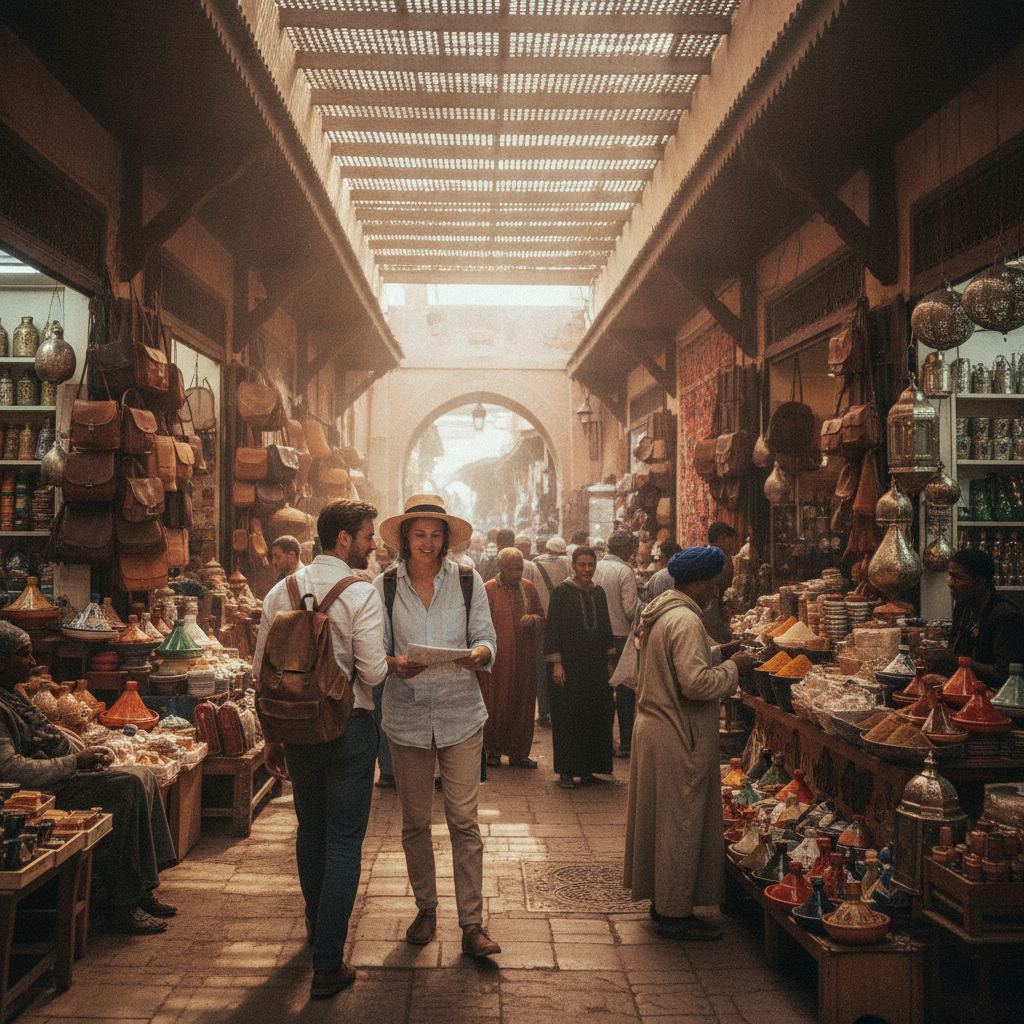
Morocco's ancient medinas are some of the most rewarding places on earth to explore — and also some of the most disorienting. The narrow alleys of Fez and Marrakech twist and double back on themselves, vendors call out from every doorway, and the sensory experience of a souk can shift from thrilling to exhausting in the span of a single block. If you've never wandered through one before, the sheer density of it all can catch you off guard. A little preparation goes a long way toward turning that overwhelm into genuine wonder.
Give Yourself Permission to Get Lost (Within Reason)
One of the biggest mistakes first-timers make is clinging too tightly to Google Maps. The medinas of Fez el-Bali and Marrakech's Djemaa el-Fna area weren't built for GPS — they were built for centuries of daily life, and the most memorable moments tend to happen when you wander off the main drag. That said, getting truly lost is no fun. Before you head out, take a screenshot of your riad's location and learn the name of the nearest major landmark. Knowing you can reorient yourself frees you to explore without anxiety nipping at your heels.
Learn a Few Words of Darija Before You Arrive
Moroccan Arabic — Darija — isn't the same as Modern Standard Arabic, so even travelers with some Arabic background will notice differences. You don't need fluency; a handful of phrases makes a real difference. Knowing *shukran* (thank you), *la shukran* (no thank you), and *bshal hada* (how much is this?) signals respect and tends to soften interactions considerably. French also goes a long way, especially in Casablanca and Marrakech where shopkeepers often switch between languages fluidly. A small effort in the local language changes the dynamic from tourist transaction to genuine exchange.
Understand How Bargaining Actually Works
Bargaining is expected in the souks, but there's a rhythm to it that's worth understanding before you start. The initial price quoted is almost always a starting point, not a final offer — sometimes it's two or three times what a local would pay. A reasonable approach is to counter at about half the asking price and work upward from there. What you want to avoid is making an offer you're not prepared to honor; once you name a price and the vendor accepts, walking away is considered genuinely rude. Take your time, stay friendly, and don't feel pressured to buy anything.
Set a Daily Cash Budget Before Entering the Souk
The souks are a cash economy, and the combination of beautiful craftsmanship and persuasive vendors can quickly derail even the most disciplined shopper. Decide how much you're comfortable spending before you go in, withdraw that amount from an ATM outside the medina, and leave your cards at the riad. This isn't about being restrictive — it's about staying present and making choices you'll feel good about later. When you're not mentally tracking an open-ended spend, you can actually enjoy looking at things without the background stress of wondering whether you're overspending.
Use a Local Guide for Your First Morning
Hiring a licensed guide for half a day — particularly in Fez, whose medina is a UNESCO World Heritage Site with over 9,000 streets — is genuinely worth the cost. Official guides carry credentials issued by the Moroccan government and can be arranged through your accommodation or through the local tourism office. Beyond directions, a good guide explains what you're actually seeing: the function of a particular fondouk, the difference between cooperatives and family-run workshops, the history behind a tannery like Chouara. That context transforms the experience from a confusing maze into a living city.
Know the Difference Between a Shop and a Cooperative
Throughout the medinas, you'll be invited into workshops and cooperatives — leather tanneries, argan oil presses, zellige tile workshops — often as part of a guided route. Some of these are genuinely educational; others are sales environments designed to feel like cultural experiences. Neither is inherently bad, but knowing what you're walking into helps you engage on your own terms. You're never obligated to buy, and the best cooperatives will demonstrate their craft whether or not you make a purchase. A soft "just looking" delivered with a smile is entirely acceptable.
Time Your Souk Visits Strategically
The medinas feel very different depending on when you visit. Early mornings — before 9am — are when locals shop, stalls are restocking, and the pace is calm. Midday in peak season can feel genuinely crowded, especially in Marrakech's central souks near the spice market. Late afternoon brings a second wave of energy as the light softens and vendors are often more willing to negotiate close to closing time. If you're sensitive to noise and crowds, build your itinerary around those quieter windows and save the afternoon for sitting in a café, watching the medina slow down around you.
Protect Your Attention as Much as Your Wallet
Souk shopping can be mentally tiring in a way that sneaks up on you. The constant stimulation — color, sound, smell, movement — is part of the magic, but it also depletes your decision-making energy faster than you'd expect. Give yourself permission to say no, to walk past things without engaging, and to take breaks. A glass of mint tea in a quiet courtyard isn't an indulgence; it's a reset that makes the next few hours more enjoyable. The medinas reward patience and presence, not speed.
As more travelers seek out authentic cultural experiences rather than polished resort stays, Morocco's medinas are seeing a growing wave of curious, thoughtful visitors. The souks are evolving too — younger artisans are blending traditional craft with contemporary design, and a number of cooperatives have become more transparent about pricing and production. The more you know before you arrive, the better equipped you are to engage meaningfully with what these places genuinely have to offer. Go slowly, stay curious, and you'll leave with far more than whatever fits in your bag.