Rural Vietnam has a way of rewarding those who slow down enough to actually see it. Beyond the well-worn guesthouse circuits and travel agency packages lies a network of family-run homestays that offer something far more textured — meals cooked over wood fires, mornings spent watching farmers tend flooded rice paddies, and conversations that require patience and hand gestures but leave a lasting impression. Knowing how to access these experiences, and do so thoughtfully, transforms a trip from pleasant to genuinely meaningful.
Find Reputable Networks Before You Book
Not all homestay networks are equal. Platforms like Airbnb list a few rural options, but more curated resources — including Rustic Pathways and local Vietnamese tourism boards — tend to vet hosts more carefully and ensure fair compensation flows to the family rather than third-party middlemen. The Mai Chau Ecolodge network in Hoa Binh Province, for example, connects travelers directly with White Thai families who have hosted guests for generations. Starting with a network that has genuine community ties makes a significant difference to both the quality and the ethics of the experience.
Contact Hosts Directly When Possible
Once a network or listing looks promising, reaching out directly to the host — rather than booking entirely through a platform — builds early rapport and allows for honest conversation about what the stay actually involves. Many rural families in places like Mu Cang Chai or the villages surrounding Sapa have basic English through years of hosting, and a simple message expressing genuine interest in their daily life rather than just a bed goes a long way. It also opens the door to arranging meals, farm activities, or guided walks that wouldn't appear on any standard booking page.
Understand What Guesthouses Structurally Cannot Provide
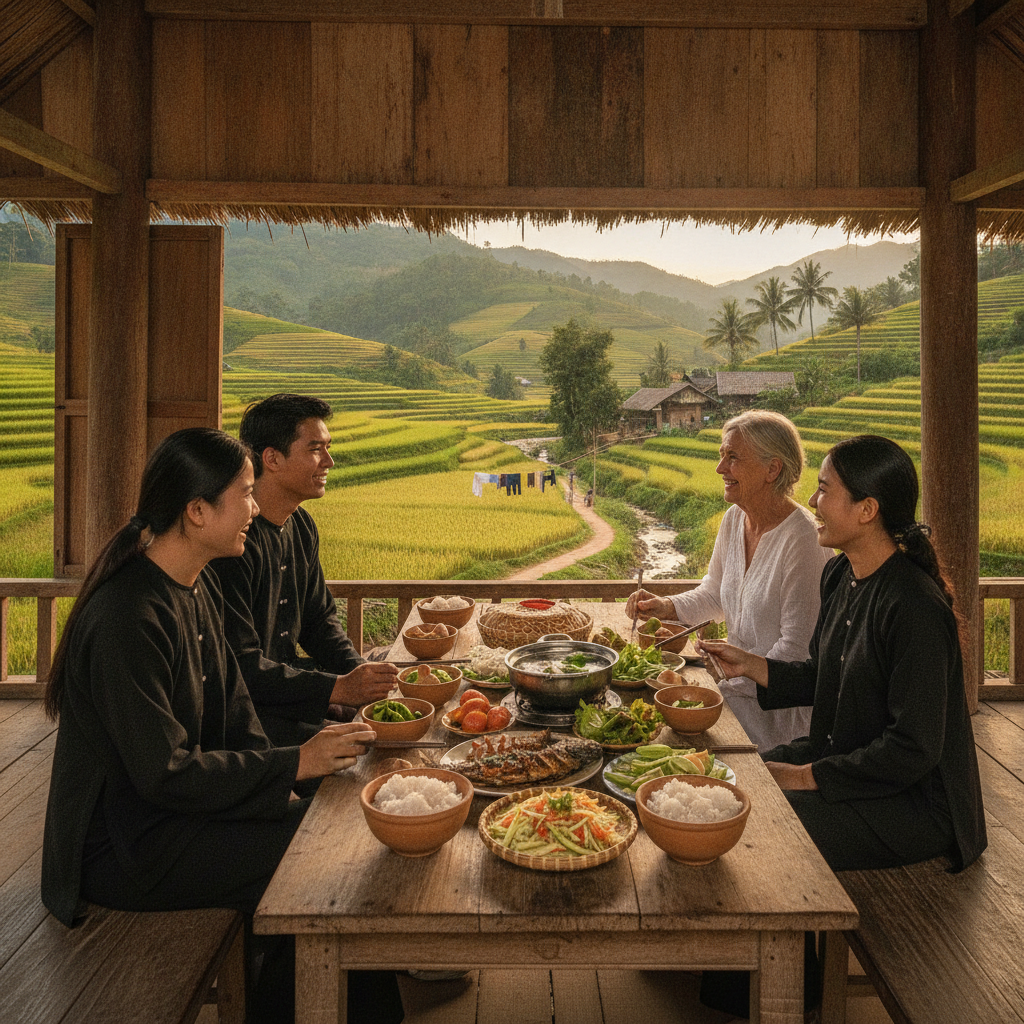
Guesthouses serve a real purpose — they offer privacy, predictable amenities, and easy logistics. But their business model works against immersion. Staff rotate, meals come from a fixed menu, and the property exists at arm's length from the surrounding community. A homestay in Ban Lac village places you inside the social architecture of a real household. You wake up to the same sounds the family does, share meals prepared from ingredients bought that morning at the local market, and observe the quiet rhythms of rural Vietnamese life from the inside rather than through a guesthouse window.
Prepare for a Different Kind of Comfort
Authenticity rarely comes with high-thread-count sheets, and setting realistic expectations before arrival protects the experience on both sides. Squat toilets, shared bathing spaces, and thin sleeping mats are common in more traditional homestays. The food is almost always exceptional — fresh, regional, and prepared with care — but it reflects local ingredients and cooking traditions rather than tourist preferences. Travelers who arrive prepared for simplicity tend to find it charming rather than challenging. Packing a small gift for the household, something modest like quality tea or sweets, is a gesture that hosts genuinely appreciate.
Use Your Time There Purposefully
A rural Vietnamese homestay is not a passive experience. The most rewarding stays happen when guests participate — joining the family in morning farm tasks, helping prepare the evening meal, or accompanying a host to the weekly hill tribe market in a town like Bac Ha. These are not staged performances for tourists. They are real activities that the family would carry out regardless, and your presence, handled respectfully, adds to rather than disrupts their day. Bringing a small notebook to write down words in Vietnamese or Hmong shows genuine interest and tends to delight hosts in ways that tip amounts never quite do.
Navigate Cultural Etiquette With Care
Rural communities in northern Vietnam, particularly among ethnic minority groups like the Tay, Hmong, and Dao peoples, carry distinct customs around hospitality, dress, and conduct inside the home. Removing shoes before entering is standard. Accepting food and drink when offered — even when full — is considered respectful. Photographing family members, especially elders or children, warrants asking permission through gestures or your host. Taking a few hours before the trip to read about the specific ethnic group whose home you'll be staying in adds context that makes every interaction more meaningful and prevents unintentional offense.
Build Flexibility Into Your Itinerary Around the Stay
Some of the best moments in a rural homestay are unplanned. A neighbor might invite you to a ceremony. The host's cousin might offer to take you to a part of the valley that no guidebook mentions. A local festival might fall during your stay — something neither you nor your host knew about when you booked. Rigid itineraries squeeze out these possibilities. Leaving at least one or two unscheduled days around the homestay portion of a Vietnam trip creates space for the kind of spontaneous, irreplaceable moments that become the stories travelers tell for years.
Think About the Economic Impact You Leave Behind
Choosing a homestay over a guesthouse is also a spending decision with real downstream effects. Money paid directly to a rural family stays almost entirely within the village economy. It supports school fees, agricultural tools, and the kind of stability that allows communities to maintain their cultural practices rather than chase employment in cities. Buying handicrafts directly from the household or through a community cooperative — rather than at tourist markets in Hanoi or Ho Chi Minh City — extends that impact further. The choice of where to sleep and what to buy in rural Vietnam is, in a quiet but tangible way, a form of advocacy.
There's something that stays with you long after leaving a rural Vietnamese village — not the photographs, though those matter, but the particular feeling of having been genuinely welcomed into someone's daily life. Guesthouses offer comfort and convenience, and there's a time for both. But the families hosting travelers across the valleys of Ha Giang and the terraced hills of Yen Bai are offering something rarer: a glimpse into a way of living that is unhurried, rooted, and quietly extraordinary. Approaching that offer with preparation, respect, and real curiosity is what transforms a good trip into one worth carrying with you.