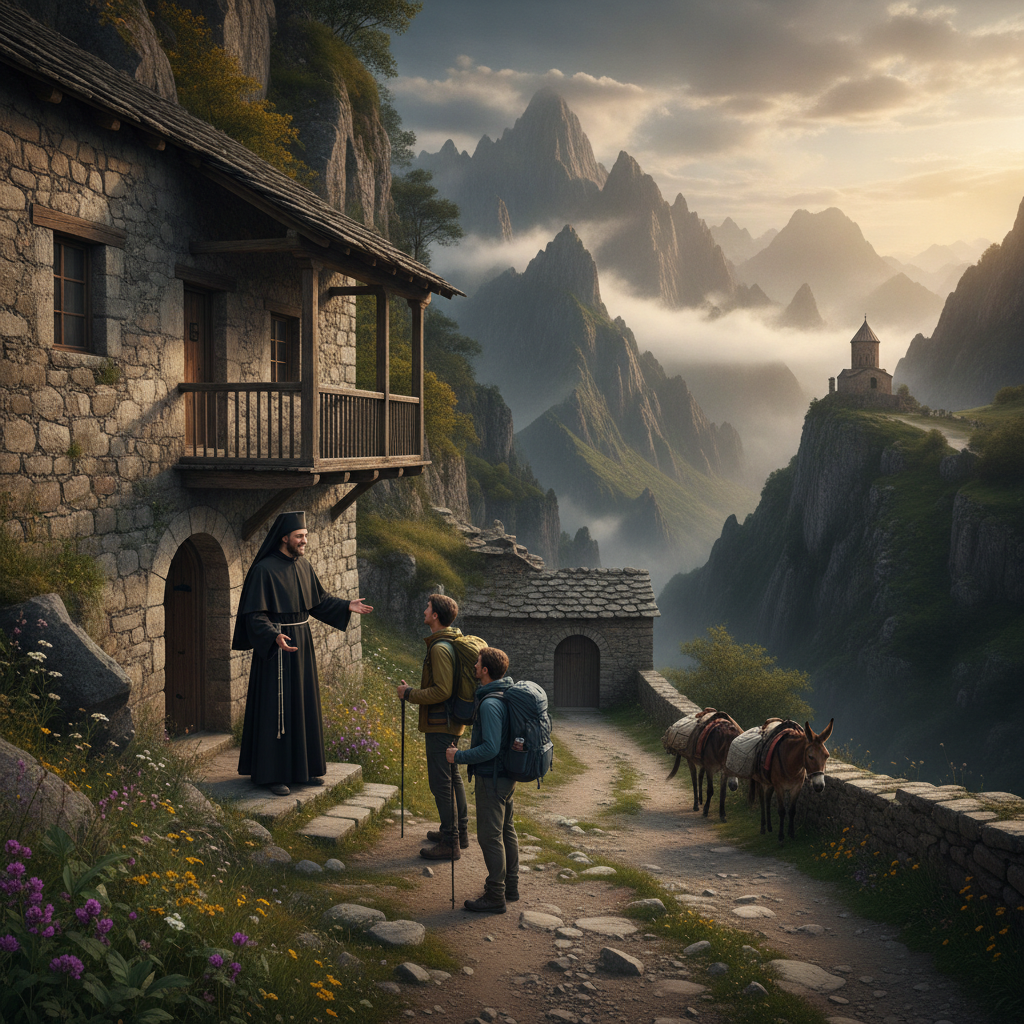
Affordable accommodation in the remote highland regions of the Caucasus is genuinely hard to come by. Budget travelers who venture beyond Tbilisi or Yerevan quickly discover that the combination of limited infrastructure, seasonal road closures, and sparse tourist development makes planning feel like guesswork. Monastery guesthouses change that equation entirely — offering simple, clean lodging at a fraction of commercial rates, often in places where no hotel exists at all.
Research Which Monasteries Accept Overnight Guests
Not every monastery in the Caucasus opens its doors to travelers, so narrowing down your options before you arrive saves a lot of wasted effort. In Georgia, places like Vardzia, Nekresi, and the monastic complex near Shuakhevi have hosted travelers with relative consistency. In Armenia, Tatev and Haghpat are well-known starting points. Online forums and regional travel blogs tend to carry the most current information, since policies shift seasonally. Reaching out directly — often through a local tourism board or a guesthouse in the nearest town — is usually the most reliable approach.
Arrive With a Donation Mind-Set, Not a Hotel Expectation
Monastery guesthouses operate differently from commercial lodging. There's rarely a fixed nightly rate listed online, and the experience is closer to hosted hospitality than a transaction. Most communities ask for a voluntary donation to cover costs, and being genuinely generous here matters — both ethically and practically, since word travels fast in small monastic communities. Bring cash in local currency, keep your expectations modest on amenities, and treat the arrangement with respect. You'll typically find simple meals, shared facilities, and a quiet that's almost impossible to find anywhere else.
Use the Monastery as a Staging Point, Not Just a Bed
The real value of staying in a monastery guesthouse isn't just the low cost — it's the strategic location. Many of Georgia's and Armenia's monasteries sit at elevation, tucked into valleys or perched on ridgelines that put you within walking or short driving distance of trails, villages, and viewpoints that day-trippers from city hotels simply can't reach. Staying at Alaverdi Monastery in the Alazani Valley, for example, positions you well for early-morning exploration of the Kakheti wine region and the surrounding foothills before the heat builds.
Pack for Self-Sufficiency in Remote Settings
Monastic communities aren't set up to cater to travelers the way guesthouses in tourist towns are. You won't find a convenience store nearby, and meal availability is inconsistent — sometimes you'll be invited to share a communal meal, sometimes you're on your own. Carrying a small camp stove, dry staples, and a reliable water filter makes a meaningful difference. A headlamp, backup battery, and warm layers are essential even in summer at higher elevations. Think of it less like hotel packing and more like a lightweight expedition with a roof at the end of the day.
Learn Basic Phrases in Georgian or Armenian
English fluency is rare in remote monastic settings. Even a handful of basic phrases in Georgian or Armenian goes a long way toward building goodwill with the monks or nuns who host you. Simple expressions of gratitude, a greeting in the local language, and the ability to ask about directions or meal times transform the dynamic. Apps like Pimsleur carry Georgian and Armenian courses, and spending even a few hours before your trip on pronunciation basics signals genuine respect for the community you're entering.
Understand the Seasonal Window for Access
Many highland monasteries in the Greater and Lesser Caucasus become effectively unreachable between late autumn and early spring. Snow closes mountain roads, and communities become more insular during winter months. The sweet spot for most travelers runs from late May through early October, with July and August offering the most reliable road conditions but also the highest chance of other visitors. September is often the ideal balance — trails are dry, crowds have thinned, and the light across the highland valleys is genuinely spectacular.
Build a Multi-Stop Route Between Guesthouses
Once you understand how monastery guesthouses work, the smarter approach is building a loose multi-day route that strings several together. In Georgia, a traverse through the Trialeti range or the upper Mtkvari corridor can connect multiple monastic sites over four or five days with minimal transport cost. In Armenia, the Debed Canyon corridor links Haghpat and Sanahin within a manageable distance. Using shared marshrutka minibuses between towns, supplemented by occasional hired local drivers, keeps costs low while giving you genuine flexibility.
Respect the Daily Rhythm of the Community
Monastic life runs on a schedule that doesn't accommodate late arrivals or early departures without notice. Morning prayers, work hours, meal times, and evening services follow a pattern that predates tourism by centuries. Arriving before dark, keeping noise minimal, dressing modestly, and being present enough to ask whether your presence at certain times is welcome — these aren't just good manners, they're what separates a welcome guest from a tolerated one. The monasteries that remain open to travelers do so because past visitors have been respectful. That's a reputation worth maintaining.
Monastery guesthouses in the Caucasus represent one of the more underappreciated travel strategies available to independent travelers willing to slow down and plan carefully. As interest in the region grows — Georgia in particular has seen a steady increase in thoughtful independent travelers over recent years — the window for accessing these spaces on quiet, unhurried terms may gradually narrow. The monasteries that do continue welcoming guests will likely do so on their own terms, and that's exactly what makes them worth seeking out now.