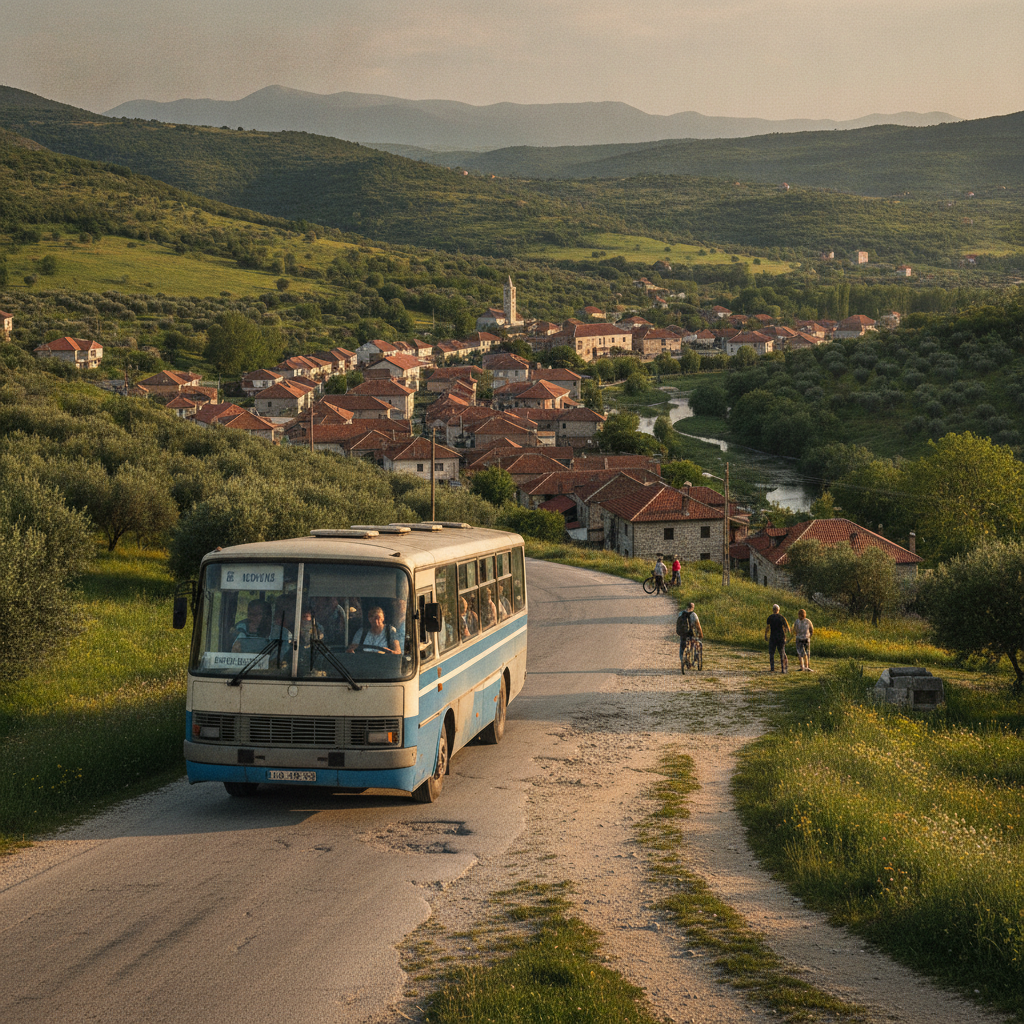
There is a particular kind of impatience that takes hold in airports — the sense that movement should be fast, frictionless, and spent at altitude. Travelers in Southeast Asia know this feeling well. Budget carriers like AirAsia and Vietjet have made it almost reflexively cheap to leap between capitals, and the logic of skipping from Bangkok to Hanoi in two hours rather than two days seems, on its surface, entirely sound. But the travelers who slow down long enough to consider the road tell a different story. Overland border crossings — by bus, train, or shared minivan — have quietly accumulated a devoted following among those who find that the space between destinations is often where the real journey lives.
What the Flight Itinerary Leaves Behind
Domestic and short-haul international flights in Southeast Asia are genuine marvels of accessibility. They've opened the region to budget travelers who might otherwise have spent their entire trip in a single country. And yet the flight experience itself has become almost deliberately empty — a transfer from gate to gate that erases the geography between two places. Crossing from Thailand into Laos on the slow ferry at Chiang Khong, or taking the overnight train from Bangkok to the Malaysian border at Hat Yai, is something else entirely. The landscape shifts gradually, the vegetation changes, the architecture at roadside stops begins to reflect a different cultural grammar. Travelers arrive not just at a destination, but with a felt sense of having actually moved through space.
The economic argument is also stronger than it first appears. A budget flight between, say, Chiang Mai and Luang Prabang can seem inexpensive until airport transfers, baggage fees, and the cost of arriving two hours early are factored in. Overland routes through companies like Nattakan Bus or the state railway systems of Thailand and Vietnam often come in significantly cheaper for the full journey — and many include overnight travel that replaces a night's accommodation cost. The savings rarely announce themselves loudly, but travelers who do the full comparison tend to find the gap more meaningful than expected.
The Culture of the Road and the Border
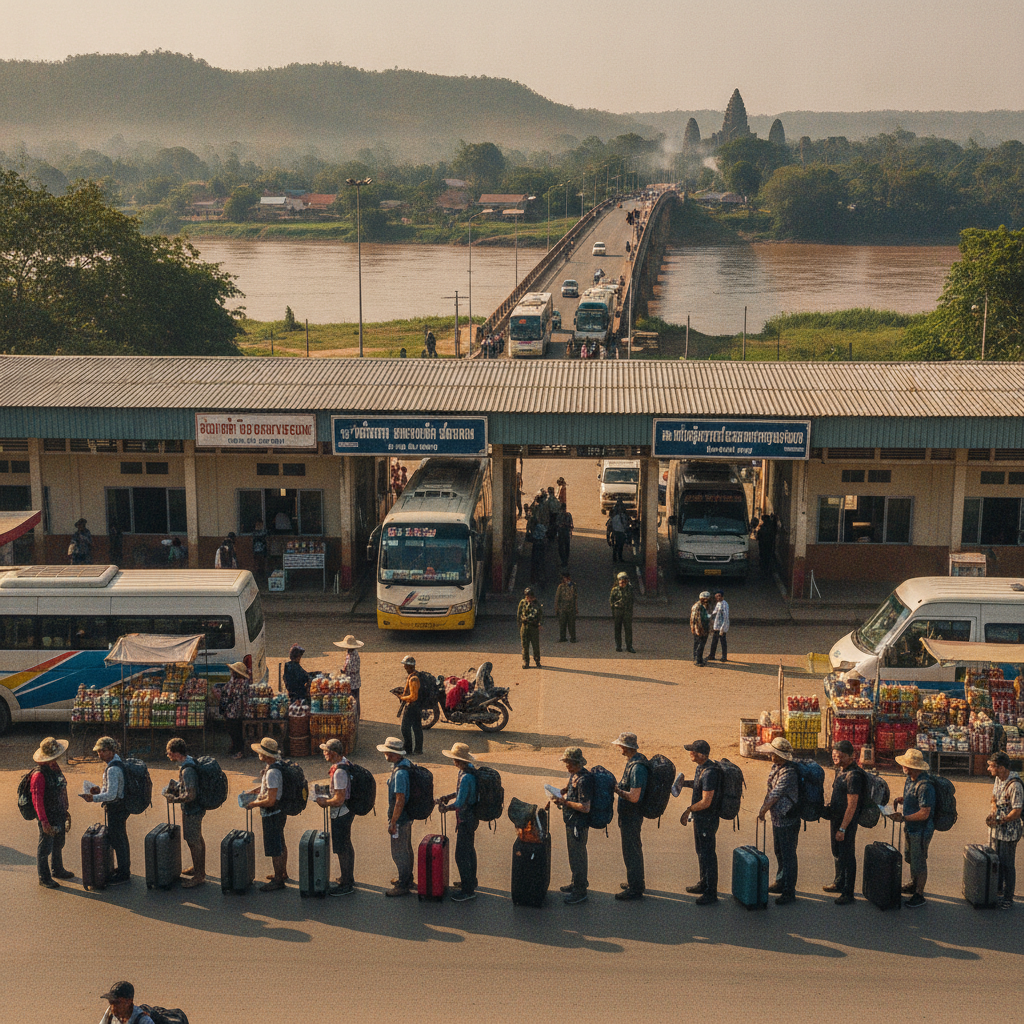
Southeast Asian overland crossings carry their own cultural weight. The *songthaew* — the covered pickup truck used as a shared taxi across much of northern Thailand and Laos — is not merely transportation. It's a moving commons, shared with local market vendors, schoolchildren, monks in saffron robes, and the occasional chicken. The border towns themselves, places like Poipet between Thailand and Cambodia or Savannakhet along the Mekong, exist in a fascinating middle state: part transit zone, part distinct community. They absorb the energy of two countries at once, producing a street food culture, a commercial energy, and a social texture that no airport lounge can approximate.
The experience of crossing a land border also forces a more deliberate relationship with paperwork, timing, and local knowledge — skills that make subsequent travel sharper and more confident. Travelers who have queued at the Moc Bai crossing between Vietnam and Cambodia, learned to navigate the visa-on-arrival desk, and then boarded a local bus into Phnom Penh emerge with a practical fluency that is genuinely useful. There's a difference between visiting a country and entering it — and the overland crossing tends to produce the latter.
Reading the Route as Part of the Journey
Routes that connect major Southeast Asian cities overland often pass through places that no reasonable flight itinerary would include. The road from Hue to Hoi An runs along the Hai Van Pass, a stretch of Vietnamese coastline that has earned its reputation as one of the most visually striking drives in the region. The train between Singapore and Kuala Lumpur winds through palm plantations and small-town Malaysia in a way that feels genuinely intimate. These are not detours. They are the route itself — the actual geography of a region that tends to be experienced only in aerial abstraction by those moving through its airports.
For travelers with even a modest flexibility in schedule, overland options open up a different kind of itinerary planning. Rather than structuring a trip around flight hubs, it becomes possible to move in a more continuous arc — stopping in smaller towns, adjusting pace based on interest rather than departure gates. Apps like Rome2Rio have made it considerably easier to map these routes and compare realistic travel times, which are often closer to flight times than travelers expect once airport logistics are included. The mental model shifts from connecting dots to tracing a line.
Why the Slowdown Is Worth Scheduling
There is a concept in Thai culture — *sanuk* — that roughly translates to the quality of enjoyment found in the act of doing something, not just in its outcome. It applies to work, to meals, to relationships, and perhaps most naturally to travel. An overland crossing, with its stops and border formalities and shared-transport negotiations, is inherently *sanuk* in a way that a two-hour flight is rarely permitted to be. The flight optimizes for outcome; the road allows for process. Southeast Asia, a region that rewards patience and attentiveness in nearly every cultural context, tends to give more to travelers who are willing to receive it at ground level.
If you're planning a trip through this part of the world and you find yourself defaulting to the flight option simply because it's familiar, it's worth sitting with the alternative a little longer. Look at what the overland route passes through. Estimate the real cost of the flight including every associated expense. Consider what kind of traveler you want to be in that particular stretch of days — and what kind of experience you're actually trying to have. The border crossing might take longer. It will almost certainly be less predictable. But there's a good chance it will be the part of the trip you remember most specifically, most fondly, and most completely.
The airport had its logic, and it still does. But the road has its own argument — one that begins, quietly and unhurriedly, the moment the bus pulls out of the station and the city gives way to something less familiar, and more real.