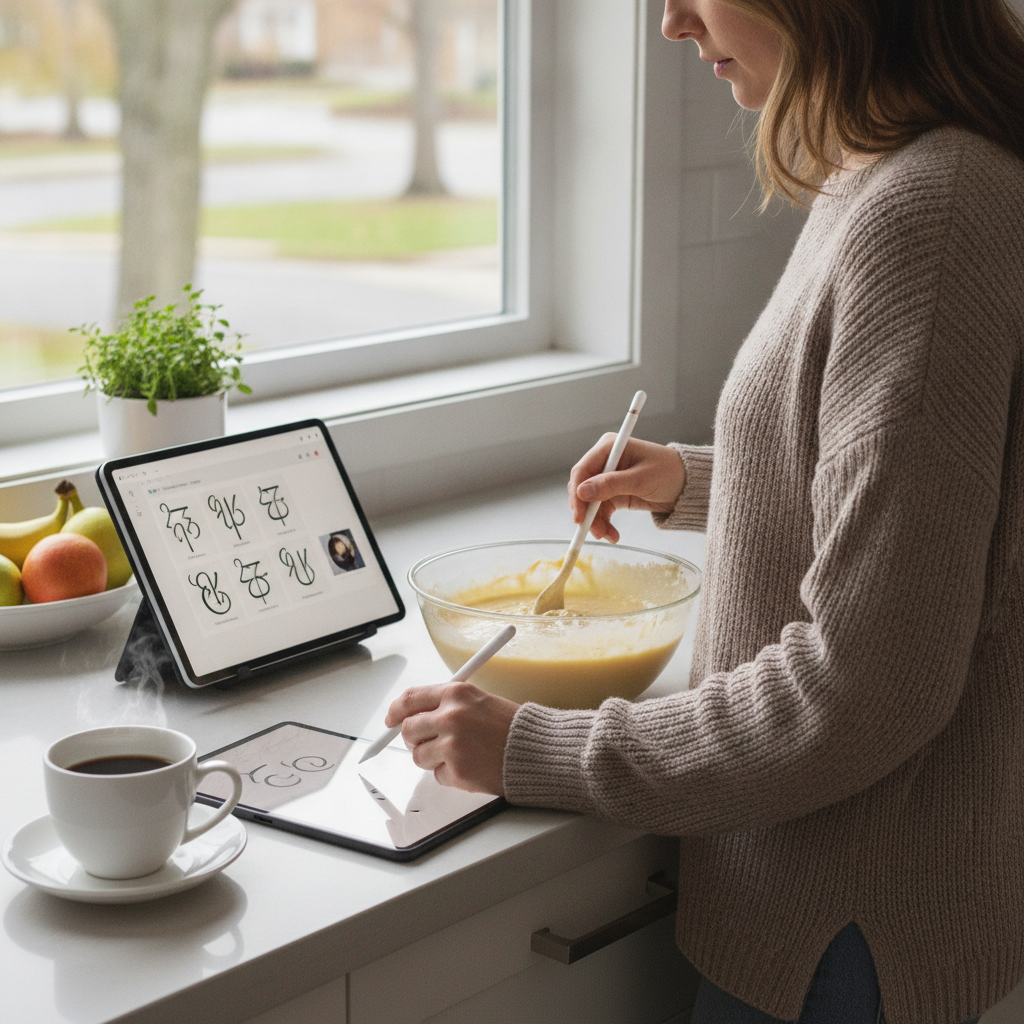
Starting something new is rarely the hard part in theory — it's the moment-to-moment friction of actually sitting down and doing it that defeats most good intentions. You already have a life full of routines running on autopilot: your morning coffee, your commute, the ten minutes you spend scrolling before bed. What if those existing patterns could carry a new skill along with them, almost effortlessly? That's the core idea behind habit stacking, and it's one of the most practical learning strategies you can put to use right now.
Understand Why Habit Stacking Actually Works
Every habit you've built over years has a deeply grooved neural pathway behind it. When you link a new behavior to one of those established cues, you borrow the momentum that pathway already generates. You're not building a new habit from scratch — you're attaching a rider to a horse that's already running. Apps like Duolingo have leaned into this instinct by sending push notifications timed around typical daily breaks, because the developers understand that context is half the battle. Your brain associates the cue with action, and the new skill gets pulled along for the ride.
Choose Your Anchor Habit Carefully
Not every existing habit makes a good anchor. The best anchors are ones that happen at a consistent time and place, with a reliable emotional tone. Your morning coffee ritual works well because it's calm and solitary. Your post-gym shower window works because you're already in a reflective headspace. A hectic school run or a stressful commute on a packed train — less ideal. Think about two or three habits that happen daily without much variation, then ask which one leaves you with a few minutes of mental availability. That's your anchor.
Start With a Micro-Version of the New Skill
One common mistake is pairing a full practice session with a habit that only has a five-minute window. Instead, design the smallest possible version of what you want to learn. If you're picking up conversational Spanish, that might mean reviewing three vocabulary cards while your coffee brews. If you're learning basic watercolor technique, it might mean sketching a single thumbnail while you wait for dinner to finish cooking. Platforms like Anki are built precisely for this — short, focused repetition that fits naturally into gaps rather than demanding a dedicated block of time.
Use Location as a Trigger, Not Just Time
Time is one cue, but location is often a stronger one. Many people find that sitting in a specific chair, at a particular desk, or even in the same café corner signals the brain to shift into a particular mode. If your anchor habit already happens in a fixed location — say, you always read at the kitchen table after dinner — that location becomes part of the cue package. You're not just riding the time slot; you're also activating the spatial memory associated with focused attention. Neighborhoods in cities like Portland and Amsterdam have built entire café cultures around this idea of location as a productivity trigger.
Track the Pairing, Not the Skill Progress
When you're in the early stages, resist the urge to measure how much you're improving. Instead, track whether the pairing happened. A simple paper habit tracker or an app like Streaks can confirm that you sat down and did the thing — even for just a few minutes. This shifts the reward from outcome to process, which is critical in the fragile first weeks. Progress in a skill is often invisible early on, but the chain of completed days is immediately visible and deeply motivating. Protect that chain by keeping the session short enough that skipping it feels more effort than completing it.
Prepare Materials the Night Before
Friction doesn't only come from motivation — it comes from logistics. If your Spanish flashcard deck isn't open on your phone before you sit down with your coffee, there's a real chance you'll just scroll Instagram instead. Spend sixty seconds the night before setting up whatever you need for the next morning's pairing. Lay your sketchbook on the table. Queue up the podcast lesson. Put your guitar where you'll see it during the lunch break you've designated as your anchor. Reducing setup friction is as important as choosing the right anchor habit in the first place.
Give the Pairing Four Weeks Before Evaluating
Habit research consistently points to a range of several weeks before a new behavior begins to feel automatic. Four weeks is a reasonable minimum before you decide whether a pairing is working. During that window, don't tinker too much. If you keep adjusting the anchor, the time, or the skill format, you're resetting the clock on the neural encoding process. Commit to one pairing for a month, then assess. You might find it's working better than you expected once the initial novelty has worn off and the behavior has started to settle into something quieter and more sustainable.
Layer a Second Skill Only After the First Feels Effortless
Once a pairing runs so smoothly that you barely notice it — when skipping it actually feels stranger than doing it — you're ready to consider adding a second skill to a different anchor habit. This is where the strategy compounds. Two small daily practices, each attached to an existing routine, can accumulate into dozens of hours of focused skill development over a year without ever requiring a dramatic overhaul of your schedule. The key is patience: don't stack a second pairing until the first one no longer requires willpower to execute.
The future of self-directed learning is moving steadily toward integration rather than isolation. Rather than carving out a separate "learning hour" that competes with everything else in your day, more learners are finding ways to weave skill development into the texture of daily life. Tools and platforms will continue to get better at meeting you where your routines already are — shorter formats, smarter notifications, and content designed for in-between moments. The learners who thrive in that environment won't be the ones with the most free time. They'll be the ones who learned to make their existing habits do double duty.