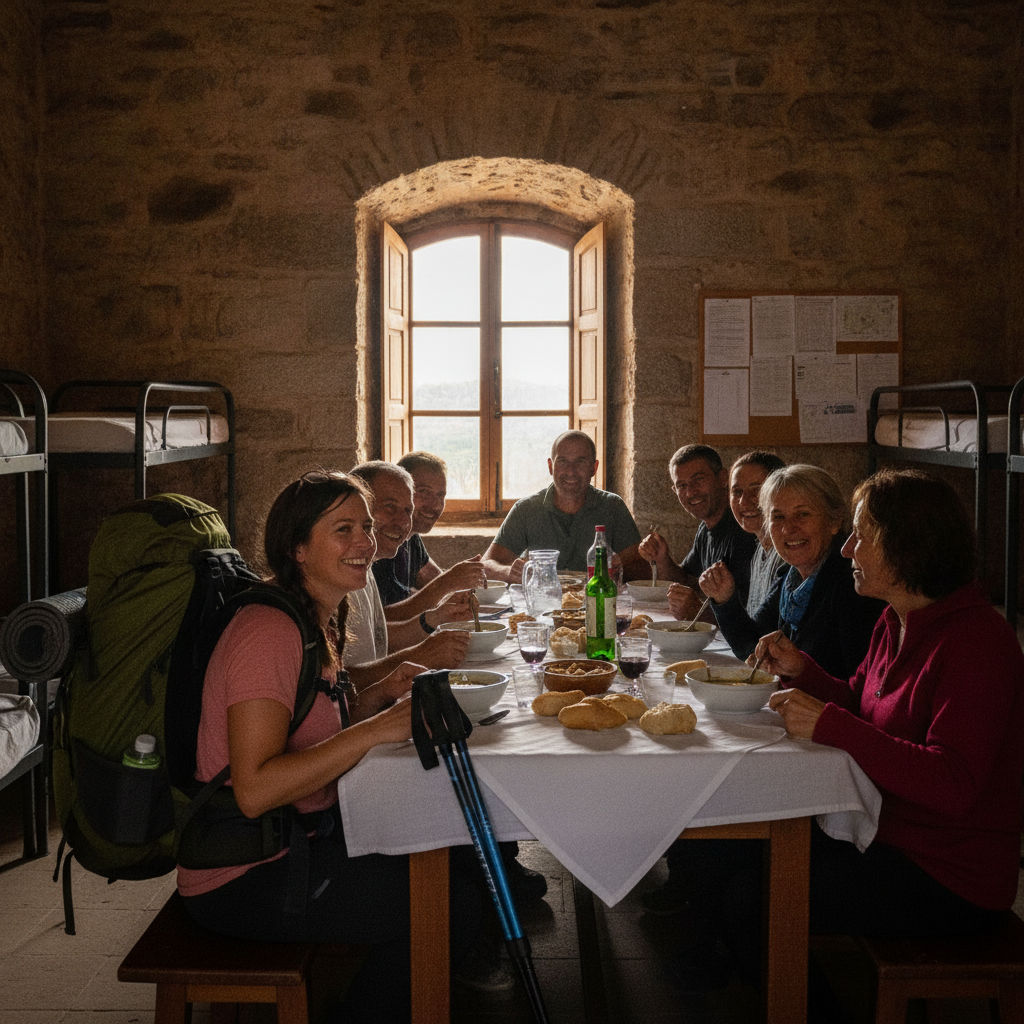
The Camino Portugués is one of the most financially accessible long-distance walking routes in the world — and that's largely because of a quiet infrastructure that's been serving pilgrims for centuries. Albergues, donativo guesthouses, and monastery-run accommodation form a tiered accommodation network that, if you understand how it works, can function as a complete budget framework from Porto or Lisbon all the way to Santiago de Compostela. The challenge most first-time pilgrims face isn't the walking. It's not knowing which nights to splurge, which to save, and how to read the options before you arrive at a town already exhausted.
Planning your budget around the accommodation hierarchy — rather than trying to nail down every expense in advance — is a smarter and more flexible approach. Here's how to make that system work for you.
Understand the Three Accommodation Tiers First
Before you build any budget, you need a clear picture of what's actually available. On the Camino Portugués, accommodation falls into three rough tiers: municipal albergues run by local councils, private albergues with more amenities and reliable booking options, and donativo or monastery guesthouses where you pay what you can. Each tier has a different price point and a different booking culture. Municipal options are typically the cheapest but often first-come, first-served. Private albergues like those listed on Gronze.com allow advance reservations. Knowing this before you leave saves you from scrambling each evening.
Use Donativo Nights as Your Budget Reset Points
Donativo guesthouses — where guests contribute voluntarily — are scattered along the Portuguese route, particularly in smaller villages and at religious houses like the one in Rates or certain parish accommodations near Barcelos. These aren't charity stops; they're functioning parts of the pilgrim tradition. Treat them as deliberate budget reset moments rather than a last resort. If you've spent more than expected on a rest day or a decent meal, a donativo night helps rebalance your running average. Building one or two of these into your planning every five to six stages keeps the overall cost trajectory manageable without requiring you to track every euro obsessively.
Calculate Your Per-Day Average From Accommodation Up
Most pilgrims make the mistake of budgeting food first and accommodation second. Flip it. Accommodation is the most predictable cost on the route — it rarely surprises you the way a restaurant bill can. Start with a conservative average across the tier mix you expect: a blend of municipal, private, and donativo nights. From that anchor number, work outward to meals, coffee, the occasional café stop in a town like Tui or Ponte de Lima. Your per-day budget becomes far easier to manage when you build it from the most stable cost outward.
Book Strategically, Not Constantly
One of the quiet advantages of the Camino Portugués over busier routes is that you don't need to pre-book every single night. For most of the year, showing up by early afternoon is enough to secure a bunk in a municipal albergue. Reserve in advance for known bottlenecks — the stretch approaching Redondela, for instance, or the final nights before Santiago — and leave the rest flexible. This approach keeps your options open for spontaneous rest days or stage adjustments, which is especially useful if your feet need a shorter day. Flexibility is a budget tool, not just a comfort preference.
Use Monastery Guesthouses as Built-In Rest Day Anchors
Several religious houses along the Camino Portugués offer simple, affordable accommodation with a calm that's hard to find in a busy albergue bunk room. The monastery at Valença and various parish houses along the Central route offer this kind of environment. These aren't just nice places to sleep — they're genuinely useful rest day bases. Staying an extra night at a low-cost religious guesthouse costs you far less than a private hotel room in a town center. Factoring one or two planned rest days into your budget at monastery rates rather than commercial rates keeps your overall spend lower while giving your body the recovery it actually needs on a multi-week walk.
Track Nightly Costs in Real Time With a Simple Log
You don't need a spreadsheet. A small notebook or a free app like Trail Wallet works perfectly. Each evening, log what you paid for the bed and roughly what you spent on food. After four or five stages, a pattern becomes clear — which types of towns run expensive, which are easy on the wallet. This real-time awareness lets you make small corrections before costs drift too far in one direction. Pilgrims who track as they go almost always finish the route closer to their original budget than those who wait until the end to add everything up.
Factor In the Credencial and Compostela Costs
The Pilgrim Passport — the credencial — is inexpensive and available at the pilgrim office in Porto or Lisbon. Getting your stamps at churches, albergues, and cafés along the way is free. The Compostela certificate in Santiago carries a small administrative fee. Neither is a major expense, but pilgrims who forget to account for these, along with the optional Pilgrim Mass donation and any cathedral-related costs, sometimes feel blindsided at the end of a carefully managed trip. Small costs at the finish line are easy to overlook in planning.
Treat Rest Days as Budget Levers, Not Luxuries
A rest day in a low-cost albergue town is often cheaper than a heavy-mileage day where exhaustion drives you into a restaurant instead of cooking. If you feel your spending climbing, a deliberate short stage or rest day in a village with a well-equipped albergue kitchen — like those in Rubiaes or along the quieter inland variant — can reset both your body and your daily average. The accommodation network on the Camino Portugués is built for this rhythm. Use it that way, and the route becomes not just walkable but genuinely affordable from start to finish.
The Camino Portugués accommodation system has been refined over generations, and it rewards pilgrims who take the time to understand it before setting out. As more walkers choose the Portuguese route over the busier Camino Francés, the private accommodation sector is growing — meaning more options at more price points are appearing each season. That's good news for budget-conscious pilgrims, as long as you stay anchored to the public and religious guesthouse network as your baseline rather than letting private amenities creep your spending upward. Build your budget from the albergue floor up, and the walk tends to take care of the rest.
