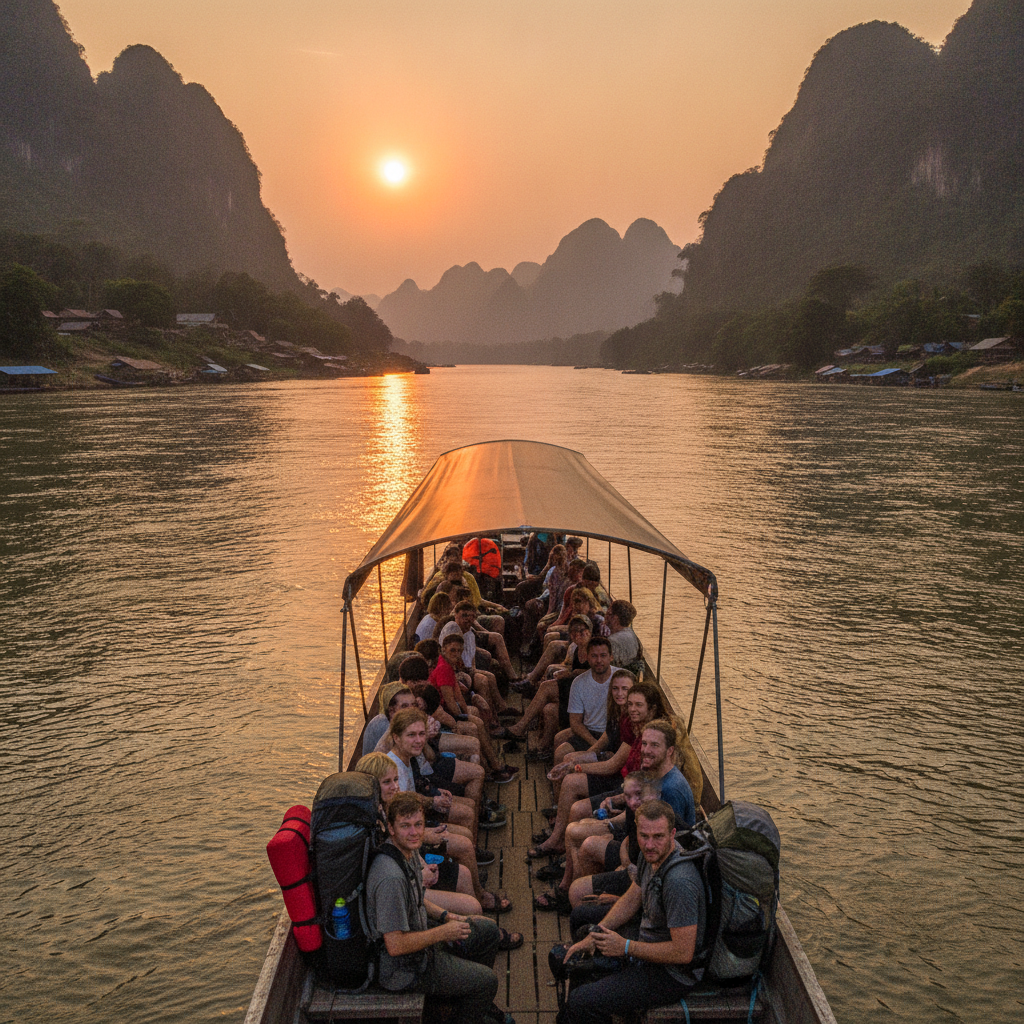
The slow boat route along the Mekong River between Chiang Rai and Luang Prabang is one of Southeast Asia's most rewarding overland connections, and most travelers still don't use it to its full potential. Instead of treating it as a one-way scenic detour, you can build it into a forward-moving itinerary that links northern Thailand and Laos without ever retracing your steps. The key is understanding how the route's pieces fit together — border crossings, guesthouse stops, and boat schedules — so that each leg of the journey carries you somewhere new.
Understand the Full Route Before You Book Anything
The classic slow boat corridor runs from Huay Xai on the Lao side of the Thai-Lao border to Luang Prabang, taking two full days on the river with an overnight stop in Pakbeng. What many travelers miss is that this route connects naturally to a broader loop. If you enter Laos from Chiang Rai via the Chiang Khong crossing, you avoid doubling back through Chiang Mai, and you exit southward through Luang Prabang toward Vang Vieng or Vientiane. Knowing the full shape of that loop before you commit to any single ticket saves you from expensive course corrections later.
Cross at Chiang Khong Rather Than Chiang Mai
Chiang Khong is the Thai border town that sits directly opposite Huay Xai on the Mekong, and it's your gateway to the slow boat. It's a straightforward bus or minivan ride northeast from Chiang Rai, which itself is well connected to Chiang Mai by bus. Crossing here rather than flying into Luang Prabang means you enter Laos from the north and travel through it south — the natural direction of the river — rather than working against the geography. The border crossing itself is calm and efficient, and you can typically pick up your Lao visa on arrival without pre-arranging anything beyond a passport photo and the standard fee.
Book Your Slow Boat Ticket in Huay Xai, Not Before
Tickets for the slow boat are best purchased once you arrive in Huay Xai rather than through third-party booking platforms in Chiang Rai or online. Prices at the pier are straightforward and set, and buying there gives you flexibility if your border crossing takes longer than expected. The boats run daily and fill up reliably, so you're unlikely to miss a departure unless you arrive at the pier late. That said, arriving early on departure day matters — seating isn't assigned, and the low wooden benches with back support near the windows go fast. Bring something to sit on or a thin cushion if comfort over two days matters to you.
Plan the Pakbeng Overnight Strategically
Pakbeng is the midpoint village where all slow boats stop overnight, and it exists almost entirely to serve this traveler flow. Guesthouses here are basic but adequate, and the main drag fills up quickly once boats dock in the afternoon. If you want a room with a private bathroom and a river view, walk past the first two or three guesthouses closest to the pier and look for spots slightly uphill. The evening is genuinely pleasant — the village quiets down early, the food is simple and fresh, and you're far enough from the tourist trail to feel the pace of river life. It's one night, and it's worth experiencing rather than rushing through.
Use Luang Prabang as a Hub, Not Just a Destination
Arriving in Luang Prabang by slow boat feels different from flying in — you've traveled through the landscape rather than over it, and the city's pace makes more sense after two days on the water. Luang Prabang itself deserves at least three or four nights, but it also works well as a logistics hub for onward travel. From here you can take a bus or shared minivan south to Vang Vieng, then continue to Vientiane, completing a north-to-south transit of Laos without backtracking. Alternatively, the scenic mountain road northeast toward Nong Khiaw and Sam Neua opens an entirely different corridor if you have extra time.
Consider the Nong Khiaw River Detour for a Quieter Alternative
If you want to extend the river experience beyond the main Mekong run, the Nam Ou River between Luang Prabang and Nong Khiaw offers a quieter version of the same slow-travel logic. Public longtail boats and small passenger vessels make the trip in a few hours, passing limestone karst scenery that rivals anything on the main Mekong leg. Nong Khiaw is a small town with a genuinely unhurried atmosphere, a handful of excellent guesthouses along the river, and easy access to trekking and cave systems in the surrounding hills. It adds time to your itinerary but removes the need to double back through Luang Prabang before continuing south.
Factor Visa Timing Into Your Border Strategy
Lao tourist visas are typically issued for 30 days from the date of entry, which sounds generous until you factor in the slow pace of river travel. If you're spending two days on the boat, three to four in Luang Prabang, and then continuing south toward the Four Thousand Islands region near the Cambodian border, the days add up faster than expected. Check the current visa rules before your trip, since extension policies in Vientiane and Luang Prabang shift periodically. Giving yourself a realistic day count from Huay Xai to your planned exit point prevents you from rushing the parts of Laos that genuinely reward patience.
Exit Southward to Avoid Retracing the River
The entire logic of using the slow boat as a connector rather than a detour depends on committing to a southward exit from Laos rather than returning north. From Vientiane, you can cross into Thailand at Nong Khai, hop a train to Bangkok, and fly or bus onward without touching northern Thailand again. If you started your trip in Bangkok, this creates a clean arc — north by land, west by river, south through Laos, and back into Thailand from the east. That loop structure is what makes the Mekong route feel like a genuine piece of an itinerary rather than a scenic side trip tacked onto something else.
As infrastructure across this corridor continues to develop — particularly with expanding bus connections in northern Laos and improved road links through Phongsali Province — the options for building non-repetitive routes around the Mekong will keep growing. The slow boat itself isn't going anywhere, and its appeal tends to increase rather than fade as faster travel options multiply around it. For now, the combination of river, road, and border crossing remains one of the most satisfying ways to move through mainland Southeast Asia with a genuine sense of forward momentum.