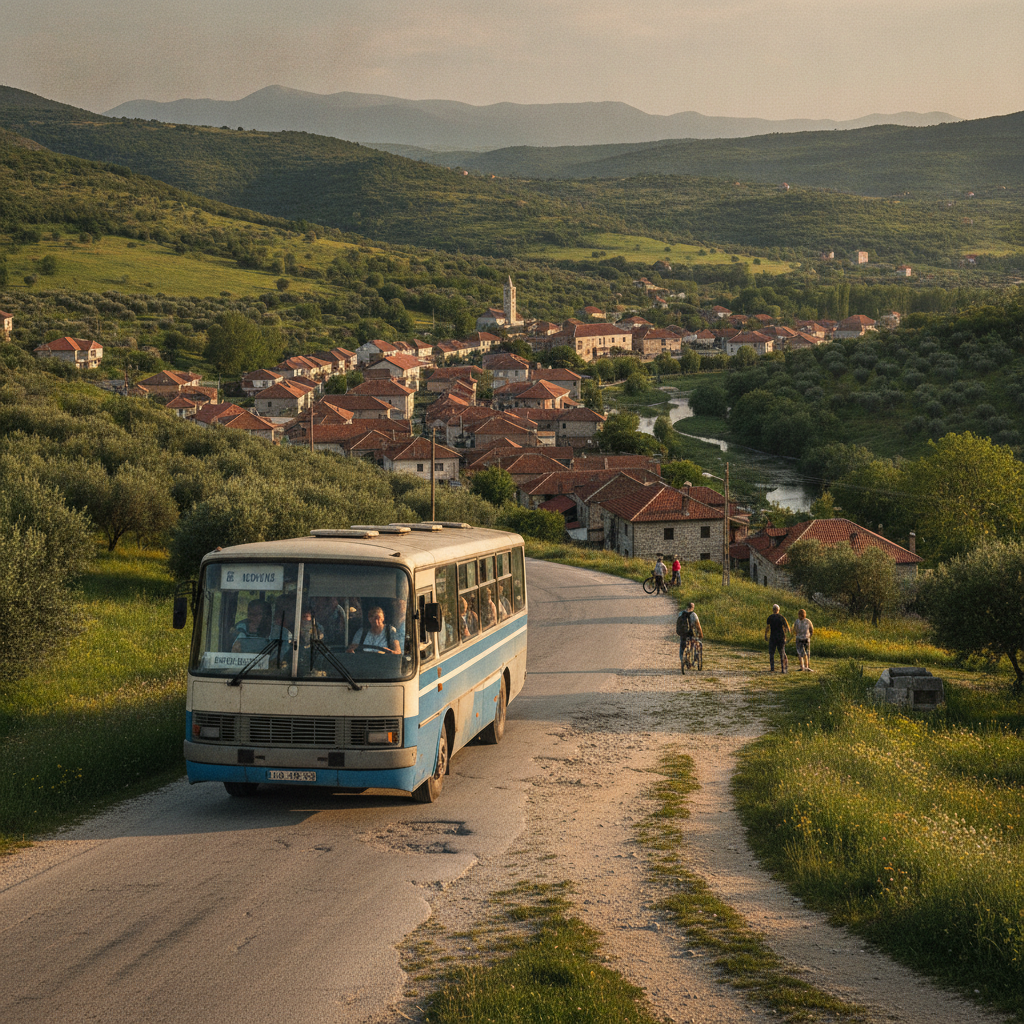
Slow regional bus networks are one of the most underestimated tools in the Balkans traveler's kit. While most itineraries default to rental cars or budget flights between capital cities, the region's dense web of intercity and local buses quietly connects hundreds of small towns, river valley settlements, and mountain villages that never appear on a highlights reel. If you're willing to trade speed for texture, the bus is where the real Balkans begins.
Accept That Slow Travel Has a Strategy
Traveling slowly doesn't mean traveling aimlessly. Before you board anything, spend time studying regional bus operators and their route maps. In Bosnia and Herzegovina, operators like Centrotrans run scheduled services between Sarajevo and smaller towns like Konjic or Jablanica — places with genuine character that fly-and-drive tourists rarely stop in. Knowing which routes exist, and roughly how long they take, lets you build an itinerary that's flexible but grounded. The pace is slower, but the planning doesn't have to be.
Use Rome2rio and Local Station Boards Together
Rome2rio is a solid starting point for understanding which bus connections exist between towns, but it doesn't always reflect local schedules accurately. Cross-reference anything you find there with the posted timetables at local bus stations, or ask staff directly when you arrive. In smaller Balkan towns, the bus station is often a single-room building with a hand-written timetable tacked to the wall. That timetable is frequently more reliable than anything you'll find online. Treating digital tools as a rough map and physical stations as the ground truth saves a lot of frustration.
Buy Tickets at the Window, Not in Advance
For most regional bus routes in the Balkans, you buy your ticket at the station window on the day of travel — sometimes directly from the driver. Online booking is rare outside of major intercity routes in Serbia or Croatia. This matters because it shifts how you think about scheduling. Rather than locking in fixed dates, you arrive, confirm the next departure, and buy your seat. It's a different rhythm than booking flights weeks ahead. For towns like Travnik in Bosnia or Prizren in Kosovo, this walk-up approach is simply how things work, and it opens up spontaneity that pre-booked travel doesn't allow.
Learn the Difference Between Expresni and Local Routes
Most Balkan bus networks operate both express routes — which connect larger cities with limited stops — and slower local routes that stop at every village along the way. If you want to reach an overlooked town, the local route is almost always your entry point. These buses often run once or twice a day, typically in the morning and early afternoon. Missing the last departure can mean staying the night, which is sometimes the best thing that happens to you on a trip. Towns like Berat in Albania or Foča in Bosnia are accessible precisely because patient travelers commit to the local schedule.
Build Your Itinerary Around River Valleys and Mountain Passes
The geography of the Balkans largely determines where buses go. Routes follow river valleys — the Neretva, the Drina, the Vardar — because roads were built along the same corridors that traders and armies used for centuries. Structuring your journey along these natural corridors connects you to a sequence of towns that share cultural and historical threads. You might follow the Neretva from Mostar toward Jablanica and notice how the architecture, the food, and even the pace of daily life shifts subtly with every valley turn. That kind of layered observation is impossible from a rental car moving at highway speed.
Carry the Right Supplies for Long Segments
Some bus segments in the Balkans run three to five hours through terrain with no service stops. Carrying water, something to eat, and a portable battery for your phone isn't overpacking — it's just practical. Buses are rarely air-conditioned on older routes, so dressing in layers and having a light scarf for dust or sun through the window makes a real difference. A small daypack kept with you rather than stowed underneath keeps your essentials accessible. These small preparations are the difference between a journey that feels like an adventure and one that just feels long.
Treat Waiting Time as Part of the Experience
Bus stations in smaller Balkan towns are social spaces. People wait, talk, share food, and watch the street. If you're sitting in a bus station in Gjakova, Kosovo or Trebinje in Bosnia for an hour before your connection, you're not wasting time — you're absorbing the pace of a place that doesn't perform itself for tourists. Some of the best conversations happen in waiting rooms where no one expects anything from you. Bring a notebook, practice a few words in the local language, and let the wait do what slow travel is supposed to do: slow you down enough to actually notice where you are.
Know When to Combine Bus and Shared Taxi
For the very last leg into remote villages or towns with infrequent bus service, shared taxis — called furgon in Albania or kombi in much of the region — fill the gap. These run informal routes, often leaving when full rather than on a fixed schedule. They're inexpensive, reliable in their own way, and almost always driven by someone who knows every house on the route. Combining a regional bus with a shared taxi for the final stretch gets you places that no map app will suggest as a destination. That's exactly the point.
The slow bus network across the Balkans is changing gradually, with some routes improving and others consolidating as population shifts reshape smaller towns. But for now, this patchwork of scheduled services, informal connections, and hand-written timetables remains one of the most honest ways to move through a region that rewards patience. The towns that fly-and-drive itineraries skip aren't hidden — they're just waiting for the kind of traveler who's willing to take the long way.