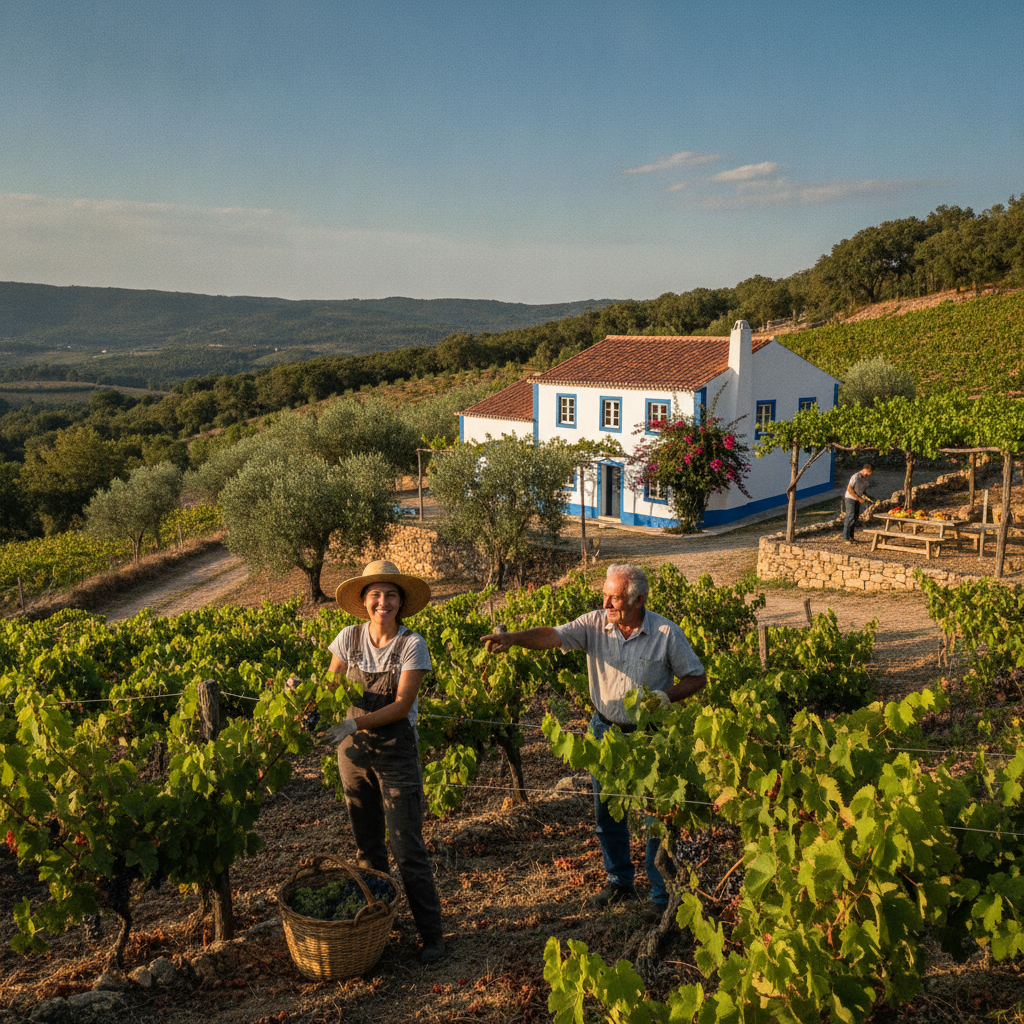
Accommodation costs have a way of eating through a travel budget faster than almost anything else, and Portugal is no exception — even in its quieter interior regions. If you've been eyeing the rolling hills of the Alentejo or the terraced vineyards of the Douro Valley but can't stomach paying for weeks of guesthouses, there's a well-established alternative that sidesteps the problem entirely. Volunteer stay networks connect travelers with farms, smallholdings, and rural guesthouses that need an extra pair of hands in exchange for a bed and meals. It's a practical arrangement that rewards both sides.
Understand How the Exchange Model Actually Works
The core arrangement is simple: you contribute a set number of hours each day — typically four to five — and your host provides accommodation and food. The work varies widely depending on the property. Some hosts need help with vegetable gardens, olive harvests, or animal care. Others run small guesthouses and need support with guest services, maintenance, or cooking. The key is that your labor is real and valued, not symbolic. You're not paying to volunteer — you're genuinely filling a gap the host can't always cover alone.
Choose the Right Platform Before You Apply
Workaway and WWOOF Portugal are the two most widely used platforms for this kind of arrangement. Workaway casts a broader net and includes guesthouses, eco-projects, and community farms, while WWOOF is specifically focused on organic farming operations. Both require a modest annual membership fee that pays for itself quickly once you're placed. HelpX is a third option worth knowing about — it lists rural properties across Portugal and often has smaller, less competitive opportunities in regions like the Beiras or Trás-os-Montes that attract fewer applicants.
Read Host Profiles With a Critical Eye
Not every listing delivers what it promises, so reading between the lines matters. A well-maintained profile with recent reviews from multiple volunteers is a strong signal. Look for specific descriptions of work tasks, the number of hours expected, and what the living situation actually looks like — a private room is very different from a shared dormitory space. Hosts who describe their property with specific detail, mention the surrounding area, and respond promptly to messages tend to run smoother exchanges. Vague listings with few reviews deserve caution.
Write an Application That Actually Gets Read
Most hosts on these platforms receive a steady stream of generic messages, so a personalized application cuts through immediately. Reference something specific in their listing — their permaculture setup near Évora, their heritage guesthouse in the Serra da Estrela, or the goat cheese operation they mentioned. Explain what skills you bring, whether that's carpentry, cooking, gardening, or simply a reliable and cheerful attitude. Keep it concise. A short, warm, specific message will outperform a long generic one every time, and hosts often respond within a day or two when they're genuinely interested.
Set Clear Expectations Before You Arrive
Once a host confirms your stay, have a direct conversation about the practical details before you travel. Confirm the exact hours expected each day, which days are free, what meals are provided, whether there's reliable wifi, and what the sleeping arrangement looks like. It's also worth asking about the nearest town and how to get there without a car — rural Portugal can be genuinely remote, and some farms sit well outside any bus route. Getting clarity upfront prevents the kind of friction that makes a two-week stay feel much longer than it is.
Build in Flexibility Around Your Arrival Timing
Harvest periods, olive picking season in autumn, and the summer vegetable surge are the times when rural Portuguese farms most actively need help. If your travel window is flexible, aligning your arrival with these periods means you're genuinely useful, which tends to produce warmer relationships and better experiences. Hosts who are stretched thin during harvest are often more grateful and more generous with their time and local knowledge. Off-season stays can also be rewarding — quieter, more personal — but the workload is lighter and the experience more reflective.
Treat It Like a Cultural Immersion, Not Just Free Lodging
The practical benefit of free accommodation is real, but the deeper value of a volunteer stay in rural Portugal is something different. You'll share meals with families who've farmed the same land for generations, learn a few words of Portuguese out of necessity, and develop an understanding of how rural communities actually function day to day. The Alentejo in particular has a slow, deliberate rhythm that rewards patience. Volunteers who approach the exchange with genuine curiosity — asking about the land, the crops, the history — tend to walk away with relationships and memories that no guesthouse stay could replicate.
Stack Multiple Stays to Cover a Longer Trip
A single volunteer placement can cover a week or two of accommodation, but seasoned slow travelers often line up two or three placements end to end across different regions. A month in Portugal could include time on a biodynamic farm near Montemor-o-Novo, followed by a coastal guesthouse outside Sagres, and then a small eco-lodge in the Peneda-Gerês area. Each placement adds a different layer — different landscapes, different people, different work. Planning this kind of itinerary takes a little lead time since good hosts fill their spots quickly, but the logistics are straightforward once you've done it once.
Volunteer stay networks in rural Portugal continue to grow as more smallholders and independent guesthouses discover the value of welcoming skilled, motivated travelers. As remote work has reshaped who travels and for how long, the profile of the average volunteer has shifted — hosts are increasingly welcoming people who bring professional skills alongside their willingness to work. The networks themselves are improving too, with better filtering tools and more transparent review systems making it easier to find a genuinely good match. If you're planning an extended trip through Portugal and want accommodation that gives back as much as it costs, this model is worth your time.