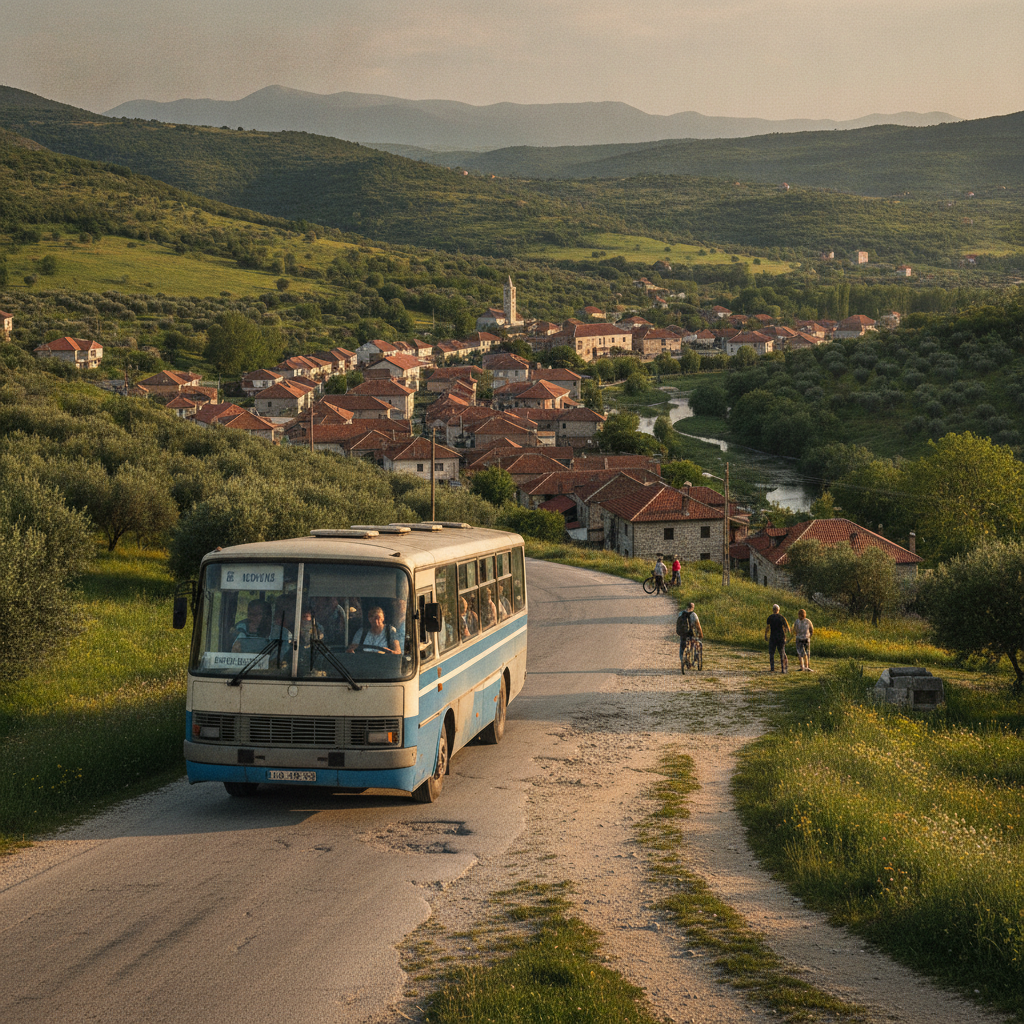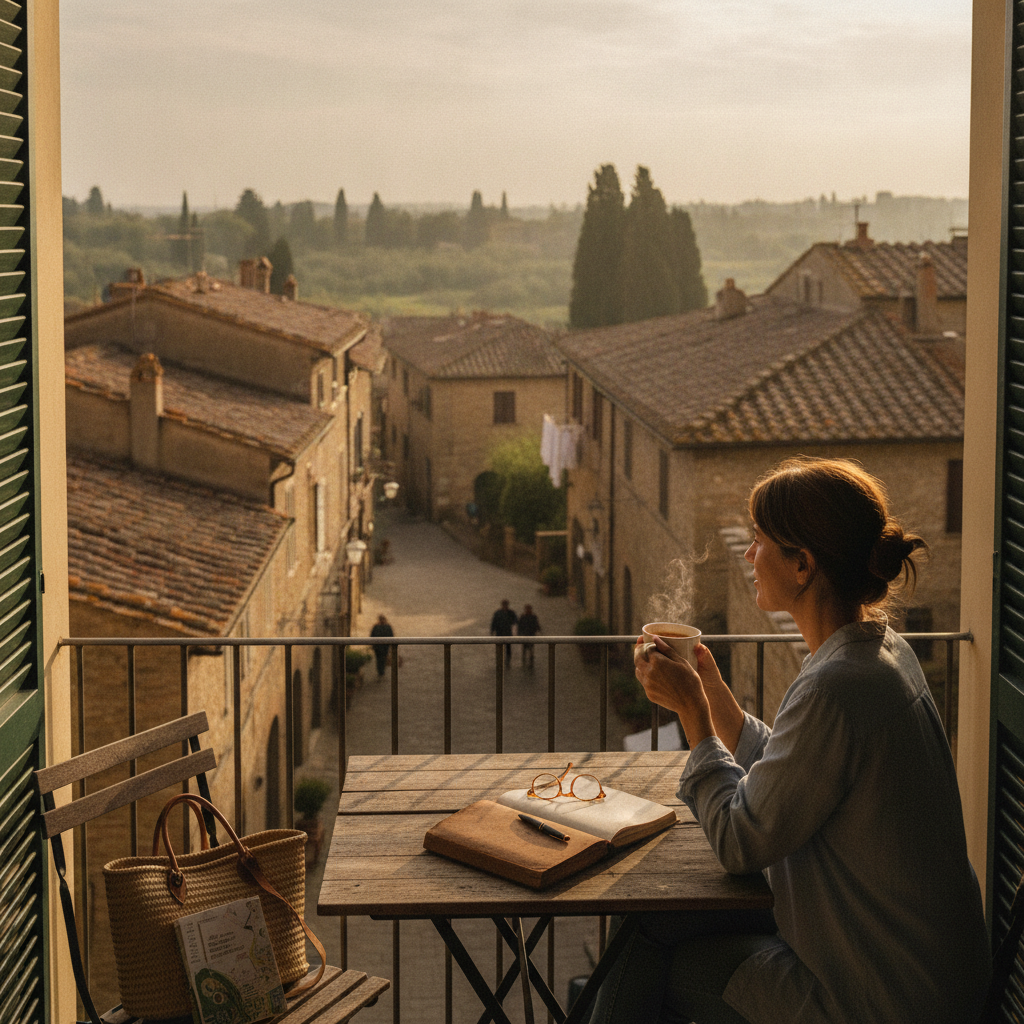
There is a particular kind of exhaustion that comes from seeing too much too quickly — the blur of departure boards, the half-eaten meals between transfers, the photographs taken of places barely felt. It is the opposite of what most people set out to find when they travel, yet it is the experience that rush-itinerary travel almost inevitably delivers. The traveler who spends three weeks in a single city or region, by contrast, begins to understand something that no highlight reel can teach: that a place does not reveal itself on the first day, or even the fifth.
What Slow Travel Actually Means
Slow travel is not simply a reduced pace — it is a different relationship with place altogether. Where conventional tourism moves through destinations as if completing a checklist, slow travel stays long enough to notice the rhythms underneath the surface: the way a neighborhood changes between morning and evening, the regulars who occupy the same café corner, the weekly market that transforms an otherwise quiet square. The concept draws loosely from the slow food movement that emerged in Italy during the 1980s, which pushed back against the homogenization of eating culture by insisting that preparation, origin, and context all matter. Applied to travel, the same logic holds. The destination is not a backdrop; it is the thing itself, and understanding it requires time.
This kind of travel has found a quiet following among remote workers, extended sabbatical travelers, and those who have simply grown tired of returning home feeling as though they never quite arrived. Cities like Oaxaca, Tbilisi, and Lisbon have become informal centers of the slow travel world — not because they offer the most monuments per square kilometer, but because they reward extended presence with layers that don't show up in a long weekend.
The First Week Is Deceptive
The first week of any extended stay tends to feel surprisingly thin. The traveler is still operating on tourist instincts — seeking out the landmark restaurants, following the reviewed walking routes, photographing the places that appear on every travel account. There is nothing wrong with this; it is orientation, and orientation is necessary. But it creates a false impression that one is already understanding the place, when in fact the surface has barely been touched. The local term for this phenomenon in Portuguese travel culture is sometimes described through the concept of *saudade* — a bittersweet longing for something not yet fully grasped — though locals use it to describe a deeper emotional state, the feeling maps usefully onto the traveler's early restlessness.
By the end of the second week, something shifts. The initial checklist has been completed, the obvious landmarks have been seen, and the traveler is left with open time and no particular agenda. This is exactly where slow travel begins. The bakery visited twice becomes a choice rather than a discovery. The side street that looked unremarkable on the first day turns out to lead somewhere worth returning to. Patterns emerge — not because the city has changed, but because the traveler's attention has finally slowed down enough to register them.
How Depth Replaces Breadth Over Time
One of the quiet transformations of extended stays is the way that knowledge accumulates almost accidentally. A traveler spending three weeks in a neighborhood in Bologna or Chiang Mai begins to understand micro-geography in a way no guidebook delivers — which streets flood after afternoon rain, where the local workers eat rather than where tourists are directed, what the produce at the Thursday market reflects about the season. This is the kind of contextual knowledge that anthropologists call *thick description*: not just what is happening, but the full web of meaning surrounding it.
That depth changes how memory forms as well. A two-day stop in a city tends to compress into a handful of strong images — the cathedral, the dinner, the view from the bridge. Three weeks in the same city produces something closer to a neighborhood geography, a set of associations and preferences and small routines that feel genuinely earned. People who travel this way consistently report that those extended stays become the ones they return to most vividly, not the packed two-week tours where five countries were covered in twelve days.
The Economics of Staying Longer
Beyond the experiential shift, slow travel carries a practical logic that makes it especially compelling for those watching their travel budgets carefully. Weekly and monthly rental rates through platforms like Airbnb or local property agencies drop substantially when compared to nightly hotel costs. Grocery shopping at local markets rather than eating every meal in restaurants brings the daily cost of living considerably closer to what it would be at home. Transit costs fall simply because there are fewer of them — no internal flights between cities, no rushed train connections, no last-minute booking premiums.
This isn't a minor consideration. The total cost of a three-week stay in one city is often comparable to — and sometimes lower than — a two-week trip covering four or five destinations, once flights, accommodation, and daily expenses are fully accounted for. The traveler gains time and depth while often spending less. There is also a sustainability dimension worth acknowledging: fewer flights means a smaller carbon footprint, which matters to a growing number of people making travel decisions in 2026.
Letting a Place Find You
If you've ever returned from a trip and felt the faint sense that you passed through rather than arrived, slow travel offers a different contract. Choose one place — a city with neighborhoods to explore, a smaller town with enough texture to hold attention, a region with villages worth wandering between. Book longer than feels comfortable. Resist the urge to plan every day. Allow the first week to be orientation, the second to be discovery, and the third to be something closer to belonging. Notice what the place asks of your attention rather than what your itinerary demands. The traveler who gives a place three weeks earns something that no itinerary can schedule: a genuine sense of having been somewhere, rather than simply having seen it.
That sense of arrival — slow, earned, quietly accumulated over mornings and evenings in the same streets — is precisely what the blur of the departure board cannot offer. It turns out that the secret to understanding a place is the same secret that applies to understanding most worthwhile things: stay long enough for the surface to dissolve.