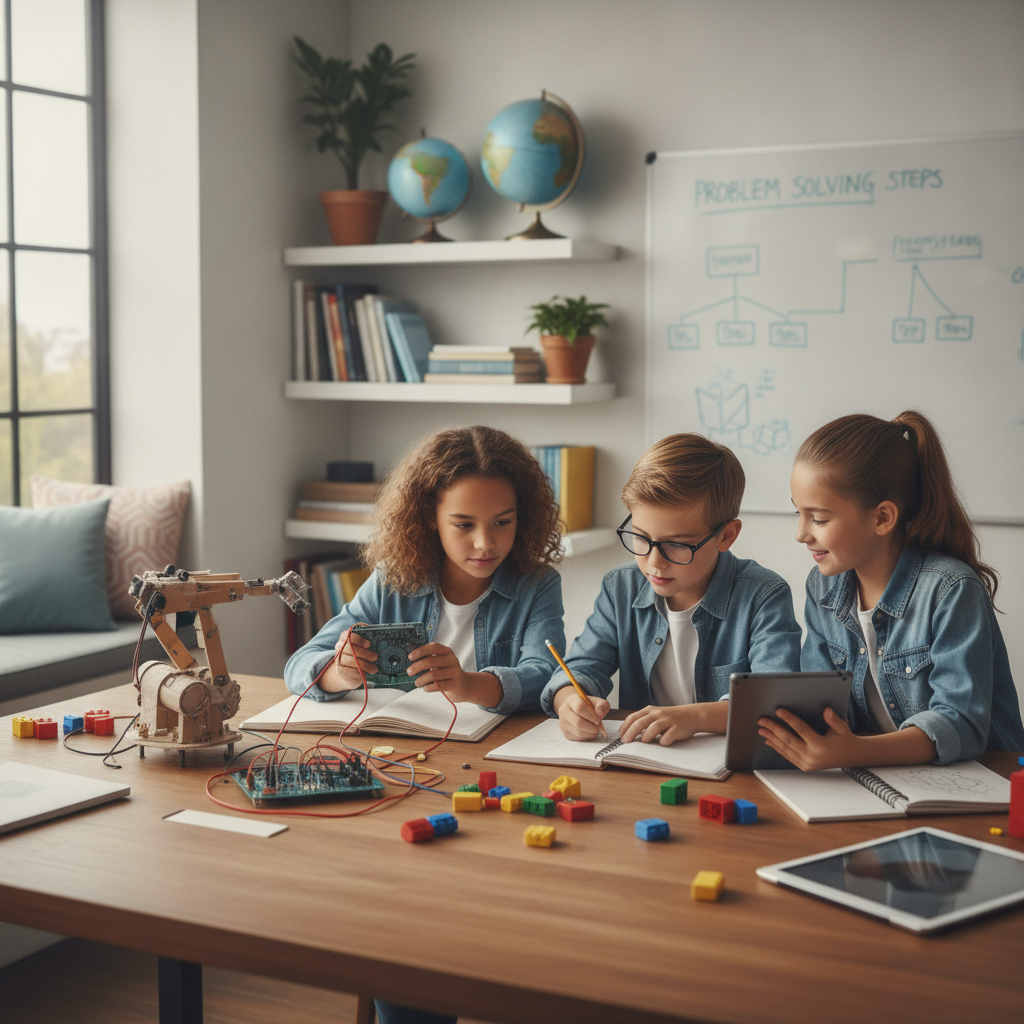
Middle school is one of the most intellectually restless periods in a young person's life — and one of the most underserved by traditional worksheets and fill-in-the-blank assignments. If you've noticed your child breezing through homework without really engaging, or struggling to connect classroom material to anything that feels real, you're not alone. Project-based learning at home offers a different path. It's less about drilling facts and more about building the mental habits that make those facts actually useful.
The good news is that you don't need a teaching degree or a dedicated classroom to make it work. With a bit of structure and the right mindset, home-based projects can sharpen how middle schoolers analyze problems, weigh options, and think independently — skills that matter far beyond any single school subject.
Start With a Question That Has No Easy Answer
The foundation of any strong project is a question worth investigating. Rather than assigning a topic like "the water cycle," try framing it as a problem: "Why does our neighborhood flood after heavy rain, and what could fix it?" Open-ended questions like this push kids to gather information, consider multiple perspectives, and reach their own conclusions. Platforms like Khan Academy and Britannica School can support the research phase, but the question itself is what drives the thinking. A genuinely interesting problem is one of the most powerful learning tools available.
Let Them Choose the Format and the Medium
When middle schoolers have some control over how they present their work, engagement goes up noticeably. Some kids will build a physical model, others will create a short documentary using iMovie, and some will write a detailed report. The medium matters less than the thinking behind it. Giving your child ownership over the format teaches them to match communication style to audience and purpose — a skill that's surprisingly rare and deeply valuable. Resist the urge to prescribe the output before the project begins.
Build In a Planning Phase Before Any Doing
One of the most common mistakes in home projects is jumping straight into execution. Before your child starts building, writing, or researching, spend time on planning: What do they already know? What do they need to find out? What materials or resources will they need, and in what order should things happen? This phase mirrors how real-world problem-solving works, whether in architecture, medicine, or engineering. Tools like Trello or even a hand-drawn timeline on paper help kids externalize their thinking, making gaps in their plan visible before they become frustrating mid-project roadblocks.
Encourage Productive Struggle Instead of Quick Fixes
It's tempting to step in the moment your child gets stuck. But the moment just before a breakthrough — when something isn't working and they're not sure why — is often where the best learning happens. Try asking guiding questions instead of offering answers. "What have you tried so far?" or "What would happen if you approached it from the other direction?" keeps the cognitive work where it belongs: with your child. Tolerating a reasonable amount of frustration builds intellectual resilience, which is one of the harder but more lasting outcomes of project-based work.
Connect the Project to Something Real and Local
Abstract topics become vivid when they're grounded in something tangible. A project on urban planning hits differently when it's focused on a specific street in your city. A study of local ecosystems means more when it involves a nearby park like Riverside Commons or a community garden your family can actually visit. Real contexts force more precise thinking — kids can't just generalize when they're dealing with specifics. They have to account for actual conditions, real constraints, and genuine complexity, which is exactly the kind of thinking that classroom exercises often can't replicate.
Teach Them to Evaluate Sources, Not Just Collect Them
Research skills and critical thinking are inseparable. Middle schoolers are often taught to find sources, but rarely taught to interrogate them. Build in a step where your child has to compare two or three different accounts of the same topic and identify where they agree, where they differ, and why those differences might exist. This habit — sometimes called lateral reading — is something even adults rarely do systematically. It teaches kids that information isn't just true or false, but situated, partial, and worth examining carefully before being trusted.
Schedule a Reflection Conversation, Not Just a Presentation
Once a project wraps up, take time to talk through what worked and what didn't — not to grade it, but to understand it. Ask your child what they'd do differently if they started over, what surprised them most, and what question they're still sitting with. This kind of structured reflection helps consolidate learning in a way that simply finishing a project doesn't. It also models the kind of honest self-assessment that strong thinkers do naturally. The goal isn't a polished final product; it's a mind that's gotten better at working through hard problems.
Use Real Tools Alongside Everyday Materials
There's no need to invest heavily in specialized equipment. Some of the most effective project materials are already around the house — cardboard, graph paper, basic kitchen supplies. That said, introducing real tools when appropriate adds authenticity that kids respond to. Free design software like Canva, spreadsheet tools, or entry-level coding environments like Scratch give middle schoolers a taste of how professionals actually work. The combination of low-cost materials and genuine tools creates a productive middle ground between play and serious inquiry.
Building critical thinking doesn't happen in a single project or a single month. It's a gradual process, and every project your child works through — even the ones that go sideways — adds something lasting. Pick one question that genuinely interests them, clear a bit of space in the week, and let the work begin. The habits they build now will serve them in ways that are hard to predict and easy to underestimate.